How VCT Championship Points Affect the Champions Race in 2026
Written by Valorant Village
Source-backed coverage ●
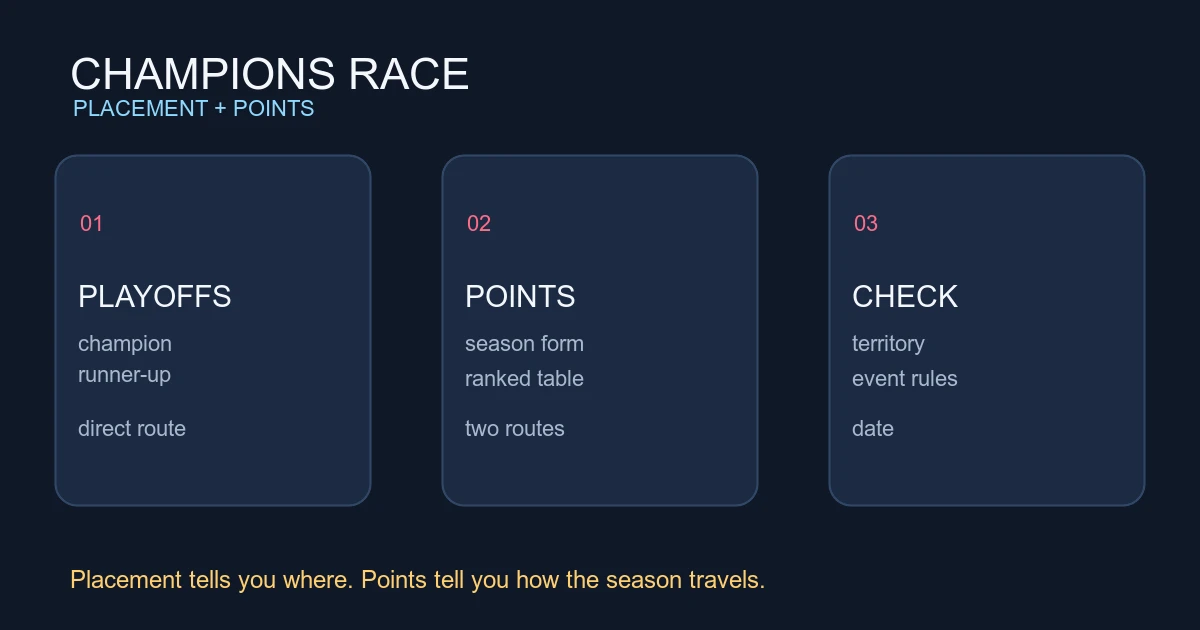
Championship Points are the part of the VCT table that makes the Champions race look more complicated than a normal playoff bracket. A team can miss the top placement in a regional Stage 2 event and still remain alive through points. Another team can win a playoff series and still need to check the table before celebrating a qualification spot.
For the 2026 season, the clean way to read the race is to separate direct placement from season-long consistency. Riot's season primer says two teams qualify through Stage 2 Playoffs and two more qualify through Championship Points in each territory. The exact point distribution and tie handling still belong to the relevant regional competition page.
The four routes in the 2026 structure
The official VCT Americas Stage 2 guide lists four qualification paths to Champions Shanghai:
- Stage 2 champion.
- Stage 2 runner-up.
- The region's number-one Championship Points team.
- The region's number-two Championship Points team.
That list explains the broad shape, not every edge case. If a team already qualifies through a playoff finish, the event's rules determine how the remaining slots are assigned. Do not look at a fan-made table and assume the next team automatically inherits a slot without checking the official competition rules.
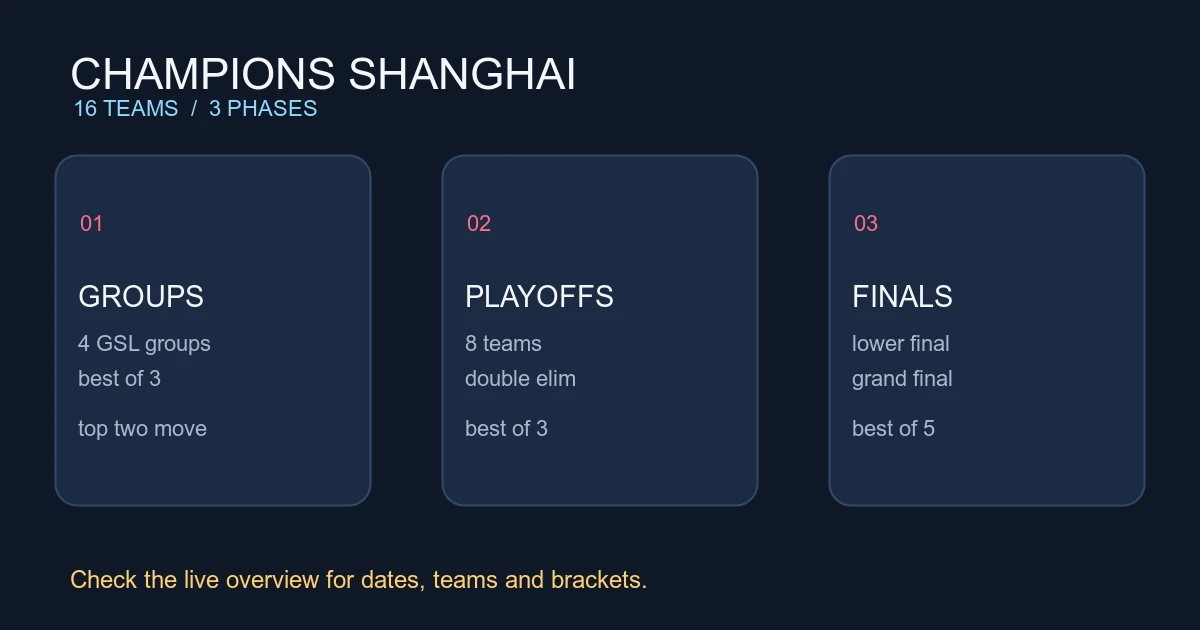
The Champions Shanghai overview describes the global event in similar terms: the top two teams from each territory's Stage 2 Playoffs and the top two Championship Point earners from each territory participate. This is the most useful mental model for the current event page.
Points reward the season, not just the final weekend
Championship Points exist to measure performance across more than one match day. Riot's 2026 season primer calls the system a refreshed version of the points route and keeps two qualification places for point earners. That means a team that has been consistently strong can enter the final stage with a different kind of advantage from a team that peaks during the playoff bracket.
The regional pages show why copying one points table into every territory is risky. The 2026 EMEA Stage 2 guide says a regular-season match win awards one point, excluding tiebreakers, and lists an indicative playoff distribution of eight points for first, six for second, five for third and four for fourth. That is useful evidence for EMEA's published event structure. It is not proof that Americas, Pacific or CN use the same numbers.
The word “indicative” matters. It tells the reader that the displayed distribution is a guide to the event, not a timeless VCT law. A strong article should preserve that qualification rather than turn it into a calculator with false precision.
How to read the race without guessing
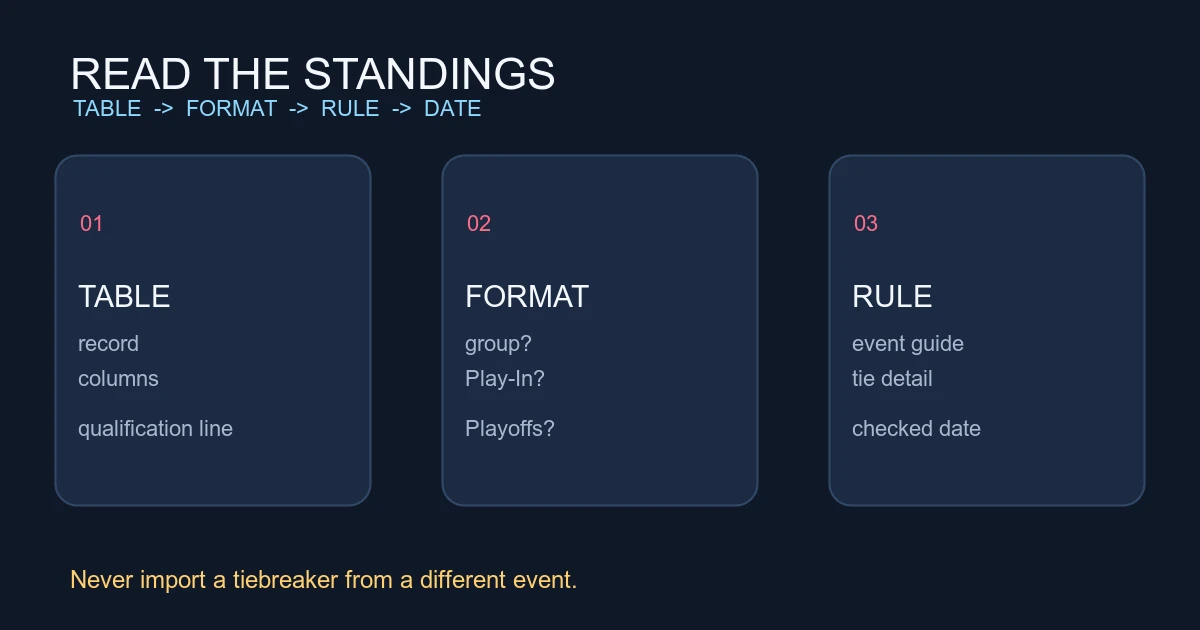
Start with the current territory. Championship Points are not one global leaderboard where every region competes for the same four rows. Open the relevant league or tournament page, note the qualification lines, then record the team's placement path and point total separately.
Next, check whether the points came from a regular-season win, a playoff placement, a bye or another event-specific award. A single number hides the source of the advantage. If the table does not explain the column, follow the event handbook or official announcement rather than reverse-engineering it from screenshots.
Then look for duplicate qualification. The top two Stage 2 Playoff finishers may also appear near the top of the points table. That does not automatically mean the table is wrong. It means the allocation rule needs to be read before deciding who is next in line.
Finally, date your note. VCT standings change after each match, and a point total that was safe before the last stage can become exposed after another team wins. Use a phrase such as “checked on 14 August 2026” when publishing a snapshot. For a live article, update the date and source rather than silently leaving old numbers in place.
The VCT standings and tiebreakers guide is useful when two teams appear level. For the viewer side of the same problem, the VCT watch guide explains which event structure to check before treating a match as an elimination game.
What points do not tell you
Points do not tell you which team will win a map, which composition will appear or whether a roster is in form. They also do not replace the event's actual standings. A team can lead the points race while entering a playoff bracket with a difficult matchup, and a low-ranked point team can still change the qualification picture with one deep run.
Points are also not a complete explanation of competitive strength. They are a qualification tool. Use them to answer “how can this team reach Champions?” Use match footage and map results to answer “why is this team winning?”
If the table is unclear, wait for the official update. It is better to say that a tie or duplicate qualification needs confirmation than to publish a confident but invented sequence of tiebreakers.
Sources checked
- VCT 2026 Season Start: EYNTK, published 2025-12-02 and checked 2026-08-14 UTC. Used for the 2026 points-route structure and season context.
- VCT Americas 2026 Stage 2: Everything You Need to Know, published 2026-06-24 and checked 2026-08-14 UTC. Used for the four Americas qualification paths.
- 2026 VCT EMEA Stage 2, published 2026-06-25 and checked 2026-08-14 UTC. Used for the regional, indicative EMEA Stage 2 distribution.
- Champions Shanghai overview, checked 2026-08-14 UTC. Used for the global event's qualification and format summary.
The distinction between confirmed qualification rules and viewer-facing interpretation is Valorant Village editorial guidance. Always use the live official event page for the final qualification decision.