VCT Standings and Tiebreakers in Plain English
Written by Valorant Village
Source-backed coverage ●
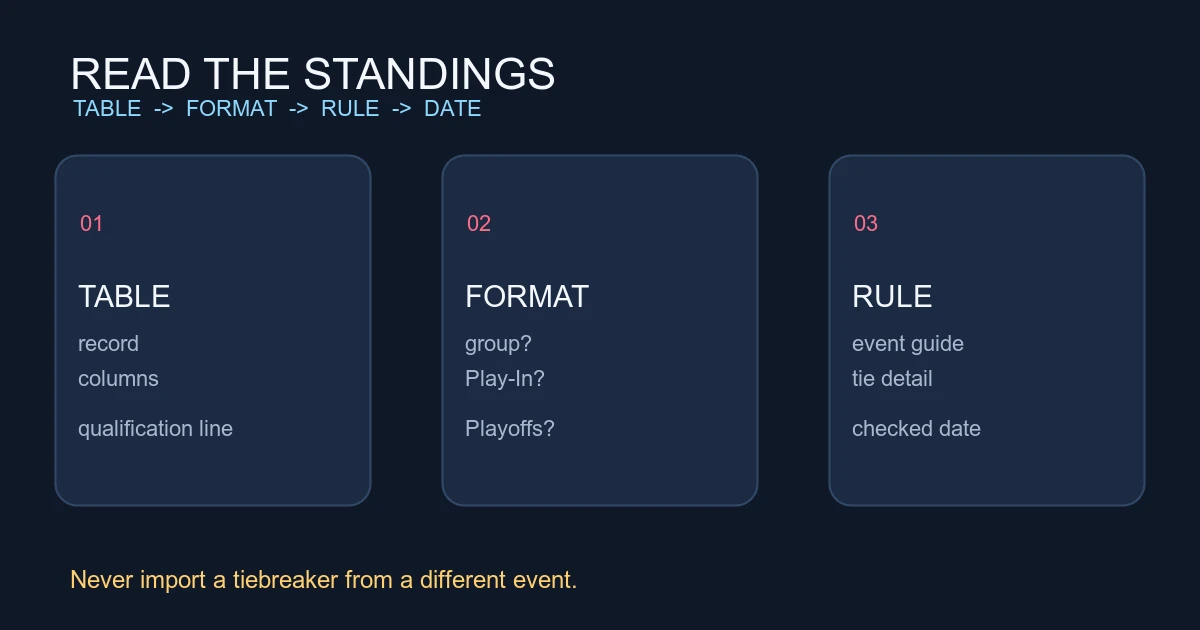
A VCT standings table looks simple until two teams have the same record and one sits above the qualification line. The mistake is to assume there is one universal tiebreaker ladder for every region, stage and season. The safer approach is to read the table in layers: record first, event format second, official rules third.
For 2026 Stage 2, the regional pages already show meaningful differences. Americas, Pacific and EMEA all describe groups and routes into playoffs, but their Play-In details and qualification paths are not identical. The table is only useful when you know which competition produced it.
Start with the columns
Read the header before reading the order. A standings page may show match wins, losses, map results, round differential, points or a form indicator. Not every number is a qualification score. A team can have a better map difference and still need the official rule to know whether that number decides a tie.
Write down four things:
- The event and territory.
- The group or stage.
- The qualification line.
- The exact columns displayed by the official page.
The VCT Americas Stage 2 guide says the 12 teams are split into two groups and that the top two from each group qualify for Playoffs. The remaining teams move into Play-In, where they are joined by the top four Challengers teams from the Americas. That context changes the meaning of fourth place. It is not automatically the same outcome in every league.
A record is not the whole stage
Riot's 2026 VCT season primer describes Stage 1 and Stage 2 group play using groups of six and single round-robin best-of-three matches. EMEA's Stage 2 page describes two groups of six, with the top four from each group moving into different next steps. Pacific's Stage 2 page says the top two from each group go directly to Playoffs while places three through six enter Play-In.
The shared shape is useful: teams are ranked inside a defined event, and placement determines the next bracket. The differences are just as important: the number of direct qualifiers, the Play-In field and the way Challenger teams enter can change by territory.
This is why a standings screenshot without a source date is weak evidence. The same rank can mean “safe,” “Play-In” or “eliminated” under a different stage structure.
What a tiebreaker actually does
A tiebreaker resolves an ordering problem when the normal standings columns do not separate teams. It does not change the match result. It answers which team receives the higher seed, a playoff place or the next available route.
Do not write “head-to-head decides it” unless the event rules say so. Do not write “round difference decides it” because that is common in another league. The official event handbook, competition page or published standings rule is the authority. If the live page has not explained an unresolved tie, say that the order is pending confirmation.
The distinction between a tie for a qualification place and a tie for seeding also matters. Two teams can be level while both advance, in which case the tiebreaker may only determine bracket position. A different tie at the cutoff can decide whether one team goes to Playoffs and the other to Play-In. The standings table may not explain that difference in one glance.
Points are a separate question
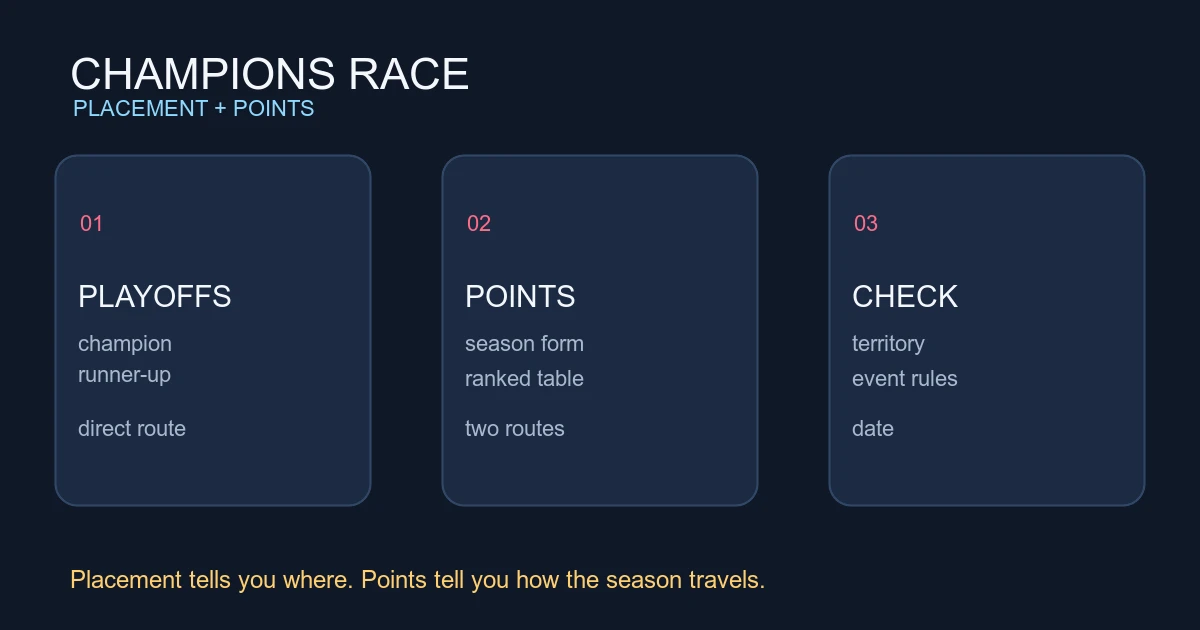
Championship Points can sit beside a regional standings table without being the same thing as the group record. Points help determine the season-long route to Champions Shanghai. Group placement decides the next match in the current stage. Keep those columns separate when explaining the race.
The Championship Points guide covers the four-route 2026 qualification structure. If a team is near a regional cutoff and also high in points, it may have more than one path alive. That is a qualification question, not a reason to override the current group rules.
A viewer's verification workflow
When the table looks surprising, follow this order:
- Open the official league or tournament page, not only a social post.
- Check whether the displayed table is group stage, Play-In or Playoffs.
- Confirm the match format and which results count.
- Find the event-specific tiebreaker or handbook reference.
- Record the timestamp before describing a team as qualified or eliminated.
Then explain the outcome in plain language. “Team A is above Team B on match record, and the official page places both above the Play-In line” is stronger than a guessed formula. If the page shows a tie, name the unresolved question rather than filling it with a familiar esports rule.
The VCT veto guide helps with match context, while the first-death review offers a way to watch the games that produced the table. Standings tell you where a team is. They do not tell you how it got there.
Sources checked
- VCT Americas 2026 Stage 2: Everything You Need to Know, published 2026-06-24 and checked 2026-08-14 UTC. Used for the Americas group and Play-In structure.
- VCT Pacific Stage 2: Group Stage Ticket Sales, published 2026-06-23 and checked 2026-08-14 UTC. Used for Pacific's group, Play-In and playoff structure.
- 2026 VCT EMEA Stage 2, published 2026-06-25 and checked 2026-08-14 UTC. Used for EMEA's group and Play-In structure.
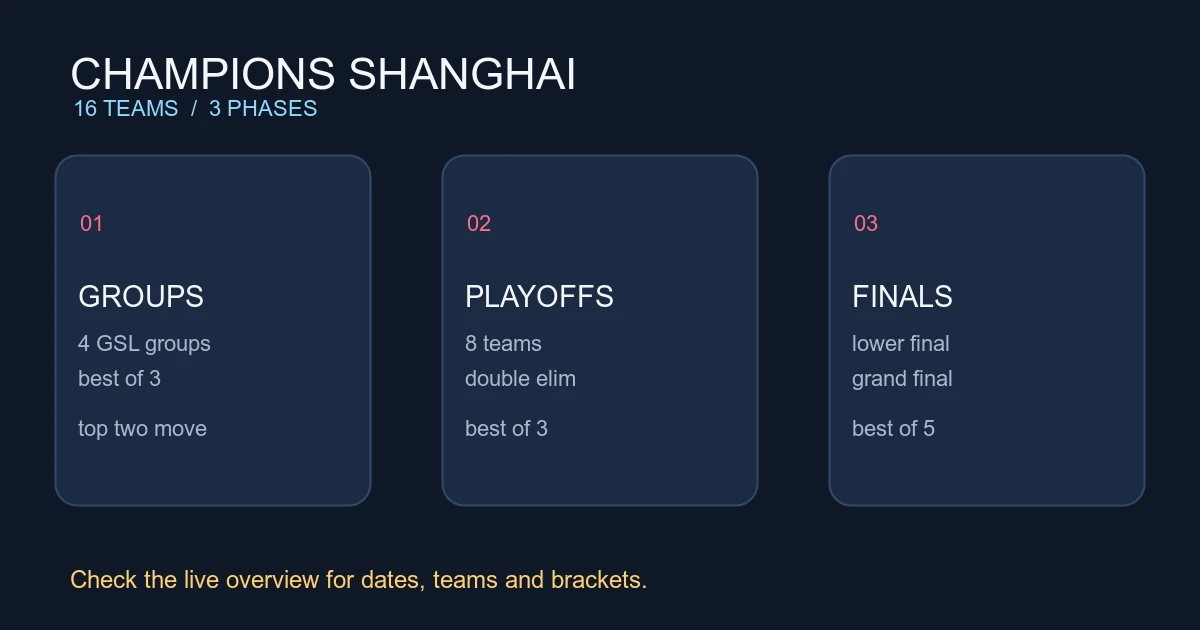
- Champions Shanghai overview, checked 2026-08-14 UTC. Used for the global qualification context.
The reading workflow and the refusal to invent a universal tiebreaker are Valorant Village editorial guidance. Rules can change between events, so the current official page wins.