Permissioned VALORANT Creator Spotlight: An Editorial Process
Written by Valorant Village
Source-backed coverage ●
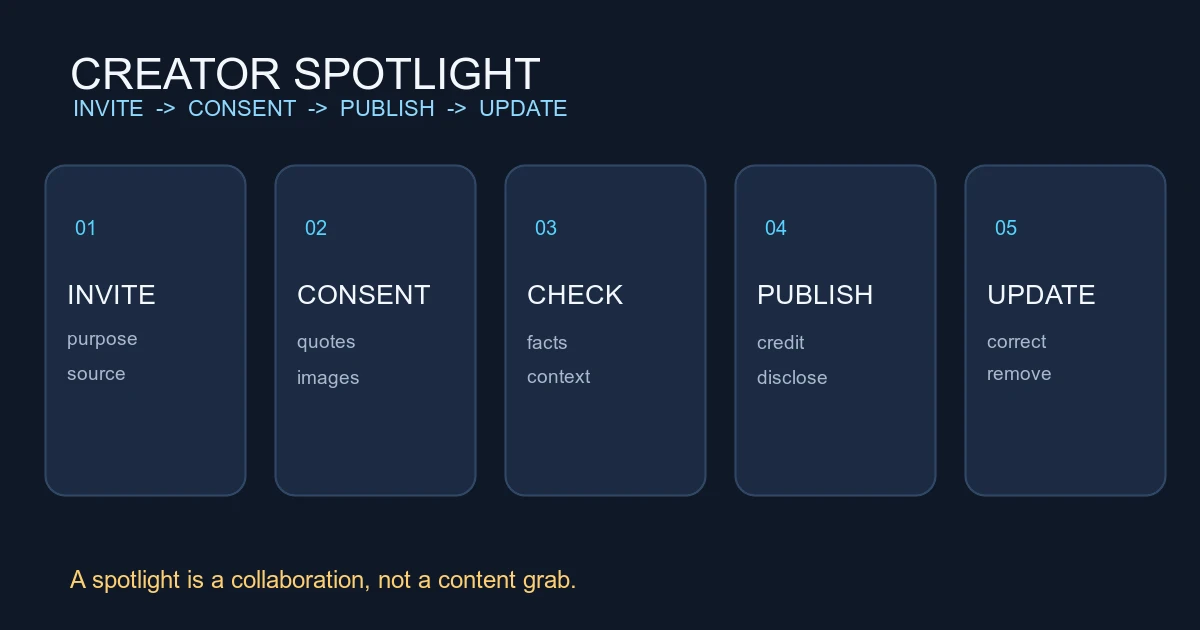
A creator spotlight should feel like a conversation, not a content grab. The creator gets a clear say over their work and name. The reader gets context about what was made and why it matters. The site gets a feature it can update or remove without a rights dispute.
The process starts before the interview. Decide what you want to publish, ask for permission that matches that use and keep the agreement with the article's image record. Permission to quote a creator is not automatically permission to copy their artwork, logo, map, video or thumbnail.
Choose a specific contribution
A spotlight needs a reason to exist. It might cover a permissioned map diagram, a coaching project, an accessibility tool, a tournament organiser or a carefully made piece of fan art. Write the editorial question first: what did this person solve, test or contribute that readers can learn from?
That question keeps the feature original. Riot's Legal Jibber Jabber policy asks fan projects to make a new contribution and warns against ripping off existing work with light commentary. A page that merely embeds a creator's video and rewrites its title is not a meaningful spotlight.
Ask the creator for the primary link, a short description in their own words and the preferred credit. If the project has collaborators, identify them rather than treating the most visible account as the sole owner.
Get permission before collecting assets
Send a short written request that names each use:
- interview text on Valorant Village;
- selected quotes and edits for the article;
- approved images in the article and Open Graph preview;
- links in newsletters or social posts;
- crop, resize and WebP conversion;
- publication duration and removal process.
Keep the permission narrow. If the creator only approves one image in one article, do not reuse it in a wallpaper page. If a video is embedded from the creator's channel, follow the platform's current embed rules and do not download a copy for the site.
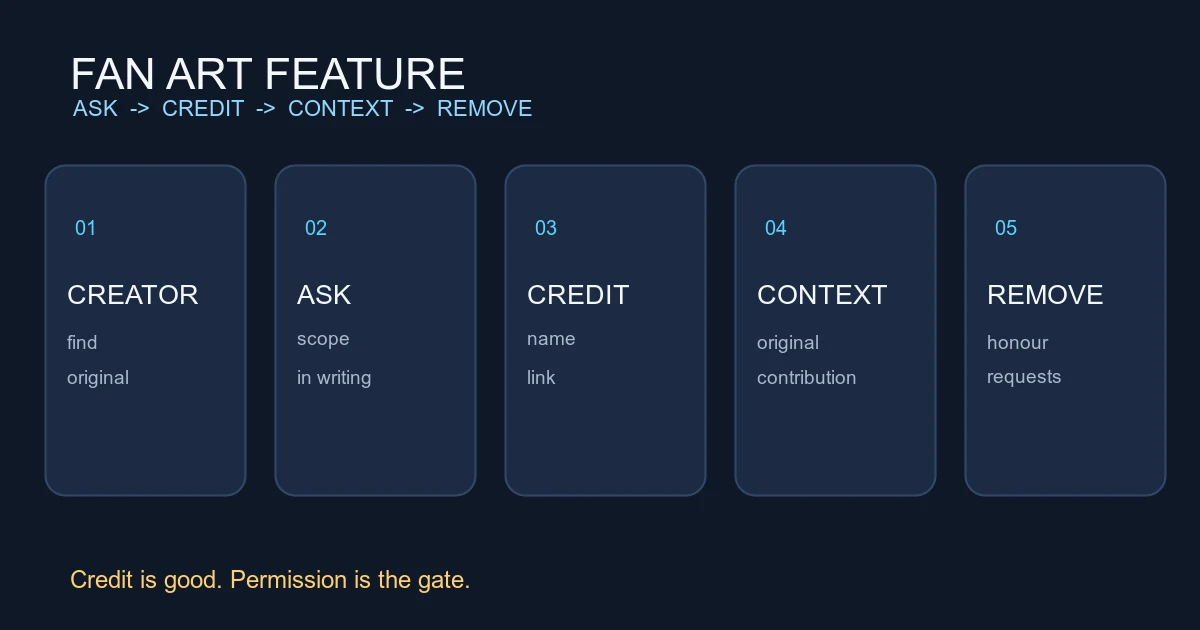
Record the reply, date, asset URL, creator name, licence terms and any expiration. The fan-art feature guide contains a permission checklist for image-led features. The same record works for a map tool or coaching project.
Interview without turning opinion into fact
Ask about process, not only promotion. Good questions include: what problem were you trying to solve, what did early tests show, what did you change, who helped and what remains uncertain? Give the creator a chance to distinguish personal experience from a claim about the whole VALORANT player base.
Fact-check the parts that are not personal opinion. If the creator discusses a patch, Agent ability, tournament rule or Riot policy, follow the primary source. Link the relevant Riot page instead of treating the interview as proof. If a creator makes a prediction, label it as their view and include the date.
Do not publish private Discord messages, personal email addresses, legal names or player information simply because they appeared during the interview. Ask before identifying collaborators or minors. Remove sensitive details from screenshots unless they are necessary and permissioned.
Build the page around the creator's work
Use a clear structure: who the creator is, what they made, the problem it addresses, a short interview, links to the original project and a practical takeaway. Put the credit next to every image. State whether the feature is independent, sponsored or part of a separate collaboration.
If Riot IP appears in the project, do not imply Riot approval. Riot's policy asks shared fan projects to identify themselves as fan projects and says Riot does not endorse or sponsor them. Follow the current policy wording and local requirements rather than inventing an “official creator” label.
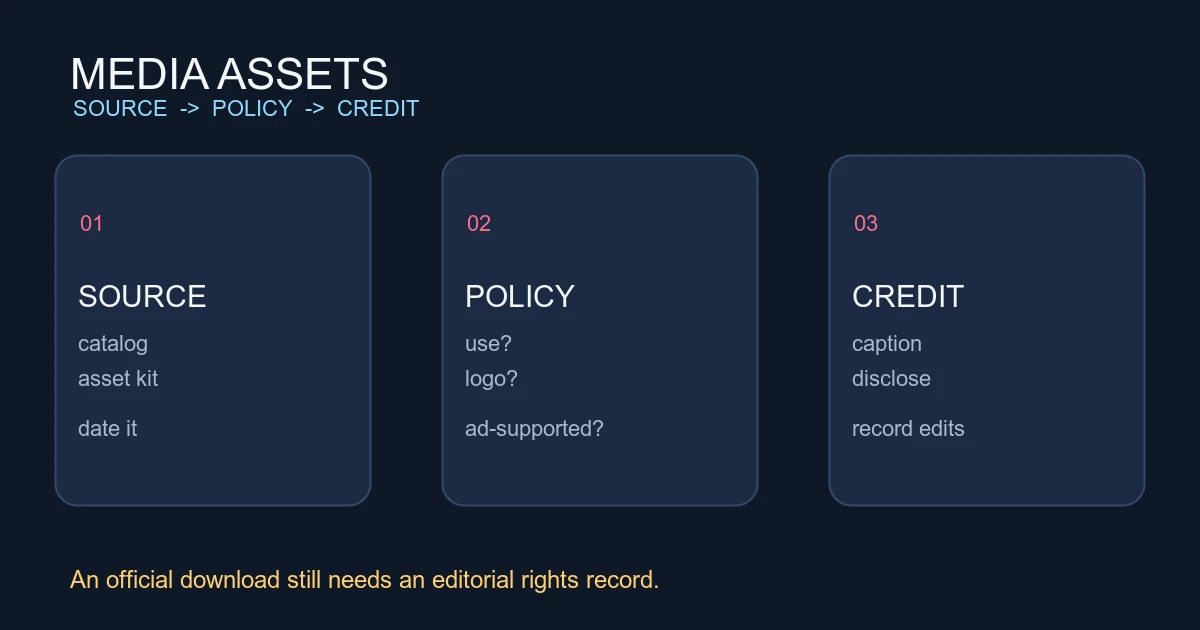
The Riot media guide covers official files. A creator's permission and Riot's IP policy are separate layers. One cannot silently replace the other.
Handle edits and takedowns
Send the creator the quotes and factual descriptions before publication when the feature is collaborative. Do not promise an unlimited veto over independent editorial analysis, but agree on how obvious factual errors, name spelling and asset use will be corrected. Keep the final permission scope with the article.
If the creator later requests removal, pause the image and review the agreement. Remove or replace the asset where appropriate, update the Open Graph card and record the action. The corrections policy gives the site a place to explain material changes without turning a rights conversation into a public argument.
An original diagram can preserve the article if the creator's image is removed. Never keep a local copy hidden in the build folder and restore it in a later redesign. Rights work includes the files that readers cannot see.
Spotlight checklist
Before publishing, confirm:
- The creator and collaborators are identified.
- The editorial question adds original value.
- Quotes, images and embeds have separate permission records.
- Riot sponsorship or endorsement is not implied.
- Claims about the game have primary sources.
- Credits, links and alt text are visible.
- A correction and takedown path exists.
That checklist keeps a community article useful after the first share. The best spotlight leaves readers with a way to find the creator, understand the work and try the idea responsibly.
Sources checked
- Legal Jibber Jabber, last updated 2018 and checked 2026-08-14 UTC. Used for originality, third-party permission, trademark and fan-project disclaimer boundaries.
- Riot Games Terms of Service, last modified 2024-12-01 and checked 2026-08-14 UTC. Used for the broader user-content and IP boundary.
- VALORANT Asset Kit, published 2020-05-07 and checked 2026-08-14 UTC. Used as an official-asset reference that points creators back to Riot's legal policy.
This is an editorial process, not legal advice. Keep written permission and current policy checks for every featured creator and asset.