How to Use Riot's VALORANT Media Assets Responsibly
Written by Valorant Village
Source-backed coverage ●
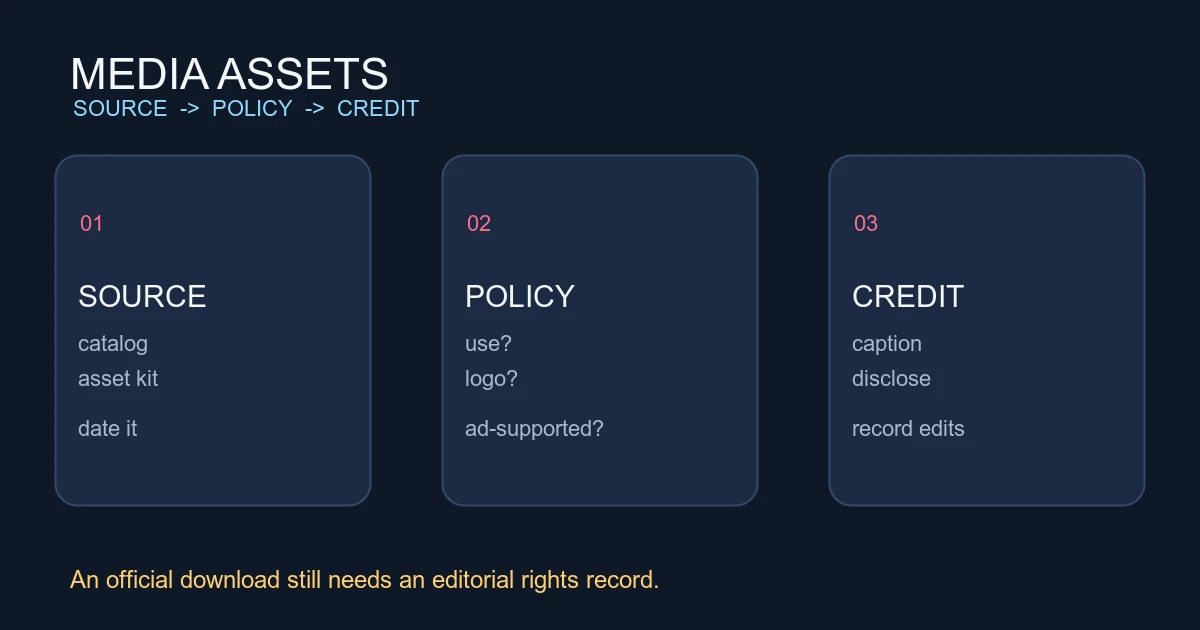
Riot makes VALORANT media easier to find than it used to be, but “publicly available” is not the same phrase as “usable for every purpose.” The Riot Developer Portal describes a public content catalog containing VALORANT assets such as icons, logos and text. Riot's Asset Kit also offers official files for creators. Both are useful starting points. Neither should be treated as permission to ignore the policy attached to the asset.
For an editorial site, the safest process is to identify the exact source, read the current terms, keep the use narrow and avoid anything that could make a reader think Riot sponsors the article.
Catalog access is not a blank cheque
The VALORANT Developer Portal says the public content catalog is free to use and warns that its manual updates may lag behind a patch. That gives an editor two practical facts: the catalog is an official source, and the downloaded files may not reflect the current game immediately.
The VALORANT Asset Kit is older. Its 2020 page offers overlays, logos, screenshots, character art and concept art, then points creators back to Riot's Legal Jibber Jabber policy. It is an official resource page, not a promise that every file can be used in any commercial layout forever.
Treat the page, file and policy as one record. Save the source URL, asset name, download date, intended use and any restrictions. If the source disappears or the policy changes, your record should show what you relied on when publishing.
Read the legal boundary before choosing a logo
Riot's Legal Jibber Jabber policy says it supports free fan projects and describes limited uses of Riot IP. It also has important restrictions around commercial projects, third-party work and Riot logos or trademarks. The policy says passive ad revenue is one exception for some individual player projects, but that does not answer every question about a website's ownership, business structure, sponsorship or regional law.
That is why a logo deserves a higher bar than a small factual icon. Do not place a Riot or VALORANT logo in an Open Graph image just because you found a transparent PNG. Use the exact asset only when the current permission clearly fits the use, keep the branding secondary to your original editorial work and include a visible separation from Riot sponsorship.
If the answer is unclear, use a text headline and an original diagram. A clean explanatory card is usually better for SEO and safer for rights than a stretched logo montage.
Make your own contribution
Riot's policy asks fan projects to include original content and says not to rip off another person's project or add only light commentary to existing content. That principle is useful even when an official asset is allowed. A Riot image can illustrate a reported fact, but it should not be the entire value of the page.
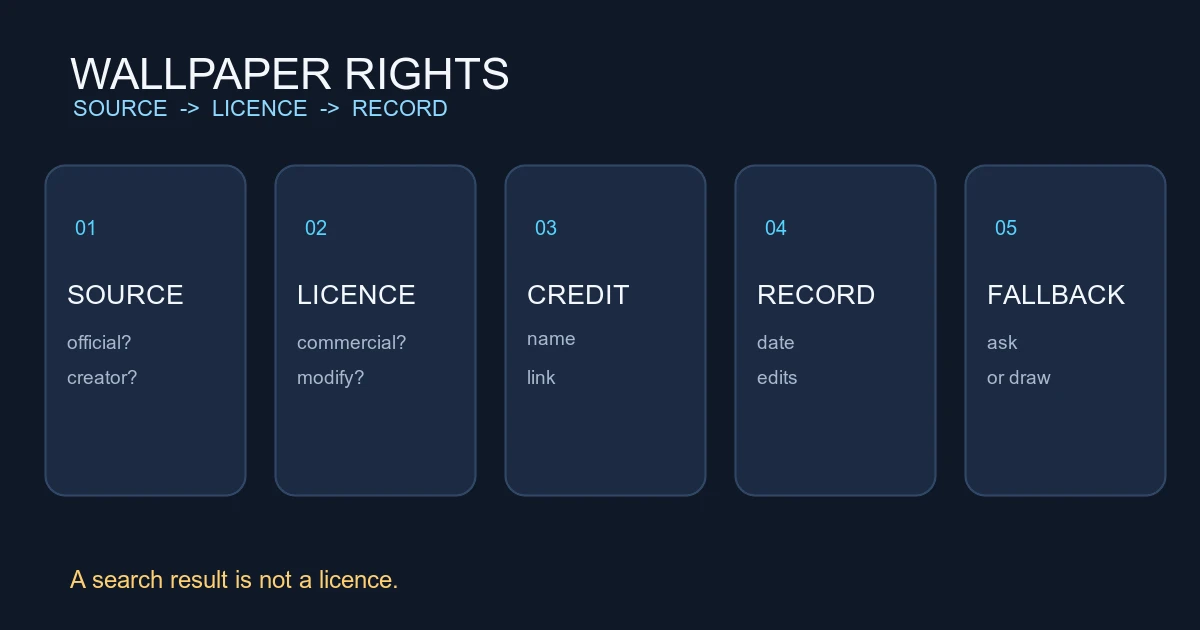
For a guide, put the answer in the writing, diagrams, tested examples or analysis. Use a sourced asset to identify the subject, then explain what the reader should do with the information. The rights-cleared wallpaper guide applies the same rule to downloads: the licence record matters, but original selection and context make the page useful.
Do not combine an official image with a creator's artwork unless you have permission for both. Asset availability from Riot cannot grant rights to a fan artist, photographer or designer whose work appears in the same composition.
Track edits and attribution
Record every material change. Cropping, resizing and converting a file to WebP are different from painting over an Agent, removing a credit or combining the asset with another creator's work. Describe what you did in the media provenance file and keep the original source link near the article's editorial record.
If an asset needs a caption, say what it is and what it is not. “Official Riot asset used to illustrate the article” is clearer than language that implies Riot reviewed the article. If a file came from a fan, name the creator, link the original and state the permission or licence. Never erase a watermark to make the card look cleaner.
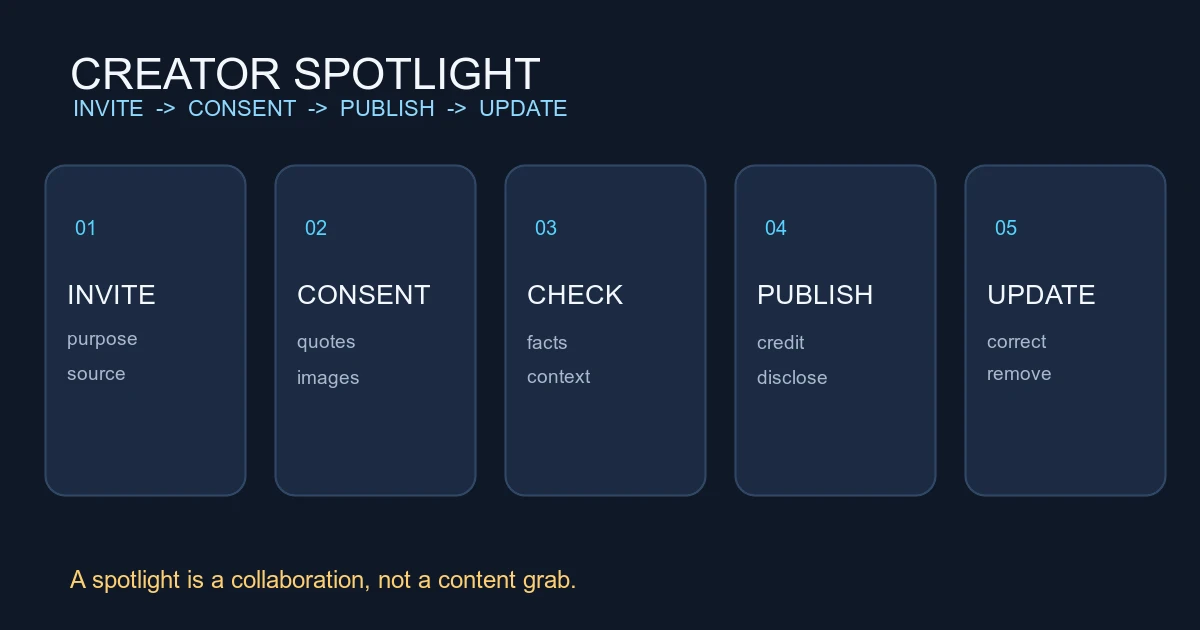
The fan-art feature guide covers creator permission in more detail. Use the same discipline for screenshots and wallpapers, even when the file is widely reposted.
Keep the page independent from Riot
Riot's policy says a shared fan project should make clear that it is not a Riot project. Do not use a page title, logo treatment, domain path or social card that could make a reader mistake Valorant Village for an official Riot channel. Avoid writing “official” unless you are describing the source, not the relationship between the source and this website.
This is especially important on Open Graph images. A social preview may be seen without the article's disclaimer, so use the site name, a descriptive headline and original editorial artwork where possible. Official images belong in a factual context, not as a substitute for a brand identity.
The five-minute asset record
Before publishing, save these fields:
- Exact source URL and file name.
- Retrieval date and current policy checked.
- Creator or rights holder.
- Permitted use and any restriction.
- Modifications and final dimensions.
- Credit, caption and disclosure.
- A removal or replacement contact path.
If one field is unknown, do not publish the file yet. Choose a public-domain or clearly licensed alternative, request permission or make an original diagram. Image generation is also not evidence of official art, so label it if it is ever used.
Sources checked
- VALORANT Developer Portal, checked 2026-08-14 UTC. Used for the public content catalog and its update caveat.
- VALORANT Asset Kit, published 2020-05-07 and checked 2026-08-14 UTC. Used for the official asset-kit examples and its link back to Riot's legal policy.
- Legal Jibber Jabber, last updated 2018 and checked 2026-08-14 UTC. Used for fan-project, ad-revenue, originality, trademark and disclaimer boundaries.
This is an editorial workflow, not legal advice. Review the current Riot policy, local law and any creator-specific licence before using an asset in a monetised or sponsored placement.