VALORANT Fan Art Features: Permission, Attribution and Context
Written by Valorant Village
Source-backed coverage ●
Fan art is not a free image library. The artist may own the drawing, photo, edit or 3D work even when it depicts a VALORANT character. Riot may also own or control parts of the underlying game IP. A responsible feature handles both questions: has the creator agreed to this use, and does the presentation avoid implying that Riot made or endorsed it?
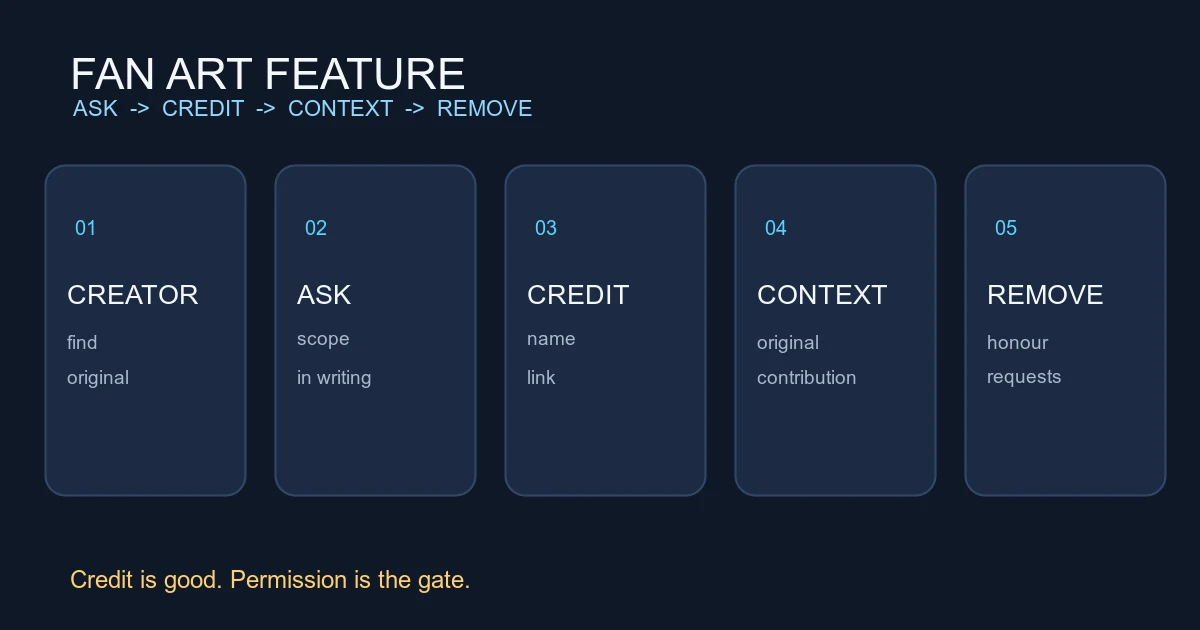
The workflow is simple enough to repeat. Find the original creator, ask for permission in writing, agree on the exact use, credit the work where it appears and keep a removal path. If any part is unclear, do not publish the image while you investigate.
Find the person who made the work
Start with the earliest source you can verify. A repost account is not automatically the artist. Look for the creator's portfolio, original social post, commission page or contact address. Reverse-image search can help find copies, but it does not prove who owns the work.
Save the original URL and the creator's public name. If the work includes a photographer, model, collaborator, 3D asset or music track, record those contributors too. One person's permission may not cover every element in the final file.
Riot's Legal Jibber Jabber policy says not to use a third party's IP without permission and not to steal another person's project. That is the right standard for the feature itself. A post that says “credit to the artist” after downloading an image is not the same as permission to copy it.
Ask for a specific permission
A useful request names the article, site, image placements and time period. It should answer questions such as:
- May Valorant Village display the work in the article and Open Graph preview?
- May we crop or resize it for a responsive layout?
- May we use it in a newsletter or social post that links back to the feature?
- Is the permission free, paid, exclusive or non-exclusive?
- How should the artist's name and links appear?
- Can the artist ask for removal later?
Do not ask for “all rights” when you only need a web feature. Narrow permission is easier to understand and easier to honour. Keep the reply, date and agreed wording in the image provenance record. If the creator says “yes” in a public comment, save the URL and the exact context rather than relying on memory.
Credit next to the work
Put the creator credit beside the image or in the same visible figure caption. Link the name to the creator's chosen page, not to a repost that hides the source. Do not bury a small credit at the bottom of a long article when the image is the main attraction.
Describe the work accurately. Say “fan illustration by” or “community artwork by,” not “official VALORANT art.” If the image is a submission to a Riot contest, that does not make every repost automatically authorised. The Champions fan-art guidelines apply to that particular submission context and include their own eligibility rules.
The same distinction applies to AI. A contest rule that asks for original work without AI is not a universal statement about every community image. Ask the creator how the work was made when that fact matters, and do not claim a process you did not verify.
Add context instead of making a gallery
Riot's policy asks fan projects to make an original contribution and warns against ripping off existing content. A useful feature should therefore do more than place an image on a page. Interview the artist, explain the prompt, describe the technique, or connect the work to a specific part of the community.
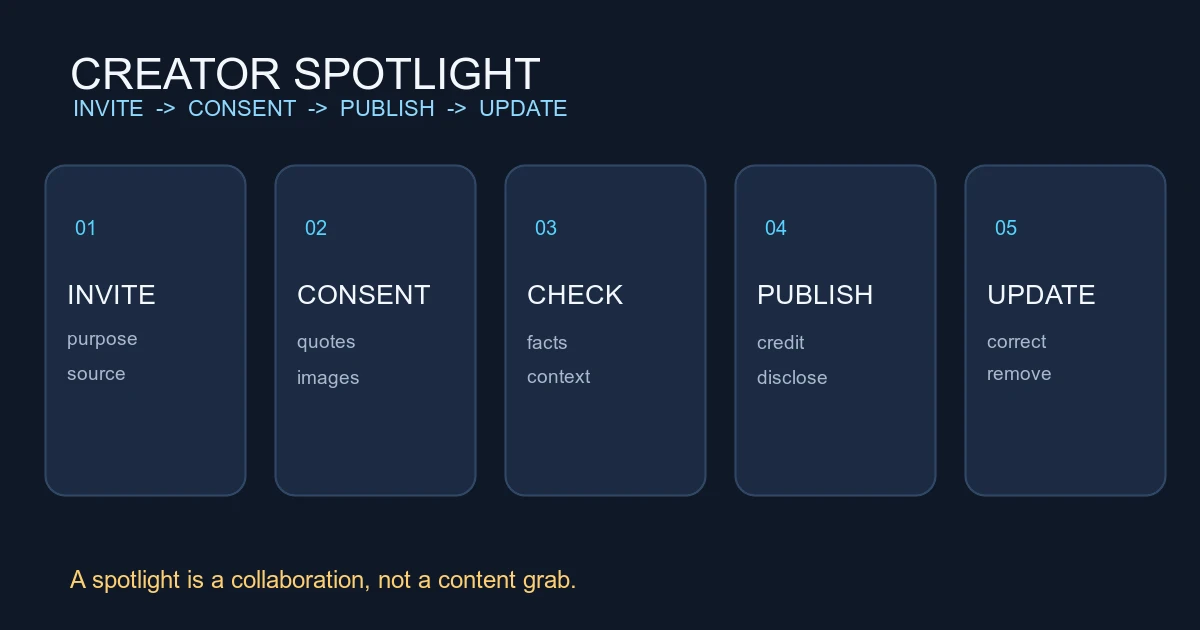
Avoid turning a permissioned feature into a scraped gallery. One well-contextualised work is stronger than twenty thumbnails with no story. The creator spotlight process provides a short editorial checklist for interviews, fact checking and updates.
Do not rewrite the artist's words to make them sound like Riot marketing. Quote briefly, link the original, and send material questions to the creator before publication. If the feature discusses a tournament, player or event, check those facts separately with primary sources.
Keep Riot's role clear
Riot's policy says shared fan projects should visibly state that Riot does not endorse or sponsor the project. Use a clear fan-project notice where the policy and context require it. Do not place Riot logos in the feature header or make the page look like a Riot press release. The VALORANT name can identify the subject of an editorial article, but it should not become a fake badge of approval.
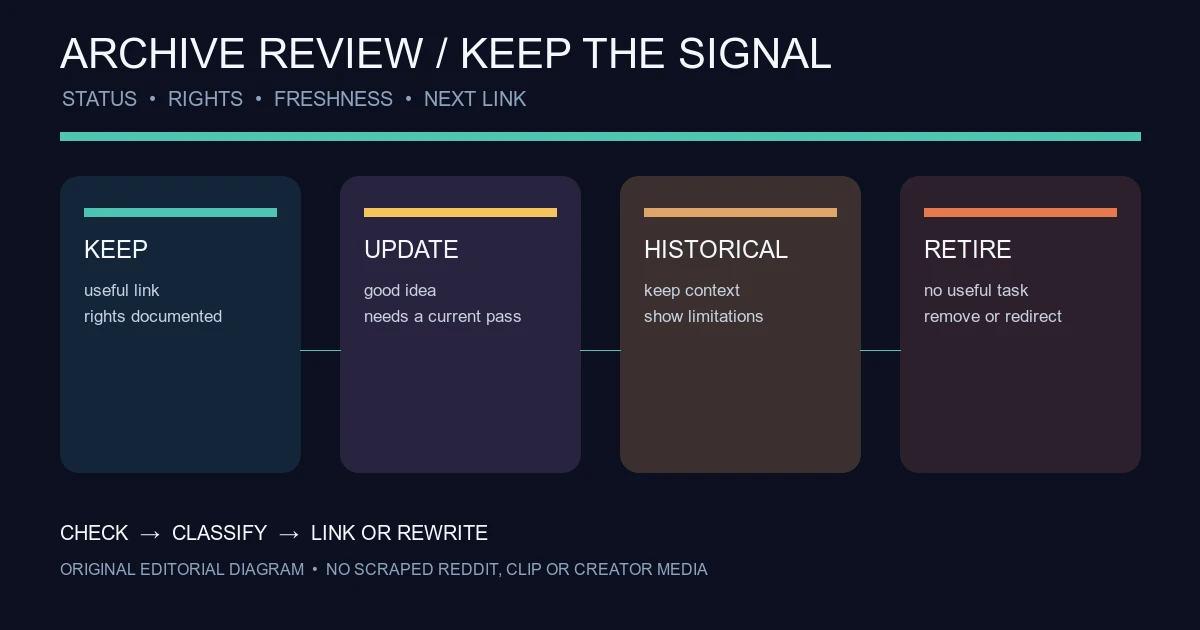
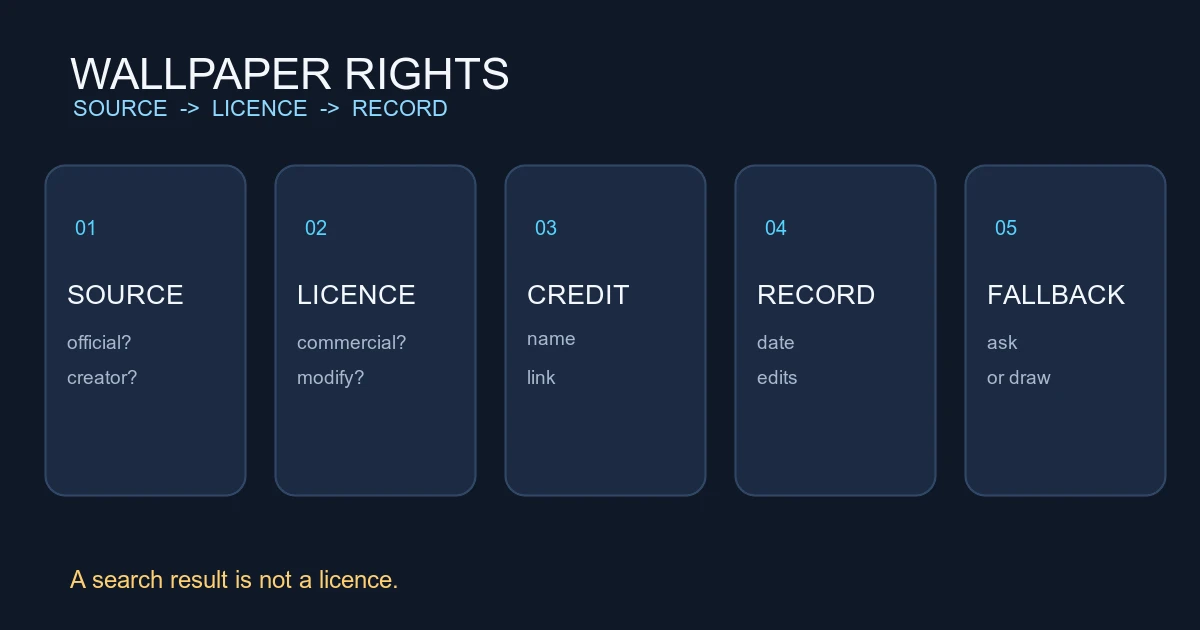
The media asset guide explains why an official asset source still needs a rights record. Fan art needs the same record plus a creator permission trail.
Honour removal requests
Permission can change. If the artist withdraws consent, pause the page and check the scope you agreed. Remove the image, social preview and cached local copy where practical. Update the article with a text explanation only if readers need to understand a correction. Do not argue that a repost made the work “public” or that credit settles the issue.
Keep a replacement plan. An original diagram or text-only card can preserve the article's usefulness without leaving a disputed image online. Record the removal date in the provenance file so a future editor does not restore the same asset accidentally.
Sources checked
- Legal Jibber Jabber, last updated 2018 and checked 2026-08-14 UTC. Used for originality, third-party permission, trademark and fan-project disclaimer guidance.
- Riot Games Terms of Service, last modified 2024-12-01 and checked 2026-08-14 UTC. Used for the broader IP and user-content boundary.
- Champions fan-art guidelines, checked 2026-08-14 UTC. Used only for the fact that a specific Riot submission program has its own rules, not as a universal reuse licence.
This is an editorial and rights checklist, not legal advice. Get a written licence or use a clearly rights-cleared/original alternative when the intended use is uncertain.