A Rights-Cleared VALORANT Wallpaper Guide
Written by Valorant Village
Source-backed coverage ●
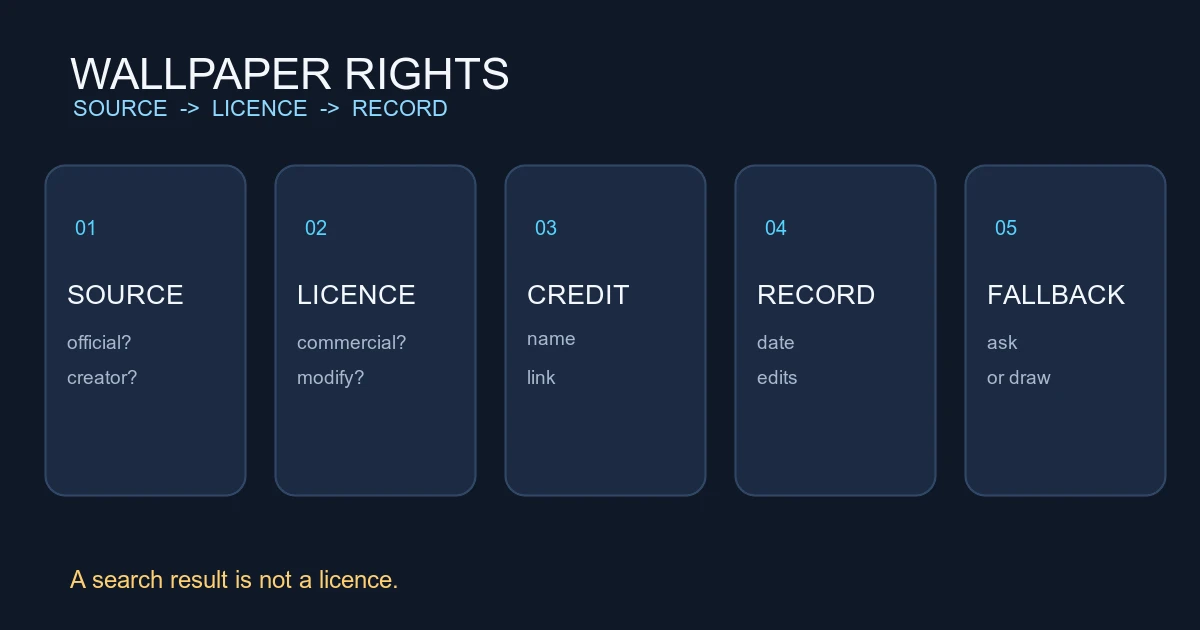
“Free wallpaper” is not a rights category. A search result can lead to an official Riot file, a creator's portfolio, a repost with no permission or an image that has been compressed so many times that nobody knows its source. Before downloading a VALORANT wallpaper for a personal screen, article hero or social card, identify who made it and what use the licence allows.
The safest source order is official asset, clearly licensed third-party work, permissioned creator work and original artwork. Fair use can matter in some jurisdictions, but it is not a blanket download button and it is not a substitute for a rights record.
Start with Riot's own sources
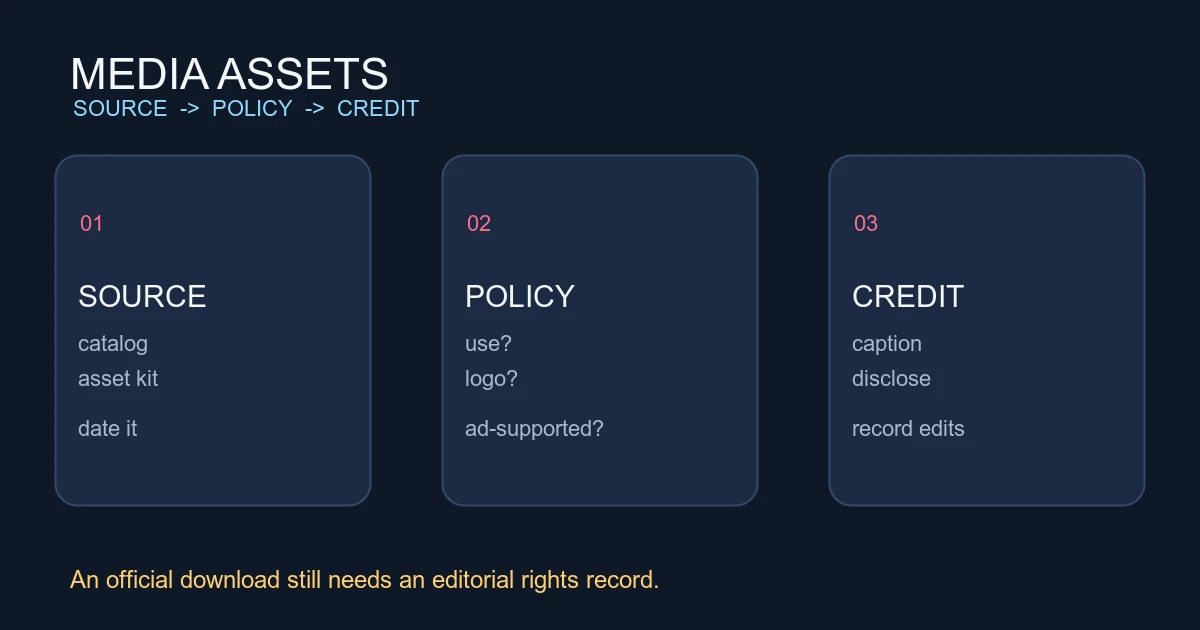
Riot's VALORANT Developer Portal describes a public content catalog containing assets such as icons, logos and text. It also warns that the catalog is manually updated after patches and may lag behind the live game. Riot's Asset Kit is an older official page with overlays, screenshots, character art and concept art.
These are better starting points than a random image board because the source is identifiable. They still need the current policy check. The Asset Kit itself points creators to Riot's Legal Jibber Jabber rules, and the catalog page does not turn every file into a universal commercial licence.
For a website, save the direct page URL, asset name and retrieval date. Note whether you are using the file as a factual illustration, a wallpaper download, an Open Graph card or an advertisement. Those are different contexts, even when the pixels are the same.
Check the creator and licence
If the image is not from Riot, find the original creator. A repost account may have no authority to license it. Look for a portfolio, original post or licence statement. A Creative Commons label is useful only when you know which version applies and whether commercial use, modification and attribution are allowed.
Record the exact licence. “Creative Commons” alone is not enough: CC BY, CC BY-NC, CC BY-SA and other variants carry different conditions. A public-domain statement can also have jurisdictional limits. If the licence is missing, ask the creator before displaying the work.
Riot's Legal Jibber Jabber policy says not to use a third party's IP without permission and not to steal another person's project. That rule applies to a creator's original composition even when the composition includes a Riot character. Credit is good practice, but credit does not repair an unauthorised copy.
Do not confuse fair use with permission
Fair use and similar doctrines are fact-specific. A critical review may have a different argument from a wallpaper download, a decorative homepage background or a social ad. The result can vary by country, platform and the exact amount of the work used.
Do not label every image “fair use” in the metadata and move on. Ask whether the page needs the image, whether the use adds analysis, whether a smaller excerpt or original diagram would work and whether the source offers a licence. When the answer is uncertain, ask the rights holder or choose another asset.
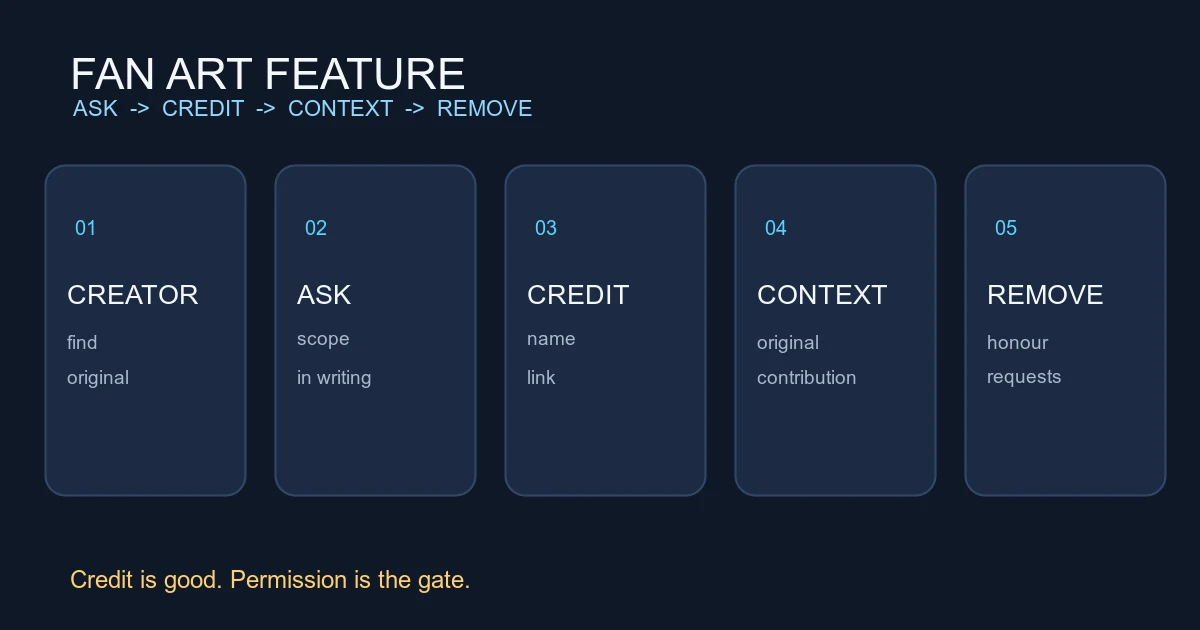
The fan-art permission guide shows how to ask for a narrow use. For a wallpaper page, also explain where the download appears, whether it can be modified and whether it will be included in a monetised article.
Resize without changing the meaning
Wallpaper files often need cropping for different monitors. Record that modification. Do not remove creator marks, logos, captions or safety text. Do not add a VALORANT Village badge that makes the work look commissioned by the artist. Keep the creator credit near the preview and preserve the original link.
For an editorial hero, write useful alt text that identifies the image as fan art, official asset or original diagram. Do not describe an imagined scene as an official screenshot. The caption should say whether the image is documentary, illustrative or promotional. Those labels matter when a reader sees the social preview without the article context.
The Riot media-asset guide covers the extra checks for official files, including catalog freshness, logos and source records. A wallpaper page should make the same distinction between an official source and an approved use.
Keep a replacement path
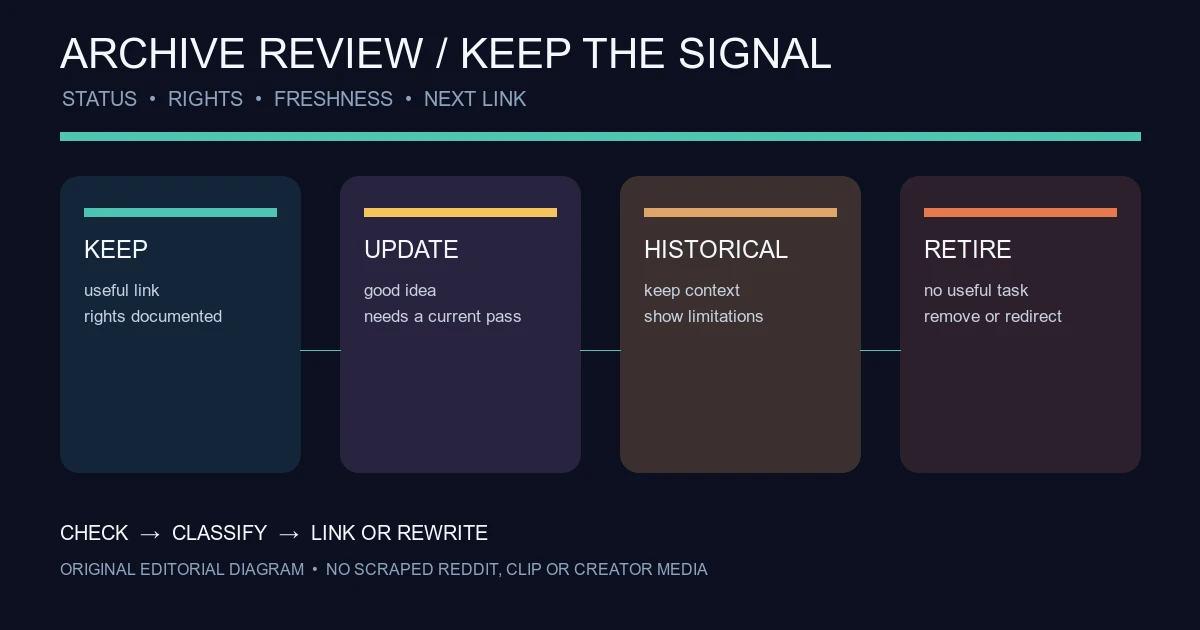
Rights records are not paperwork for one day. A creator can move their portfolio, change a licence or request removal. Store the source and permission in a structured .image.yml record, check high-risk assets during refreshes and keep an original replacement card ready.
An original diagram is often the best fallback for a guide. It can explain a map decision, an economy loop or a settings test without copying a screenshot. If generated art is used as a last resort, label it and never present it as an official skin, Agent, match or event image. For a wallpaper page, a simple original graphic is more honest than a questionable “free” download.
The rights checklist
Before publishing, answer seven questions:
- Who created or owns the image?
- Where is the original source?
- What licence or permission covers this exact use?
- Does it permit cropping, WebP conversion and Open Graph display?
- Is attribution visible beside the image?
- Does the page imply Riot or creator endorsement?
- What will replace the image if permission changes?
If a question has no answer, hold the image. A smaller content library with documented rights is easier to maintain than a gallery built from untraceable reposts.
Sources checked
- VALORANT Asset Kit, published 2020-05-07 and checked 2026-08-14 UTC. Used as an official asset-source example.
- VALORANT Developer Portal, checked 2026-08-14 UTC. Used for the public content catalog and update caveat.
- Legal Jibber Jabber, last updated 2018 and checked 2026-08-14 UTC. Used for third-party permission, originality, trademarks and fan-project boundaries.
- Riot Games Terms of Service, last modified 2024-12-01 and checked 2026-08-14 UTC. Used for the broader intellectual-property boundary.
This is an editorial workflow, not legal advice. A rights-cleared source means the permission or licence is documented for the actual use.