How to Trade a Teammate in VALORANT
Written by Valorant Village
Source-backed coverage ●
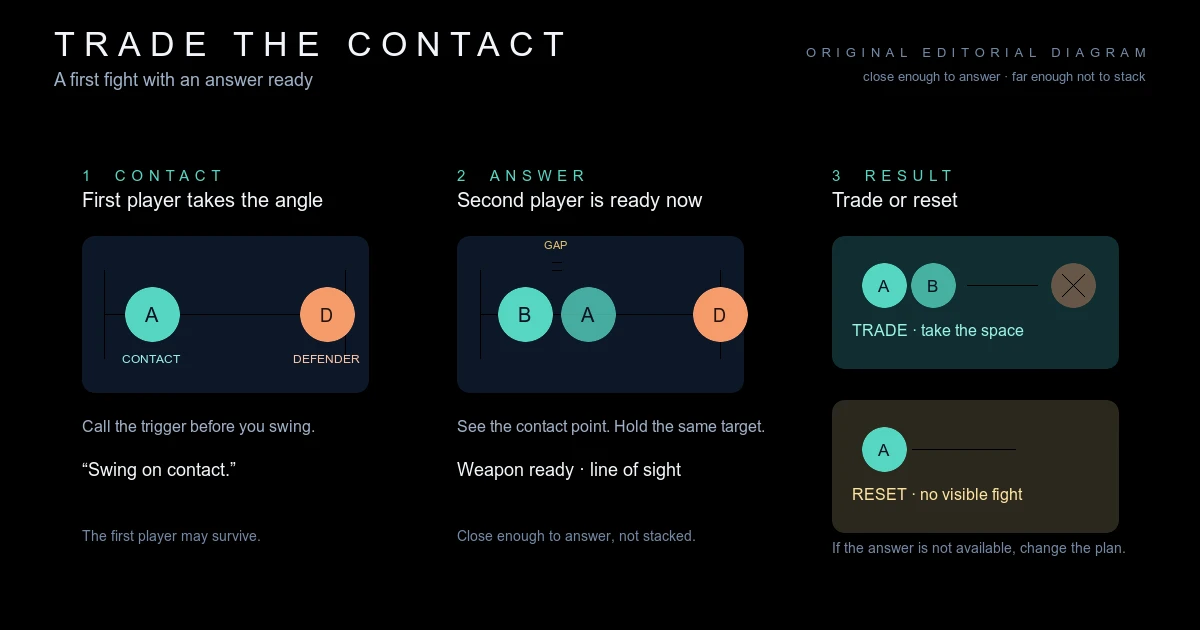
A trade is the answer to a teammate’s fight. One player takes first contact, and the second player is close enough and ready enough to fight the opponent immediately after. The first player might die. That is not the point. The point is making the enemy pay for the kill instead of getting a free duel and a clean escape.
Trading is not two teammates walking through the same doorway at the same time. It is a two-player plan with a trigger, a gap and a shared target.
Start with the official frame
Riot’s Welcome to VALORANT, published April 17, 2024, describes a five-versus-five tactical shooter with one life per round, abilities, strategy and a Spike that must be planted or defused. Riot also calls teamwork essential. Its Beginner’s Guide, published August 3, 2024, explains the attacker and defender jobs, recommends voice chat or pings for information, and reminds players to stop before shooting for better accuracy.
Those pages give us the game’s rules and vocabulary. The contact/trader labels, the spacing test, the callouts and the drill below are Valorant Village editorial interpretation. “Trade” and “bait” are player terms here, not named Riot mechanics.
The timing and spacing of a real trade
Before the fight, decide who is first and who is second. The first player is the contact. They clear or swing the angle and accept that the defender may see them first. The second player keeps a weapon ready, holds the likely head level and watches the place where the contact will happen.
The delay matters. If both players enter on the same frame, one spray, flash or other piece of utility may catch both. If the second player is several seconds behind, the first death is just a free kill. The defender can reset their crosshair, reload, reposition or receive help.
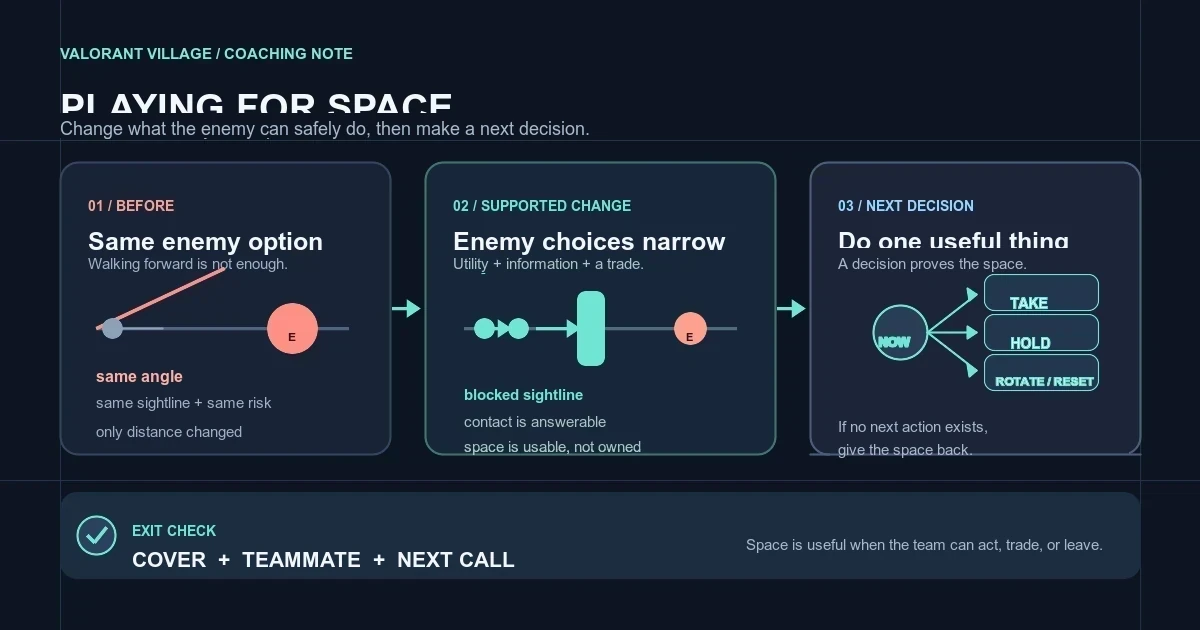
There is no universal “two steps behind” rule. Use a practical test instead: if the contact dies, can the second player see the killer and put a shot on that angle immediately, without first crossing the same doorway or turning a corner? If yes, the pair is probably close enough. If the players overlap so tightly that one burst catches both, or the second player cannot see past the first player’s body, the gap is wrong.
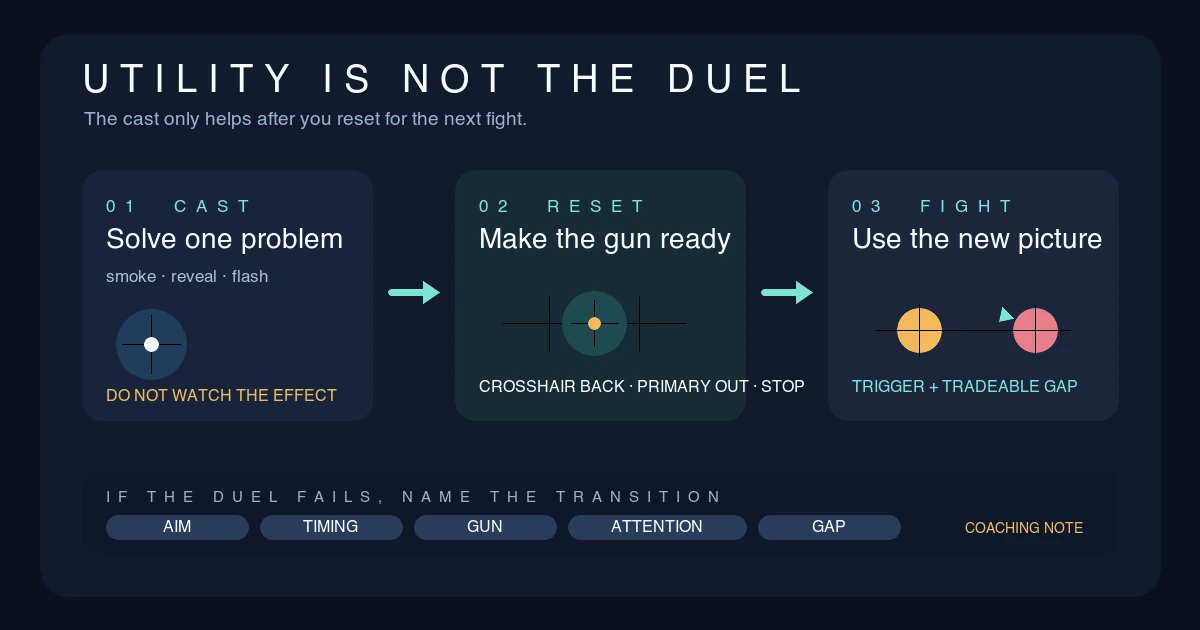
The second player should be ready before the swing starts. That means the right weapon is equipped, the magazine is usable, the crosshair is not on the minimap, and any planned utility has been called. Riot’s tac cycle, published June 27, 2020, is Intel → Plan → Execute → Repeat. A trade lives in the Plan and Execute steps: choose the trigger, then act on it together.
Trading is not baiting
Baiting happens when the first player is used as a decoy but the second player is not actually ready to contest the fight. The teammate waits too far back, watches the kill from safety, or swings only after the opponent has finished the first fight and is already looking for the next target. That may produce a late cleanup, but it did not answer the contact.
A trade has a commitment before the fight. “I’m second, swing on contact” is a trade call. “Go in, I’ll see what happens” is not a plan. The first player also has a responsibility: if they call a fallback or become isolated by utility, the second player should not autopilot into the same trap. A clean reset is better than donating two kills.
Attack example: take the space, not the highlight
Imagine two attackers approaching a narrow site entrance. The first player says, “I’m contact. Swing on my shot.” The second player stands far enough back to avoid being hit by the same spray, but close enough to see the first angle and reach it quickly. Both players aim at the same likely defender position.
The first player swings and is killed. The second player takes the fight now, not after checking the scoreboard or waiting for another teammate. If the defender falls, the pair has converted one death into a trade and can use the space to help the Spike reach site. If the first player survives and forces the defender back, both players stop. The next decision may be to clear, plant or hold. The old “trade me” call does not require a reckless re-peek.
Utility can make this easier, but it does not replace the timing. Say “flash, then swing” or “stun on contact” so the second player knows what starts the move. A smoke that lands after the first player dies may still help the round, but it was not the trigger for that trade.
Defence example: trade the chase
On defence, the first player does not always need to stand and die. A defender can take an early peek, deal damage or gather information, then fall back toward a teammate. The second player holds the angle the attacker is likely to clear next. If the attacker chases, the second defender fights with an immediate answer. That is a defensive trade without throwing away the site anchor.
If the attackers arrive with blinding or stopping utility, do not swing because the word “trade” was said ten seconds ago. Call “no contact, playing retake,” preserve the player, and regroup. A trade is useful only while the fight is visible and the answer is still available.
A short practice drill
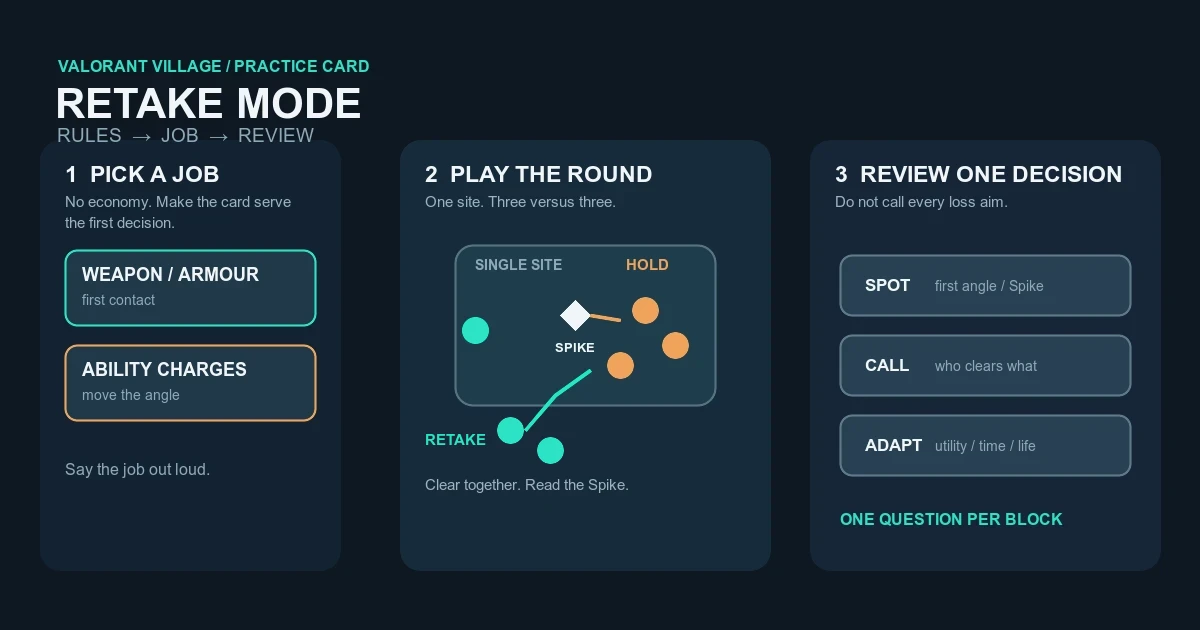
In a custom game, pick one doorway and one defender. Repeat the same entry five times. The first attacker calls the trigger, the second adjusts their gap, and the defender shoots the first attacker on contact. The second attacker must decide whether the angle was actually tradeable. Swap roles after five repetitions.
After each attempt, name one failure: spacing, timing, readiness or communication. Change one variable at a time. The pass condition is not that the first player survives. It is that the second player can reach the fight before the defender safely resets. Once that works, add a flash or smoke and repeat the drill without changing the call.
Before your next ranked swing, ask one blunt question: if my teammate is shot here, can I see the shooter now? If the answer is no, move closer, change the angle or make a different plan.
That question works best when the team can hear the answer. Pair this guide with useful VALORANT comms, then compare the same fight in a man-advantage round.