Viper Guide: Wall Timing, Fuel Discipline and Site Control
Written by Valorant Village
Source-backed coverage ●
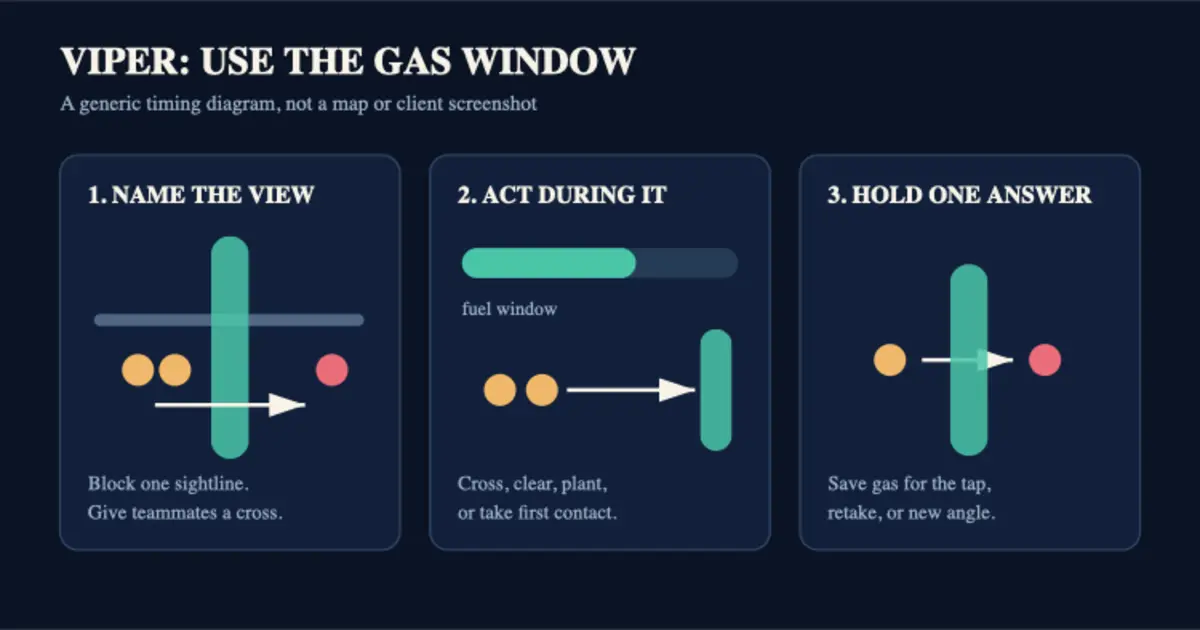
Activate Viper’s gas when a teammate can use the cover. Drop it once the job is done and everyone is safe. Keeping a screen active while the team waits spends fuel without gaining space.
Riot’s live Viper agent page describes Poison Cloud as a reusable gas emitter that consumes fuel. You can pick it up to redeploy before the round starts; plan its position before committing. Riot’s Patch Notes 13.04, dated August 18, 2026 UTC, record a Snake Bite animation fix. Both sources were checked again on September 7 UTC. The decisions and hypothetical rounds below are our coaching interpretation, not tested lineups or measured ability timings.
Give the wall one job
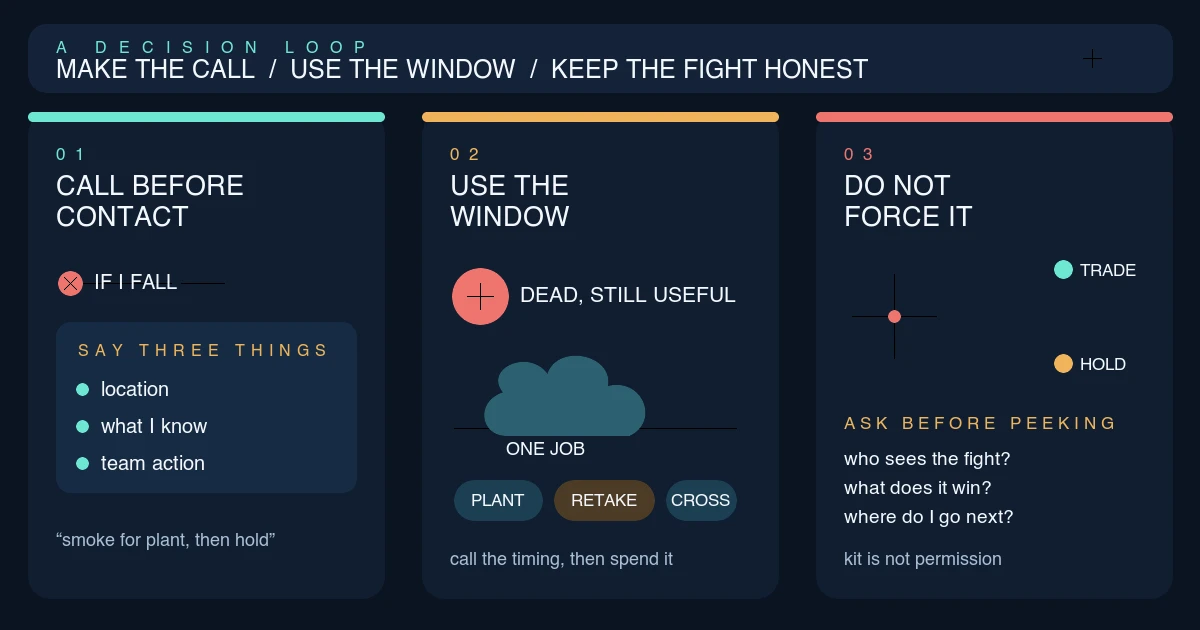
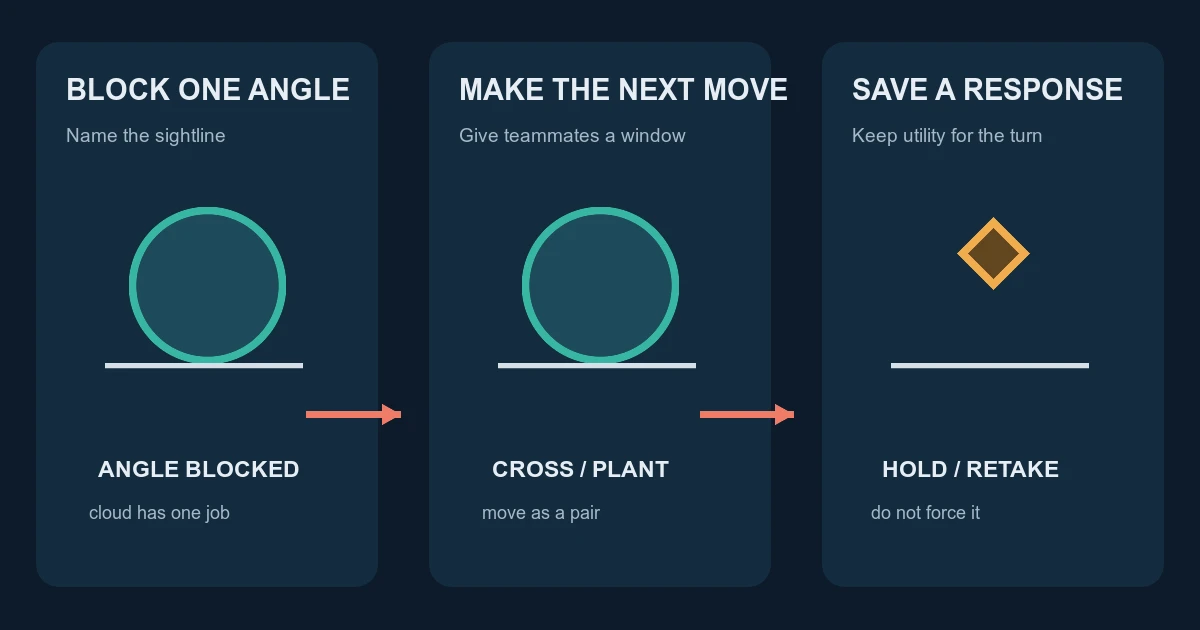
Before the round starts, name the first job for your gas: get the team across a dangerous view, split two defenders who want to trade, protect a plant, or make a retake approach uncomfortable. “Wall site” is too vague. “Wall the long view so we can take the close fight” gives the team something to do before the fuel runs.
On attack, the best activation is often the one that begins with a teammate moving. If nobody is ready to cross, clear, plant, or hold the space, turning the wall on merely gives defenders time to wait it out. That does not mean you must save it forever. It means a gas window needs an action attached to it.
On defense, wait for the cue that makes the lane matter. A confirmed group, a teammate who needs to escape, or a plant attempt can make a wall much harder to ignore. An early screen may slow a rush, but it can also hide the information your team needs to rotate. There is no universal answer. Say what the activation is buying, then judge it by that result.
For a wider look at what a team can do with the ground gained, read our guide to playing for space. Viper creates a temporary question for the enemy; teammates still have to use the answer.
An attack round: the entry gets stopped
Imagine a five-player attack with a wall placed to cut a long defensive sightline. Your entry player is ready to cross and your second player can trade. Call “wall up, cross now” as they move. If a stun stops the entry before the crossing, the original reason for spending fuel has disappeared. Ask whether anyone still needs the screen before dropping it. A teammate caught halfway across needs cover even though the planned hit failed.
Once everyone is safe, regroup and make a new call. Do not leave the wall running while the team argues about rotating. The next activation needs another agreed action, such as crossing together behind fresh utility. This example teaches an activation cue and a cancellation cue; it does not prescribe a wall for a particular map.
Treat fuel as a second decision
Reusable gas is tempting because it feels safer when it is active. But keeping it on without a next action turns flexibility into a countdown. When you activate, ask what has to happen before you need the option again.
One clean way to think about it is in two windows. The first window handles the immediate task: a cross, first contact, plant, or escape. The second is for the problem that appears after that task: a defender’s retake route, a new sightline after a pick, or the defuse area. You will not get both windows every round. The point is to avoid spending both without knowing why.
Poison Cloud helps because the placement can be part of the round plan. Put it where the team understands its purpose, then call the cue for activation. “Orb on contact,” “orb for plant,” or “orb when they tap” is much more useful than toggling it silently. If the plan changes, say that too. A stable, ordinary orb that teammates can play around beats a clever redeploy nobody expects.
On defense, suppose a teammate is holding the lane your orb would obscure. Enemy noise alone is a poor reason to take away their view. Agree on a trigger before contact: they take a shot, call for the orb, and retreat while it is active. If they instead fall back safely without contact, keep the gas available. Ask what the smoke will hide from your teammate as well as from the opponent.
This is also where concise calls matter. Our VALORANT comms guide has a practical format: location, what you know, and the next action. For Viper, add the gas window: “Two main, wall on, cross now.”
Make the post-plant threat believable
Viper is strongest in a post-plant when defenders have to respect more than one answer. A cloud can block the view into the spike. A wall can change which route is playable. Snake Bite can make a committed defuse awkward. None of those tools wins the round on its own.
Do not throw damage utility because the spike is down and the round feels late. Wait for the action that makes it matter. If a defender is not tapping, keep the threat. If teammates cannot cover the spike or trade the swing, a delayed molly is not a complete plan. Call who watches the approach, who plays the tap, and where you fall back if the first defender pushes through.
The same restraint matters when your team has numbers. In a man-advantage round, you do not need to manufacture a solo duel through your own gas. Preserve the angle, let the opponent take the risk, and use the fuel window only when it protects a real action.
Review one activation, not the whole match
Try the attack example in a custom game with a teammate. Choose a crossing, agree who makes the call, and repeat it once with an uninterrupted entry and once with the entry deliberately stopping. Check whether the player crossing can tell when the screen will drop. This is a drill for communication; it does not establish a universal fuel duration or guarantee that the placement is safe in a match.
After a session, pick two activations from your recording and note the cue, the teammate action, and the reason you switched off. If nobody used the screen, change the cue next time. If someone was stranded when it dropped, fix the call before changing the setup. Keep the same placement while testing that one change so you can tell what helped.
Avoid judging the round only by whether somebody died inside the cloud. Viper’s gas often gets value by forcing a slower route, splitting a pair of defenders, or letting a teammate plant without a long sightline. Those results are less flashy, but they are why the timing matters.