Breach Guide: Stun Timing and Making Space for a Teammate
Written by Valorant Village
Source-backed coverage ●
Breach utility is easy to mistake for the play itself. You fire Fault Line, see the effect, and feel as if the round has moved forward. Then nobody swings. The defender recovers, your teammate is still behind cover, and the next fight starts with one less piece of utility.
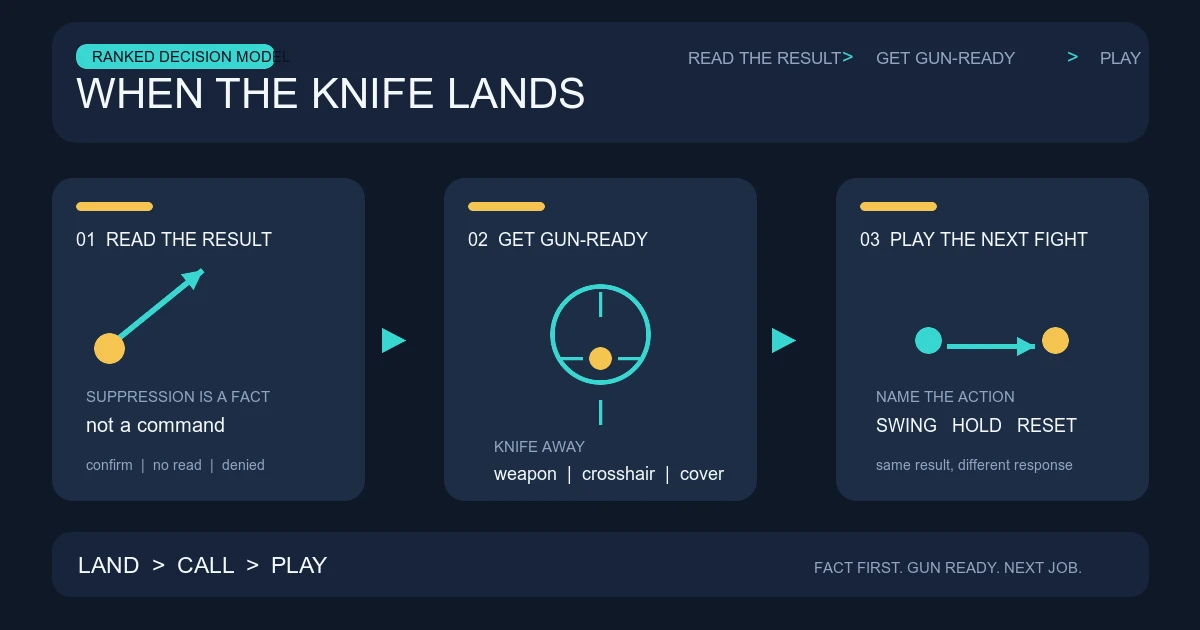
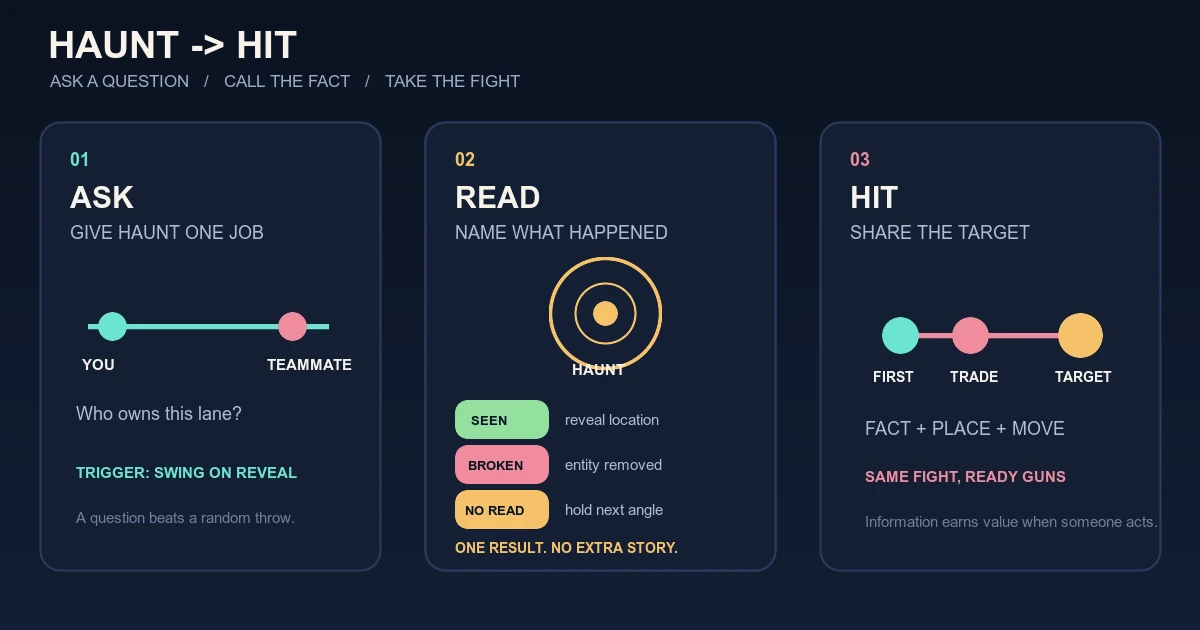
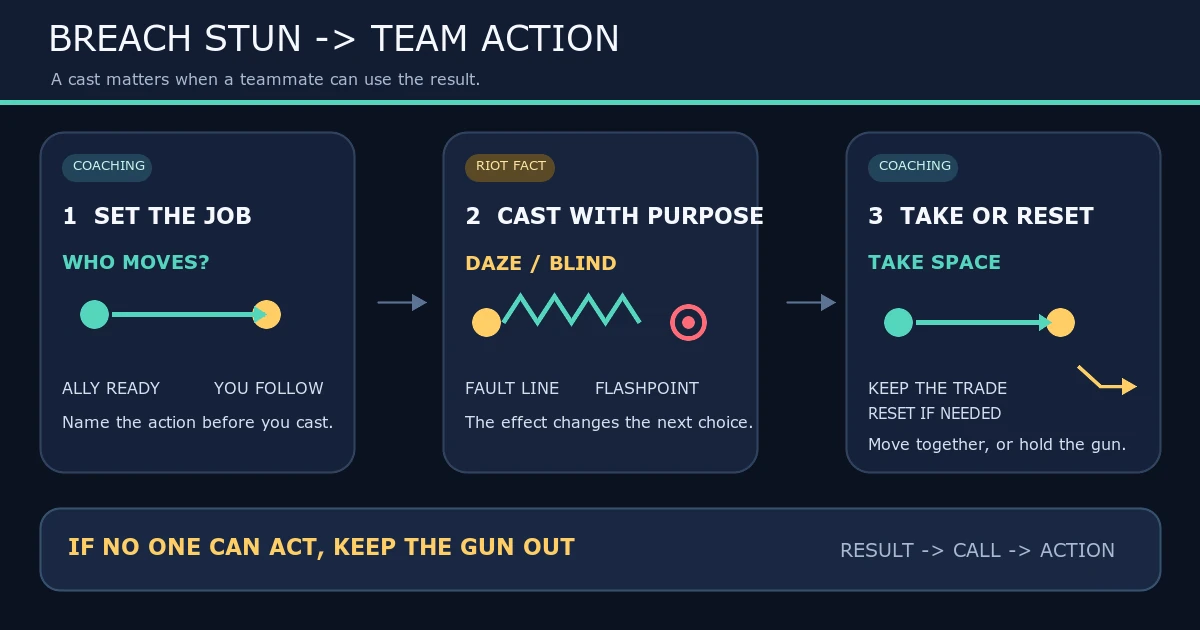
The better question is simple: who acts when the stun lands? If the answer is nobody, wait. Breach is at his best when the ability and the teammate arrive at the same decision.
Riot-documented facts
Riot lists Breach as an Initiator. His live agent page describes Flashpoint as a blinding charge that sends a fast-acting burst through a wall and blinds players looking at the detonation. Fault Line is a seismic blast: holding fire increases its distance, and releasing it sends a quake that dazes players in its zone and the line up to that zone. Players often call daze a stun. This guide uses both terms so the coaching advice is clear.
Riot also describes Aftershock as a fusion charge that sends a slow-acting burst through a wall and deals heavy damage to players caught in its area. Rolling Thunder sends a cascading quake through all terrain in a large cone; players caught in it are dazed and knocked up. Those are the current mechanics documented on Riot's page. The latest patch note I checked, VALORANT Patch Notes 13.02 from July 29, 2026, lists no Breach balance or mechanic change. The practical rules below are Valorant Village coaching interpretation.
Valorant Village coaching interpretation: time the action, not the animation
There is no useful universal number for “perfect Breach timing.” The cue is the teammate's readiness. Before you cast, check three things:
- Who is taking the first look or crossing?
- What result matters: a dazed hold, a blind, a forced move, or damage in a known position?
- Where does the team stop if no one can act?
That last question prevents a lot of wasted rounds. A teammate can be ready at the wrong angle, or ready to swing but unable to see the target you are affecting. Say the action before the cast: “Fault Line, swing on hit,” “flash through, take the lane,” or “Aftershock close, then hold.” The call is not a promise that the fight is won. It tells everyone what to do if the result is useful.
Fault Line is strongest when it changes the next piece of movement. If it dazes the player holding an entry, your teammate can take the first contact while you follow close enough to help. If the enemy is not there, the same cast may reveal that the team needs to clear a different angle or stop pushing. Do not run forward just because the bar was charged. Let the result decide whether the team crosses, holds, or resets.
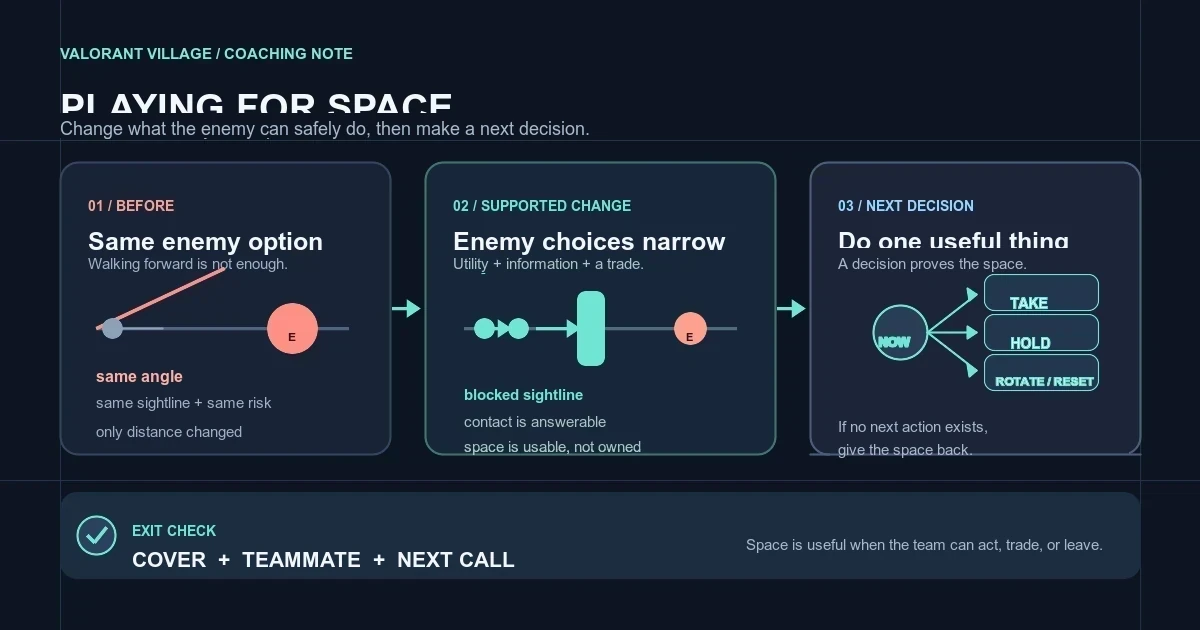
This is the practical version of playing for space in VALORANT: space is useful when the enemy has fewer safe choices and your team can use the new position. Breach's stun is a way to change those choices. It is not ownership of the area.
Make the window tradeable
Flashpoint has the same requirement. The flash can pass through a wall, but your teammate still has to be ready to take the fight it creates. If the flash lands while everyone is reloading, rotating, or staring at a different lane, the effect may produce no usable space. Call the direction of the action in plain language, then move with the player who is taking first contact.
The follow-up does not need to be reckless. Your teammate can take the first look while you hold the likely return angle. If they see nothing, keep the weapon out and clear with them. If they are pressured, you should already be close enough to fight the same opponent, not jogging in after the kill feed appears. The guide to trading a teammate in VALORANT covers that spacing problem in more detail.
Rolling Thunder needs an even clearer plan because its cone affects a large piece of ground. Decide the route before you fire: entry, retake, or a forced retreat. Tell the team what happens after the quake. “Thunder through, take site” is a usable plan. “I ulted” is information, not a next action. If the team cannot move into the affected space, keep your gun ready and take the safer fight that follows instead of chasing the animation.
Give Aftershock one job
Aftershock is not a general-purpose button for making a corner feel uncomfortable. Riot documents its slow-acting burst and heavy damage, so use it when you have a reason to affect a known or likely position: clear a tucked hold before a teammate commits, deny a defuse attempt, or force a player away from the place your entry needs. Those are coaching examples, not guaranteed outcomes.
The common mistake is watching the burst instead of watching the fight. Once Aftershock is placed, return your crosshair to the angle that can punish a move. If your teammate is not ready to take the space, the damage area can do its job without you walking into danger. This is also why you lose gunfights after using utility: the ability gets attention, and the weapon disappears from the plan.
Review the next three casts
After a few rounds, review each important Breach cast with three questions:
- Was a teammate ready to act, or did I cast into a pause?
- Did the result change an enemy option we could actually use?
- Did I follow for the trade, or did I leave the player alone?
If the answer to the first question is usually no, fix the call before searching for another lineup. If the answer to the second is no, choose a narrower job for the ability. If the answer to the third is no, shorten the distance you leave between the cast and the next fight. That is how a stun becomes space instead of noise.
Sources checked
- Breach, Riot Games live agent page, accessed 2026-08-14 UTC / 2026-08-15 NZST. Used for Breach's Initiator role and the current descriptions of Flashpoint, Fault Line, Aftershock, and Rolling Thunder.
- VALORANT Patch Notes 13.02, Riot Games, published 2026-07-29, accessed 2026-08-14 UTC / 2026-08-15 NZST. Reviewed for dated Breach changes; the note contains no Breach balance or mechanic entry.