KAY/O Guide: Suppress Timing and Playing After the Knife Lands
Written by Valorant Village
Source-backed coverage ●
KAY/O’s knife is easy to treat like a starting pistol. You throw Zero/Point, wait for the result, then walk into a fight because the animation finished. That is the wrong handoff. The knife gives you a result to play around. It does not take the gunfight for you.
After it lands, your next job should be clear: swing with the player who is ready, hold the lane the knife just changed, or reset when the result is not useful. The mechanics below come from Riot. The decisions are Valorant Village coaching interpretation.
What Riot documents
Riot-documented fact: Riot’s live KAY/O agent page lists him as an Initiator. It says Zero/Point equips a suppression blade. When thrown, the blade sticks to the first surface it hits, winds up, Suppresses anyone in the explosion radius, and can be destroyed by enemies.
Riot’s Patch Notes 13.02 from July 29, 2026 list two KAY/O fixes for NULL/cmd: missing visual and death-audio effects when the downed timer expired, plus an incorrect death animation after revival. The notes do not list a Zero/Point balance change. That is a freshness check, not a new timing rule.
Decide what the knife is for
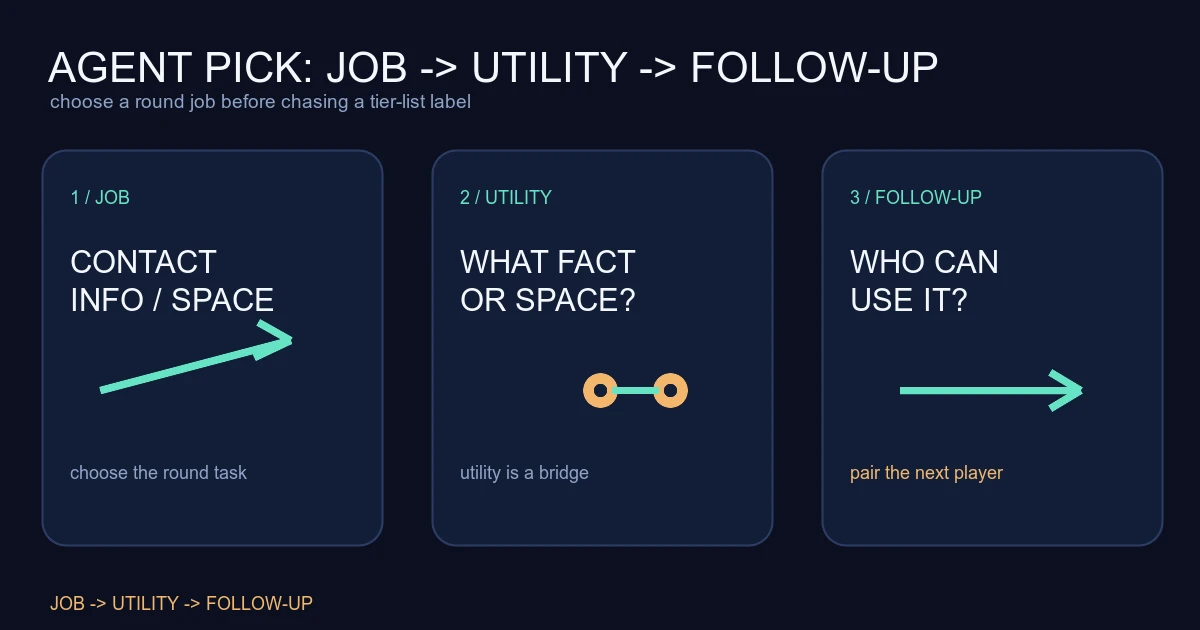
Coaching interpretation: before you throw, name the next fight. Is a teammate about to take contact? Are you holding a lane while another player crosses? Are you testing whether a defender can contest a piece of space? The answer determines where you stand after the blade leaves your hand.
Choose a fallback if the blade is destroyed, catches no confirmed player, or creates no playable opening: hold, back up, or wait. “Knife out” is not a plan. “Knife the entry, swing with contact” is one.
If contact can happen before the knife is away, use the weapon first. A perfect suppression setup is worthless when your teammate is fighting alone and you are still holding utility.
Treat the landing as a checkpoint
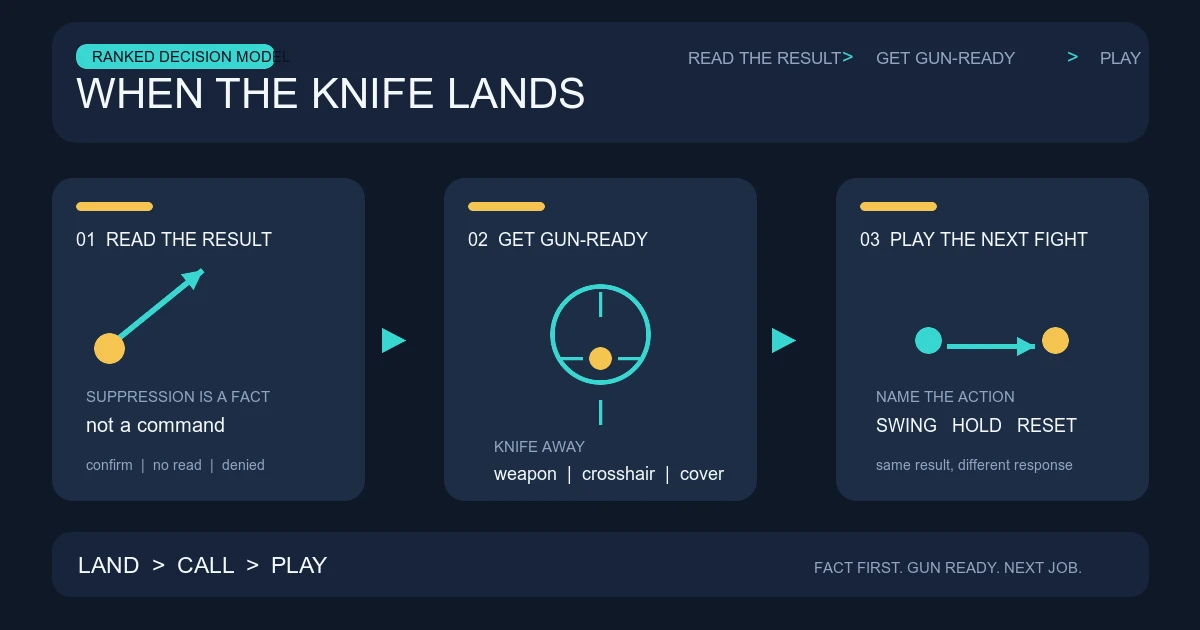
Coaching interpretation: split the post-landing moment into three states.
- Useful result confirmed. You or a teammate has a reliable indication that the knife affected the intended area. Call the fact and attach an action: “Knife on entry, swing with me,” or “Knife hit, hold the cross.” Suppression changes what the affected enemy can do with abilities; it does not remove their gun, angle, or teammate.
- No useful result confirmed. You cannot claim the lane is clear or the next duel is safe. Get your weapon ready and play the angle you can see. Do not push just to prove the knife did something.
- Blade denied. If the blade was destroyed or the throw was stopped, treat it as a failed setup. Hold, reposition, or rebuild the play. Do not invent a suppressed count from a throw that never reached its job.
Use an event, not a made-up number of milliseconds: the blade lands, the team confirms a result and someone acts, or the setup fails.
Put the gun back into the play
Coaching interpretation: once the knife is committed, leave it behind. Equip your weapon, return your crosshair to the first likely angle, and make sure your movement can stop before you shoot. Watching the floor for a better read is how KAY/O arrives late to the fight. The guide to losing gunfights after using utility covers this same attention and weapon-readiness reset.
On attack, the player taking first contact should know whether you are behind them or holding a second lane. A useful call is “knife lands, swing on my contact.” The second player needs a real line on the fight, not a vague promise to trade later. If the knife affects the entry and the first player moves, take the same fight while the defender is dealing with that contact. If the result is unclear, do not turn uncertainty into a dry peek.
On defense, the knife can support a hold without forcing you to chase. Throw it where the enemy must pass or contest, then keep the gun on the next angle. If no one appears, preserve your position and listen for the next fact. If the knife produces a useful result, use it to decide whether to swing with a teammate, deny the space, or fall back. The trade guide is useful here because the spacing test stays the same: can you see the opponent and fight immediately after your teammate’s contact?
Make the call match the result
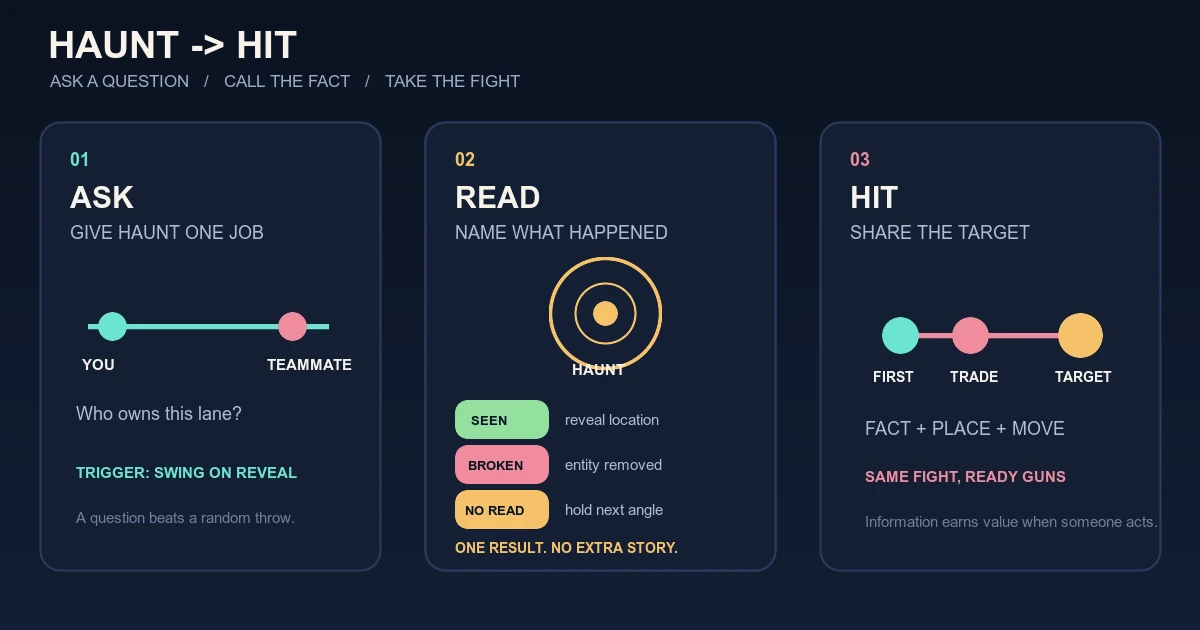
Coaching interpretation: use fact, location, action. “Knife hit, one on the entry, swing now” tells the team what you know and what you are doing. “They cannot use anything, go” skips the location and sounds more certain than the evidence. If you only know that the blade landed, say that: “Knife down, no read, hold.” The useful comms guide has the wider fact-to-action framework.
Review your next three KAY/O rounds with four questions: Did the knife have a named job? Was my weapon ready before the fight began? Did a teammate have a clear action after the result? Did I move for a real piece of space, or because the blade icon was sitting on the floor?
The best Zero/Point round is not the one with the flashiest suppression. It is the one where the landing changes a decision and KAY/O is already holding the gun when that decision arrives.
Sources checked
- Riot Games, KAY/O agent page, accessed in a Playwright browser on 2026-08-14T14:02:19Z. Used for KAY/O’s Initiator role and the current Zero/Point description.
- Riot Games, VALORANT Patch Notes 13.02, published 2026-07-29, accessed in a Playwright browser on 2026-08-14T14:04:51Z. Used only for the dated KAY/O NULL/cmd bug-fix freshness check.