How to Climb When Your VALORANT Aim Is Inconsistent
Written by Valorant Village
Source-backed coverage ●
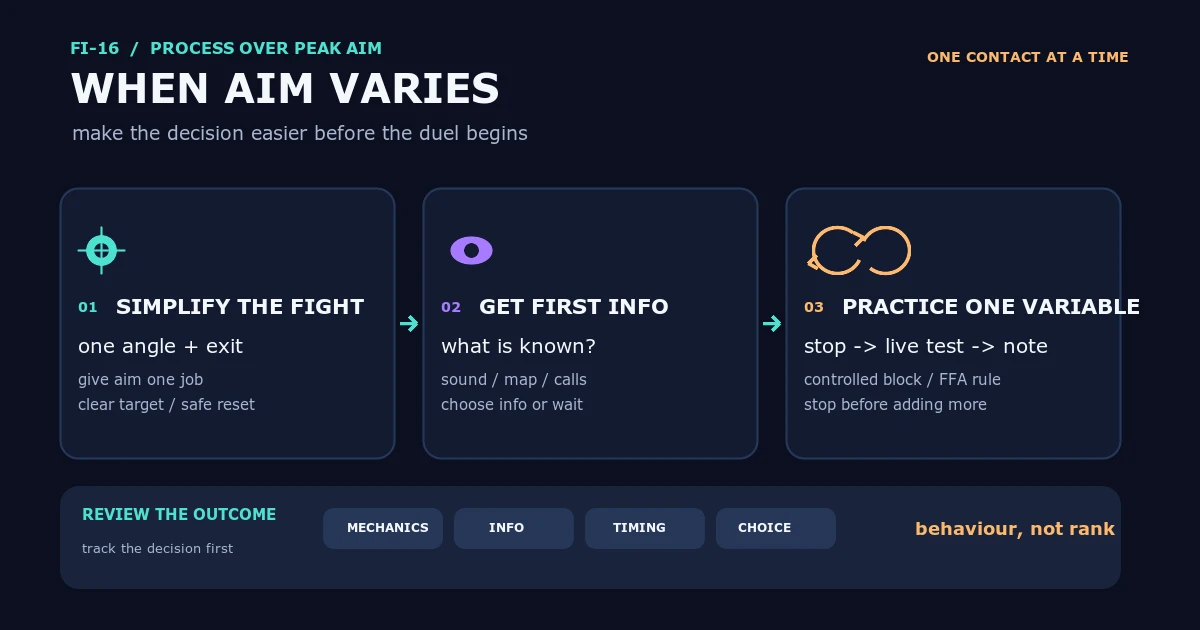
Inconsistent aim does not make every round random. One round your crosshair is ready; the next it arrives late, the first bullet misses, or your hand speeds up. If you want to climb, the target is not a perfect headshot percentage. It is making the next fight easier to read and execute when mechanics dip.
Start with the official frame
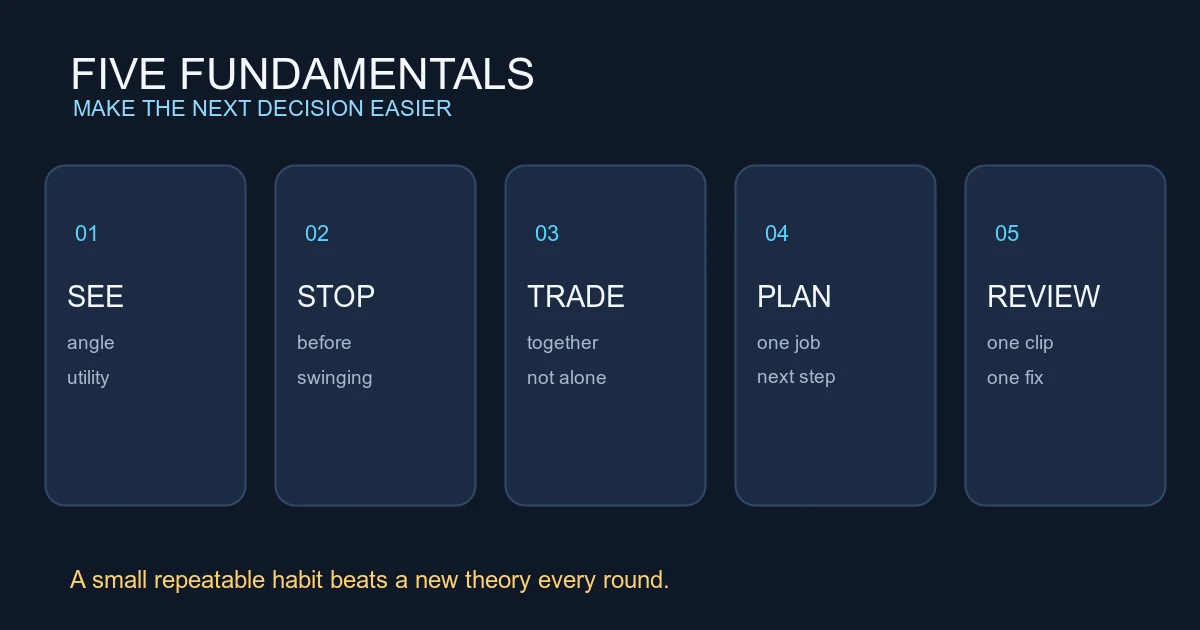
Riot's Beginner's Guide tells players to learn where enemies can come from, watch angles and corners, ask whether an ability supports the next goal, communicate information, and stop moving before shooting to be more accurate. Riot's gameplay primer describes VALORANT as a five-versus-five tactical shooter with one life per round, abilities, a Spike objective, strategy, and teamwork.
Those are official fundamentals. The coaching below is Valorant Village advice. Riot's tac cycle article calls the loop Intel, Plan, Execute, Repeat. It recognises that good information and a good plan can still fail mechanically. A miss is evidence about execution, not automatic proof that the decision was bad.
1. Simplify the fight before aim has to work
When your aim varies, remove choices from the duel. Give yourself one clear angle, one likely target, and an exit. A useful pre-contact plan sounds like: “I will hold this lane, stop, fire a short burst, then fall back.” It is easier to repeat than “I will swing, clear three angles, track the target, spray, and re-peek if I miss.”
This is editorial coaching, not a Riot rule. Carry the crosshair toward the likely head position, expose only what the plan requires, and do not turn a missed bullet into a second fight. Keep cover to reset. If entering, use a teammate or purposeful utility so the opponent has another problem to solve. Riot's beginner guidance supplies the building blocks: watch corners, use an ability toward the next goal, and stop before shooting. For the starting position itself, use the crosshair placement guide.
There is a quiet decision hidden in “take the fight.” If the angle is open to two enemies, no teammate can trade, and the other side is unknown, waiting keeps a variable aim day from becoming a two-target test.
2. Improve the information before first contact
Aim feels worse when it is asked to solve an information problem. Before you expose yourself, ask four short questions:
- What do I know about the enemy's location or timing?
- Which angle can see me first?
- Who can trade me, and how far behind am I?
- If I see nobody, where do I go next?
Use sound, the minimap, calls, pings, and utility to answer them. Riot's Beginner's Guide treats communication as part of play and points to voice, pings, and Agent voice lines for sharing information. The goal is not certainty. It is avoiding a high-commitment duel while guessing at everything that matters.
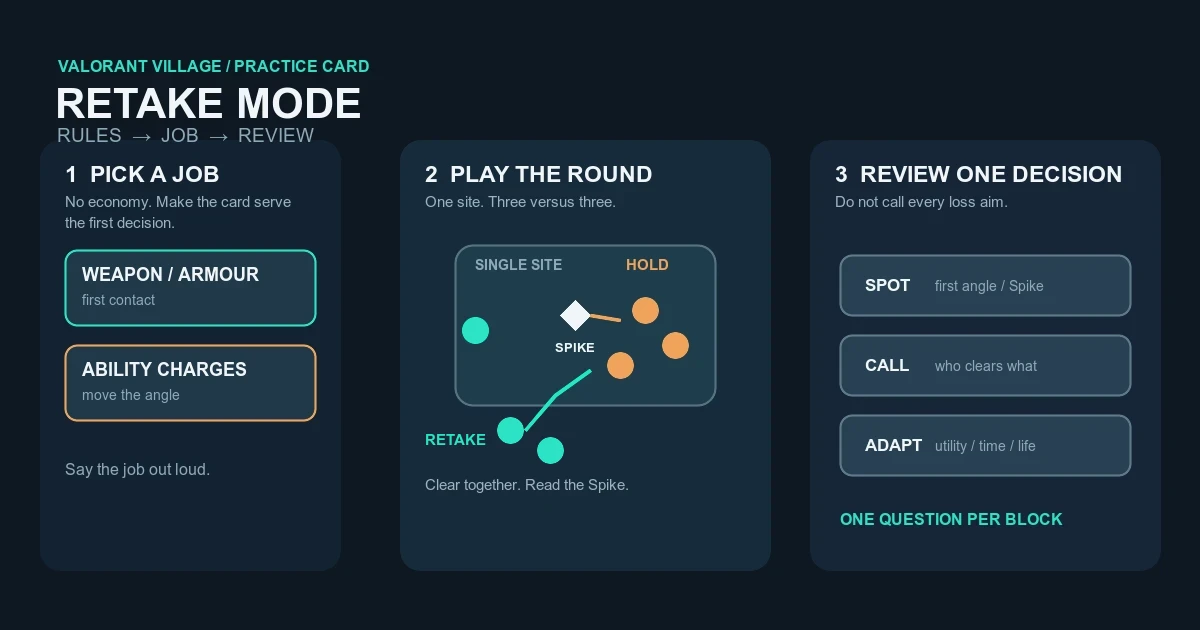
With weak information, choose a low-commitment peek, hold for a sound cue, or move with a teammate. With strong information, isolate the known angle, pre-aim the likely position, and leave after the first exchange unless the plan says to continue. If deaths start with too much exposure, the peeking guide is more relevant than another sensitivity change.
3. Use a small practice loop
This editorial loop is small enough to answer one question.
- Controlled block: In The Range, use one rifle for a few minutes. Strafe, stop, fire one bullet, and reset. Ask whether you stopped before shooting and whether the crosshair reached the intended height. Add a burst only after the single-shot action is clear.
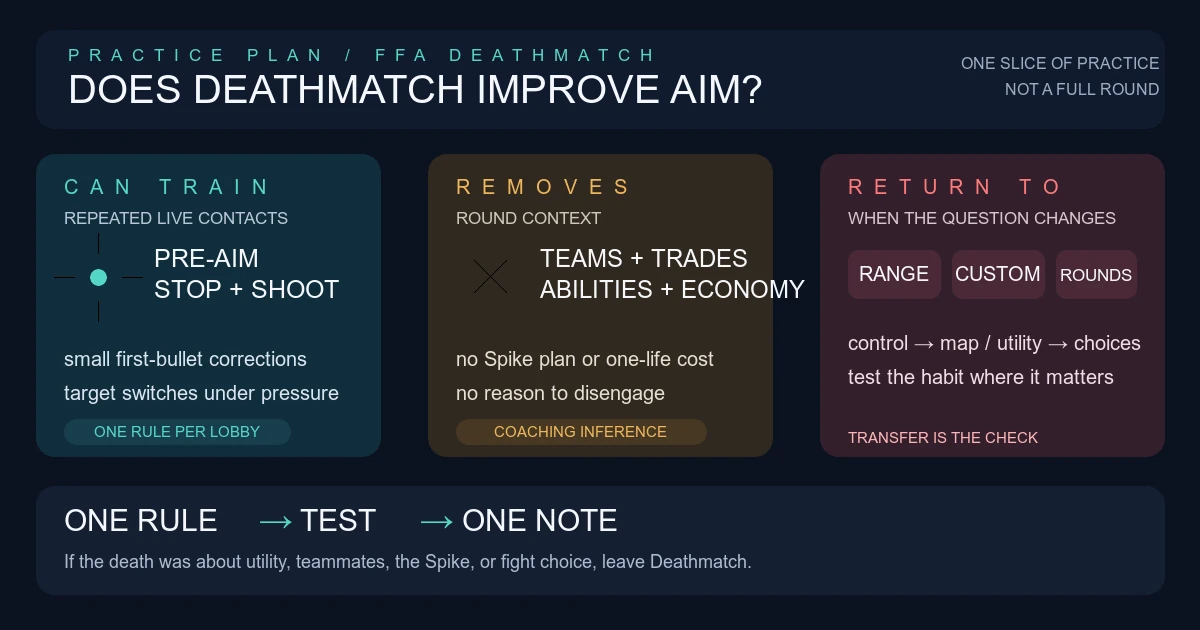
- Live test: Play FFA Deathmatch with one rule, such as “no panic spray after the first miss” or “reset behind cover after contact.” Riot's FFA Deathmatch guide describes a no-team mode with no abilities, infinite money, weapon swapping, up to 14 players, and a first-to-40 or nine-minute limit. It is a live test for one gunfight habit, not a normal round with utility, economy, Spike, and teammate plans.
- One note: After a few deaths, write one label: mechanics, information, timing, or fight choice. Add the first thing that went wrong. Stop when the label names the problem. Do not add a second drill because the scoreboard feels unfinished.
The loop connects a controlled action to a live test, then names its limit. A good Deathmatch score does not prove good round fights; a bad score does not disprove a rule you followed and learned from.
4. Review outcomes without turning them into a rank verdict
After a match, review three first-contact moments. For each one, record: the job you intended to do, the information you had before exposure, the movement and shot you actually made, and the outcome. Then classify the outcome.
- Mechanics: the plan and information were reasonable, but the stop, crosshair, or shot failed.
- Information: you exposed yourself without enough knowledge, or ignored a call, sound, or utility cue.
- Timing: the idea needed a teammate, a flash, or a different moment and you went alone or early.
- Fight choice: you took a low-value duel with no clear exit or repeated a losing exposure.
These labels are a review tool, not official Riot categories. Riot's tac cycle gives a useful order: check Intel, then Plan, then Execute. Do not blame aim before checking the first two. If the plan was sound and you were traded after a miss, record a mechanical result. If you had no information and wide-swung anyway, the miss may be secondary.
For a longer review, follow the one-match VOD review guide. The next queue needs one replacement rule, not a new identity: wait for a teammate before clearing the second angle, stop after first contact, or take information and leave when you cannot name the target. Test it across three first contacts. Success means you followed it and can explain the result. A win, K/D line, RR change, or rank movement is an outcome, not proof that the process worked.
Aim will still vary. Keep information clear, give the shot one job, and review the decision before changing settings or expectations.