Left-Handed View Models and Eye Dominance in VALORANT
Written by Valorant Village
Source-backed coverage ●
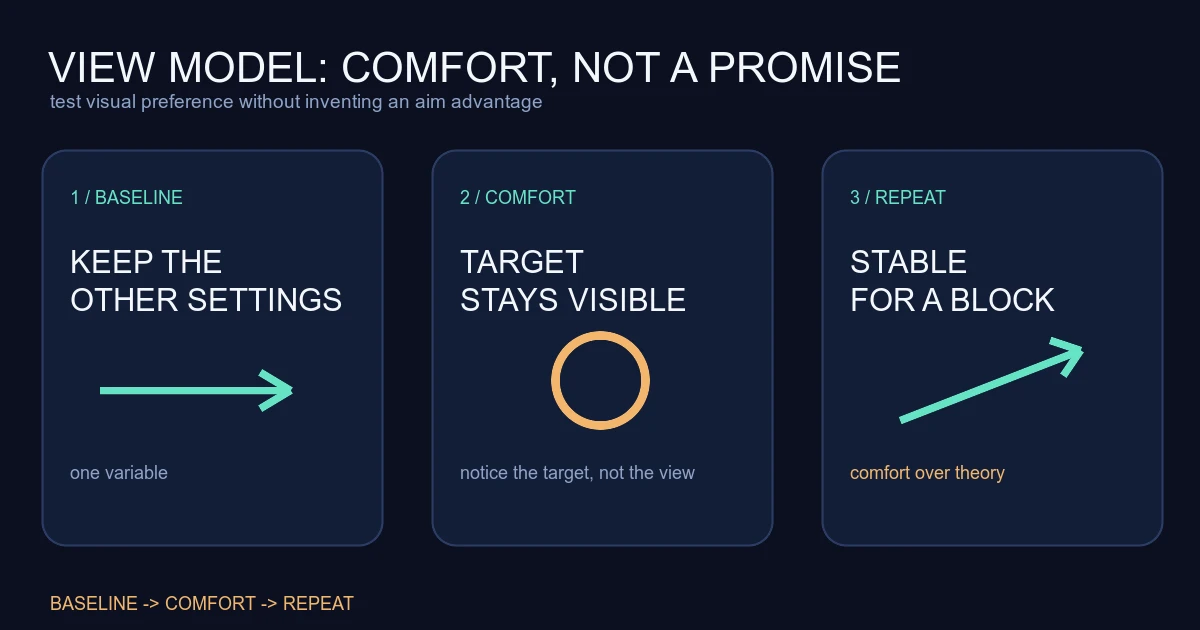
Players often ask whether a left-handed view model will make aiming easier, especially if their dominant eye and their mouse hand do not match. That question mixes three different things: a visual preference, the way the weapon sits on screen, and the mechanical skill of placing a crosshair.
Separating them makes the answer less dramatic. A comfortable view can help you keep attention on the target. It does not automatically change recoil, hitboxes or the angle order you need to clear.
What Riot actually said
In Ask VALORANT #8, published in 2020, Riot discussed exploring a left-hand view model. Riot said it wanted to test the artistic and competitive implications, including whether the view would create an advantage or disadvantage, and did not give a release date in that answer.
That is a historical source, not confirmation of the current client setting. Check your current in-game options and current Riot support information before assuming a feature is available or unchanged. The eye-dominance tests and comfort advice below are Valorant Village coaching interpretation.
Eye dominance is a preference clue
Eye dominance can describe which eye tends to take the lead when the brain receives slightly different visual information. It is not a ranking prediction. It does not tell you which crosshair colour, aspect ratio or view model will produce the best shots.
You can try a simple test by making a small opening with your hands, centring a distant object, closing one eye at a time, and noticing which eye keeps the object centred. Do not treat the result as a prescription. First-person games are not a static sight picture, and your eyes keep working together while you move, turn and track.
The useful question is whether a setting reduces visual distraction. If you notice the weapon model, arms or screen edge during a duel, test a different view if the client allows it. If you never notice those elements, changing the setting may only add another variable.
Test comfort without changing aim at the same time
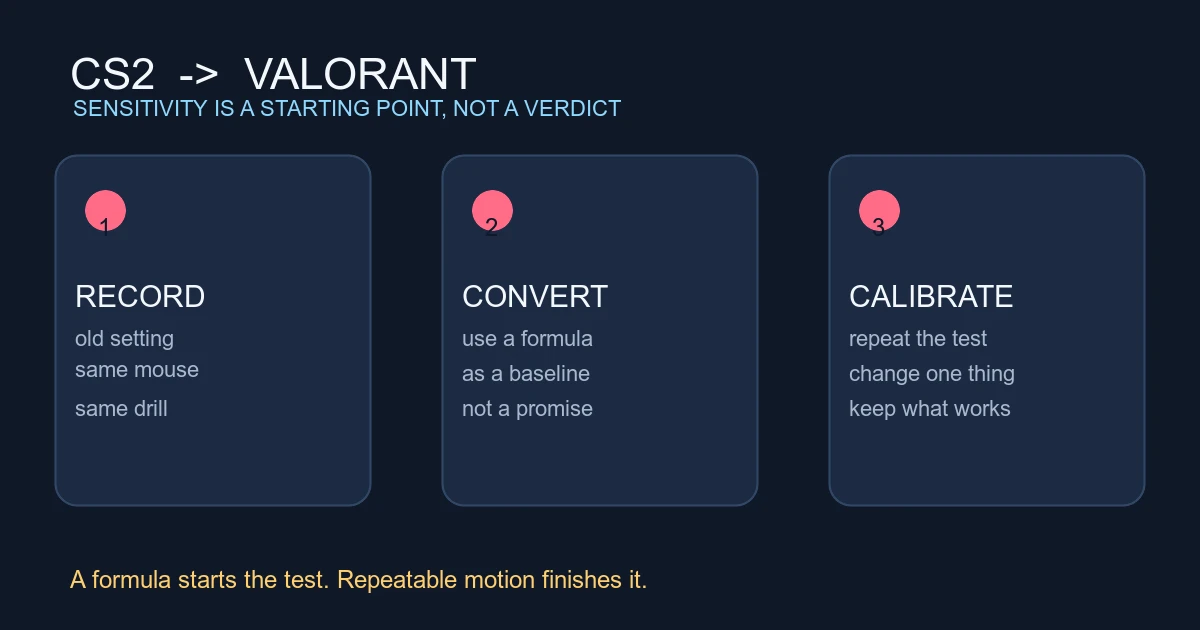
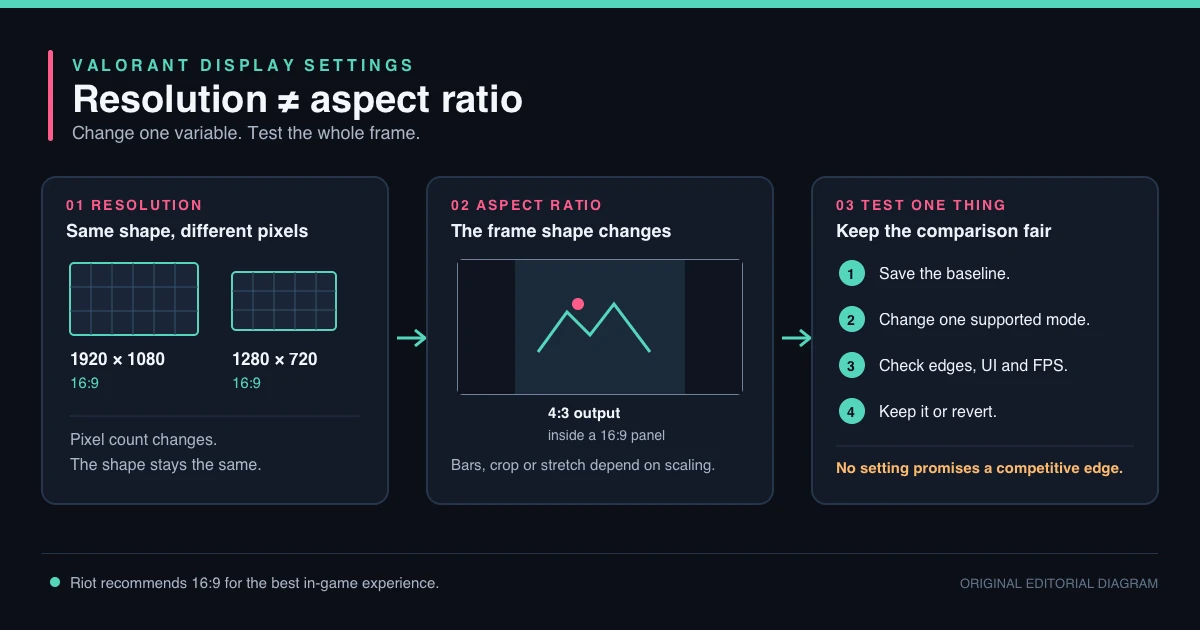
Make a baseline before you experiment. Note your sensitivity, crosshair, resolution and display scaling. The resolution and aspect-ratio guide can help you isolate those variables. Do not change all four because a new view model feels interesting for five minutes.
Use the same weapon and run three short tests. First, hold a common head height while walking through an empty route. Second, stop and fire at static targets from different distances. Third, play a short deathmatch while tracking how often you noticed the weapon rather than the enemy.
You are not measuring a perfect score. Write down whether the view felt comfortable, whether the target stayed visible, and whether the setting changed your movement or crosshair habits. Comfort that survives a real fight matters more than a range score.
Keep the crosshair and route stable
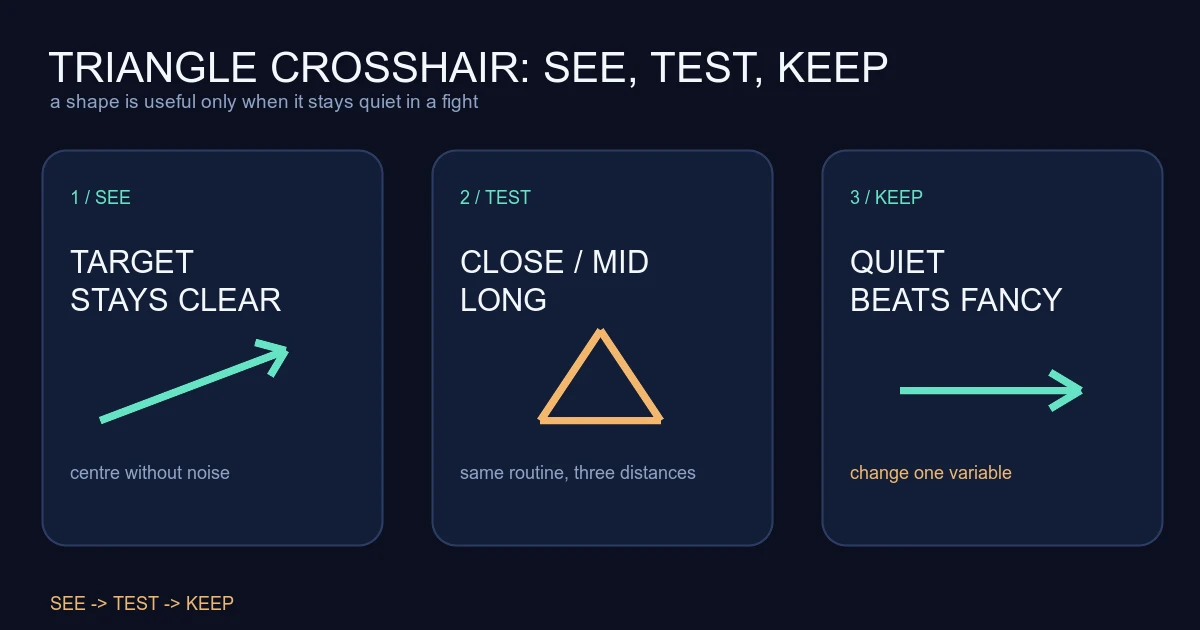
A view-model change can make the screen feel new enough that you blame every miss on the setting. Before changing the profile again, check the ordinary causes. Was the crosshair at the right height? Did you clear the first angle before the second? Were you moving while firing? Did utility change the line?
The sensitivity guide is useful when a setup feels different between accounts or displays. Test one variable, play long enough to notice a pattern, then decide. A string of settings changes can create the feeling of inconsistency even when the game is behaving normally.
The crosshair-placement guide is another good anchor. If your first adjustment is late, a left-handed view is unlikely to solve the entire problem. A stable route and a predictable height give your eyes a better chance to evaluate the new view honestly.
When to stop testing
Stop when the setting is comfortable and no longer demands attention. You do not need to prove that the left-handed version is objectively better. You need to know whether you can read targets, keep your crosshair where it belongs and repeat the same routine under pressure.
If the client does not offer the option you want, do not treat that as a hidden competitive disadvantage. Use the available settings, choose a crosshair with clean contrast, and build the habit around the view you actually play. A preference can be real without becoming a theory about every missed shot.
One useful boundary is to keep the setting stable for a block of games. If the view feels comfortable on the first day but strange later, check fatigue, display position and the type of fights you played before changing it again. A setting should reduce work for your eyes, not become another match result to explain.
Sources checked
- Riot Games Ask VALORANT #8, published 2020-09-24 and checked 2026-08-15 UTC. Used only for Riot's historical discussion of testing a left-hand view model and competitive-integrity concerns.
The eye-dominance test, comfort experiment, variable control and stopping rule are Valorant Village coaching interpretation. They are not medical advice or a promise of improved aim.