How to Read VALORANT Balance Direction Without Chasing the Meta
Written by Valorant Village
Source-backed coverage ●
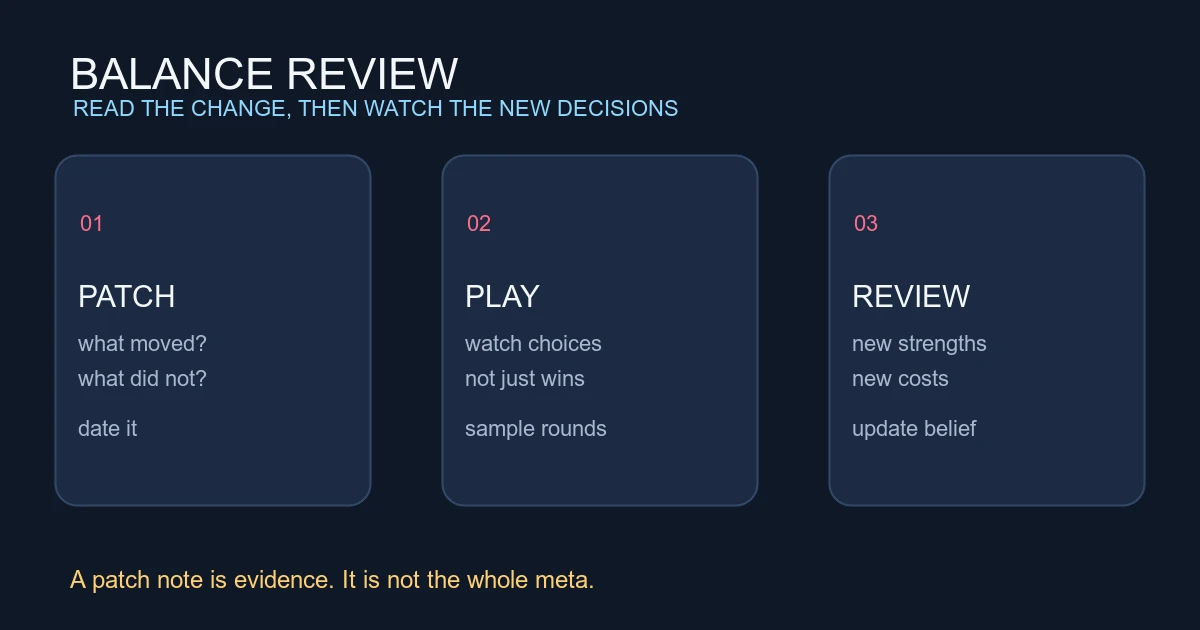
Patch reactions often choose a side too quickly. The game is now all aim. The game is now all utility. One Agent is dead. One weapon is mandatory. Those statements can be useful prompts, but they are not a full read of balance direction.
Riot's own explanations give a better frame: read the intended decision, the counterplay and the evidence after players adapt.
Riot's balance process is not one number
In How we balance VALORANT, Riot describes a balance process that considers game data, player sentiment and design philosophy. The article introduces a tac cycle of Intel, Plan, Execute and Repeat. Riot also says it does not seek a perfect 50/50 balance for every piece of content.
Those are historical statements from Riot's development team, not a current tier list. They are useful because they show why a pick rate or win rate alone cannot explain every change.
Read patch intent before the numbers
The Patch Notes 11.08 described a goal of preserving VALORANT's tactical-shooter identity while creating a healthier dialogue between gunplay and abilities. The notes used language about counterplay, strategic ability use and rewarding intentional timing.
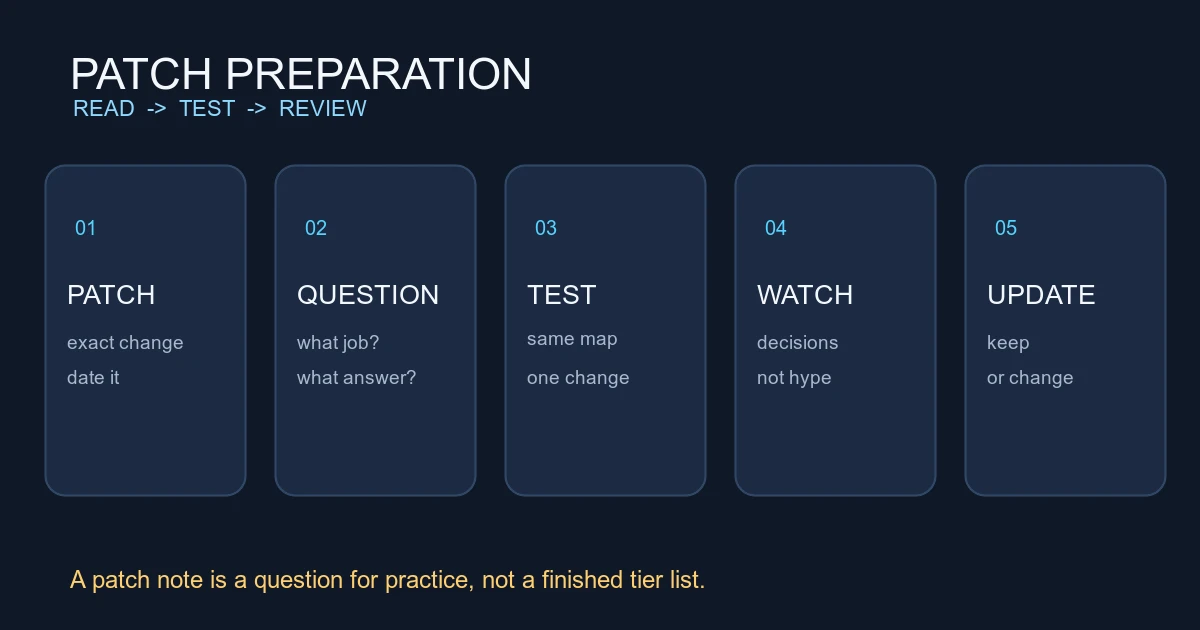
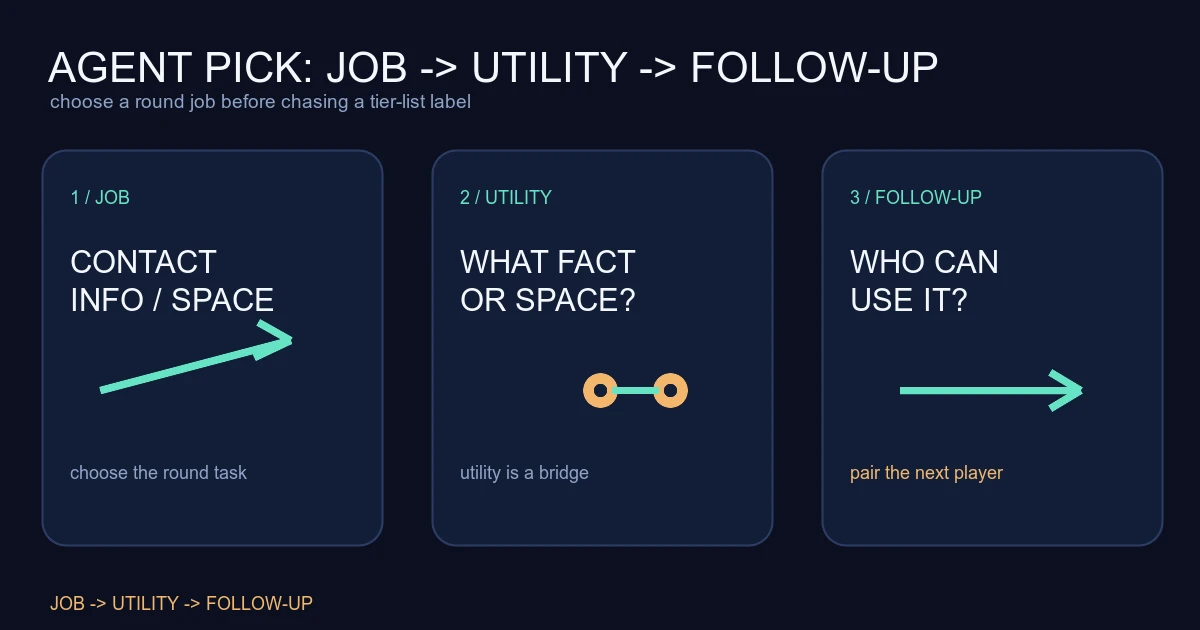
When you read a newer patch, look for the decision Riot is trying to change. Is a defensive hold too automatic? Does utility remove too much counterplay? Is an Agent failing to create the round job the designers intended? The number changes matter, but the intended interaction tells you what to test.
Use the tac cycle as a player review
The agent-role matrix gives a practical version of the tac cycle:
- Intel: what do you know about the enemy lane, utility and timing?
- Plan: which player takes the next space and what is the fallback?
- Execute: did the team use the ability at the right time and place?
- Repeat: what did the enemy change, and what can you adapt?
This makes patch changes easier to understand. If an ability is adjusted to create more counterplay, practise the response rather than repeating the old automatic setup. If a weapon or cooldown changes, review the round job that used it.
Do not make a tier list from the first day
Early reactions are noisy. Players are testing unfamiliar changes, copying a strong-looking setup and playing different maps at different skill levels. A single tournament, streamer session or ranked evening can show a possibility without showing the whole state.
The gun-model guide uses a similar evidence rule for visual claims. Notice a pattern, test it across ordinary rounds, and label what is still uncertain. Do not turn a first impression into a universal counter.
Role and region matter too. Riot's balance articles explain that the same Agent can behave differently in ranked and coordinated play. A change that helps a five-stack may not create the same result in solo queue. That is not a contradiction. It is a different environment.
Write a useful patch note for yourself
After a patch, choose one Agent, weapon or map interaction. Write four lines:
- What changed in the official note?
- What round decision should feel different?
- What enemy response should now be possible?
- What will I test over three matches?
The weekly improvement loop can hold the test. Keep the patch fact separate from your verdict. If the result is different from the intention, record the round instead of arguing from memory.
When a patch changes a familiar tool, expect the first adjustment to be messy. Teammates may use the old timing, enemies may punish an old route, and the new counterplay may not be obvious in the first session. Use the official note to choose the experiment, then use match evidence to decide whether your own habit needs to change.
It is also worth asking whether the change affects a narrow interaction or a whole composition. A single cooldown adjustment may matter most in late rounds. A map change may alter the value of an Agent without changing the Agent's numbers. Reading the scope prevents a small patch from becoming a dramatic claim about the whole game.
If a change makes a familiar habit weaker, keep the habit in your notes and describe the new response you need. “This is dead” closes the review too early. “This timing now needs a teammate or a different exit” gives you something to test.
Sources checked
- Riot Games How we balance VALORANT, published 2020-06-26 and checked 2026-08-14 UTC. Used for the data, sentiment, design philosophy and tac-cycle discussion.
- Riot Games VALORANT Patch Notes 11.08, published 2025-10-14 and checked 2026-08-14 UTC. Used for the dated competitive-dialogue and counterplay intent.
The patch-reading questions, role matrix application and review method are Valorant Village coaching interpretation, not a prediction of the next meta.