Iso Guide: Double Tap, Shield Timing, and the Second Fight
Written by Valorant Village
Source-backed coverage ●
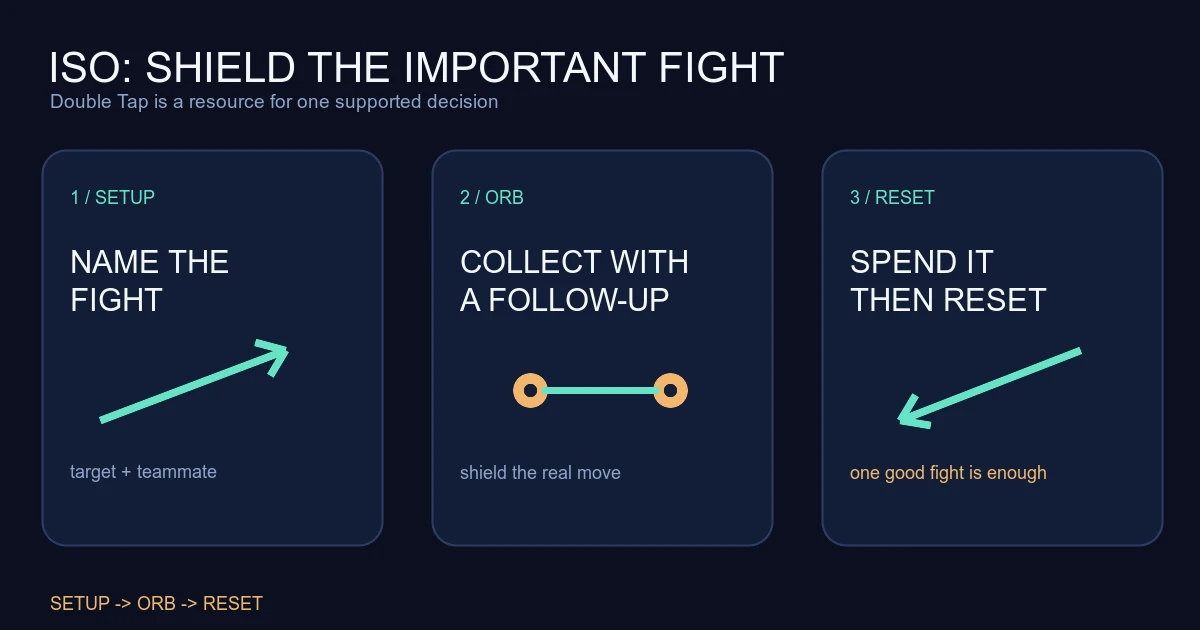
Iso's shield can make the next fight feel safer than it is. The player sees the resource, takes a dry duel, and forgets that the enemy still has a teammate, a better angle or a way to wait out the timing. Double Tap is more useful when it helps you take one important fight with support, then reset before the round asks for another.
The shield is not a replacement for a plan. It is a reason to choose a fight carefully.
What Riot actually documents
Riot lists Iso as a Duelist. On the current Iso page, Riot describes Undercut as a molecular bolt that applies a brief Fragile effect to players it touches and can pass through solid objects, including walls. Riot also describes Double Tap as a focus timer that lets downed enemies you kill or damage generate an energy orb; shooting that orb grants a shield that absorbs one instance of damage from any source.
Those are the source-backed ability facts. The timing, target selection and team use below are Valorant Village coaching interpretation. The page does not turn the shield into a guarantee that the next duel is favourable.
Start with the fight you want the shield to improve
Before activating Double Tap, name the fight that justifies it. It might be the first contact on a narrow lane, a trade after Undercut, or the next angle after a teammate opens space. If you cannot point to the fight, keep the resource for a clearer moment.
The first contact should also have an exit. A shield can absorb one instance of damage, but it does not clear the angle behind the shooter or protect you from every player in the room. Plan where the teammate stands, where you will fall back, and what happens if the orb is not available.
This is the same idea behind playing for space. The value is not the visible shield. It is the option the shield lets the team take.
Undercut should prepare a shared fight
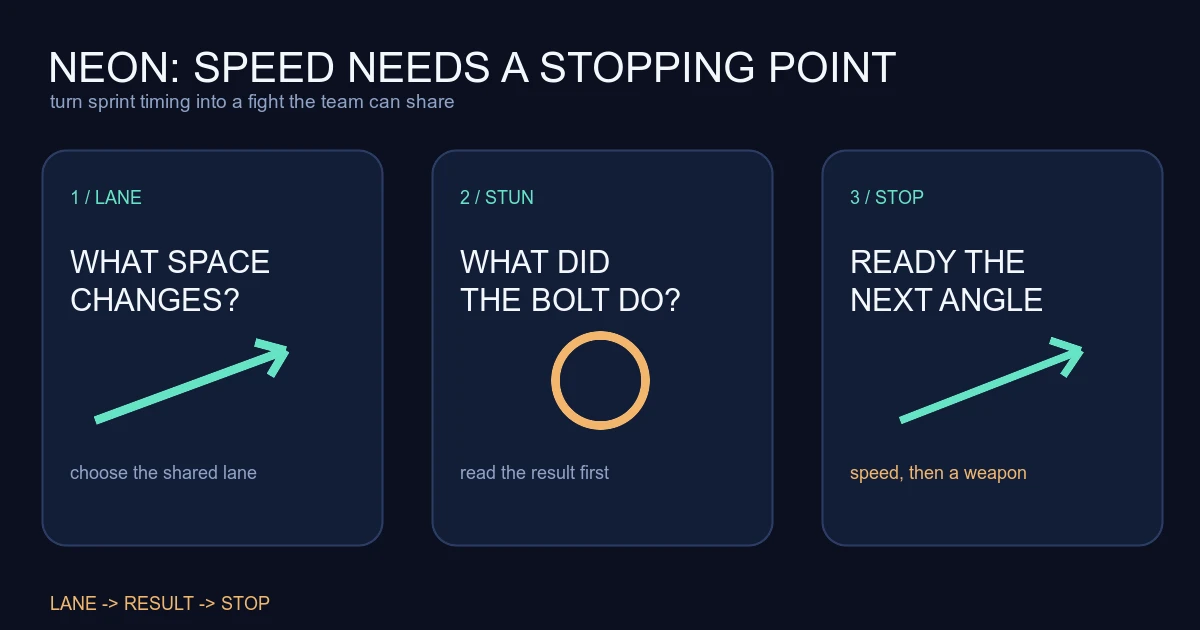
Undercut can pass through solid objects and apply Fragile to players it touches, according to Riot. Use that fact to think about timing rather than decoration. If the bolt reaches the player holding the next lane, who fights after it? If it hits a player behind cover, does your team have a route to use the pressure?
Call the target and the next action: “Undercut close, swing with me,” or “Fragile through the wall, hold for contact.” If the bolt misses, do not run into the original angle because the animation felt committed. A missed setup is information. It is not a command to take the duel anyway.
The best Undercut rounds often look ordinary. The bolt removes some of the defender's comfort, a teammate takes the first contact, and Iso uses the shield to survive the fight that matters. The ability does not need to produce a solo highlight to have done its job.
Spend the shield on the second fight
After an orb appears, resist the urge to collect it from the most exposed position. Check who can see you, which enemy angle is still active and where the next fight will happen. The shield is most valuable when it changes the risk of a planned fight, not when it lets you cross an empty hallway faster.
Once the shield absorbs damage, treat the resource as spent even if you are still alive. Your next decision should be about cover, trade support and the round objective. Do not keep peeking the same line because the first bullet was absorbed.
The trade guide gives the clean test. Can a teammate see the shooter and fight immediately? If not, the shield may preserve you for a moment without making the duel good. Wait, reposition or let the teammate create the contact.
Avoid the solo-orb trap
Iso players can become detached from the team while hunting the next orb. That is especially costly on attack, where the Spike and the entry route need bodies in the same area. If the team is ready to hit, do not leave them to chase a resource that is not part of the execute.
On defense, the same problem appears as a repeated re-peek. A shielded Iso takes an early fight, wins it, and looks for another opponent before the team has recovered. Sometimes the correct second fight is a hold that makes the attacker clear a new angle. Sometimes it is a retreat that preserves the rifle for the retake.
The guide to gunfights after utility is useful here. When the ability ends, make sure the weapon is ready, the movement has stopped and the next angle is intentional.
A Double Tap practice loop
In a custom game, mark three fights on one route: the first contact, the orb location and the reset position. Walk the route without abilities, then repeat with Undercut. Practise collecting the orb only when a teammate can see the next shooter.
In ranked review, record whether Double Tap changed a fight or only changed your confidence. Write down the target, teammate distance, first angle and what happened after the shield was spent. If the shield repeatedly leads to a solo chase, move the team call earlier and choose a smaller fight.
Iso is strongest when the resource sharpens a decision. It is not a licence to take every duel. One well-supported second fight can create more value than three isolated swings that happen to look brave.
Sources checked
- Riot Games Iso, checked in a live browser 2026-08-15 UTC. Used for Iso's Duelist role, Undercut's Fragile-through-solid-objects description and Double Tap's orb/shield description.
The fight selection, Undercut timing, orb discipline, trade test and practice loop are Valorant Village coaching interpretation, not Riot rules or guaranteed outcomes.