VALORANT Gun Models: What You Can Identify Without a Skin Database
Written by Valorant Village
Source-backed coverage ●
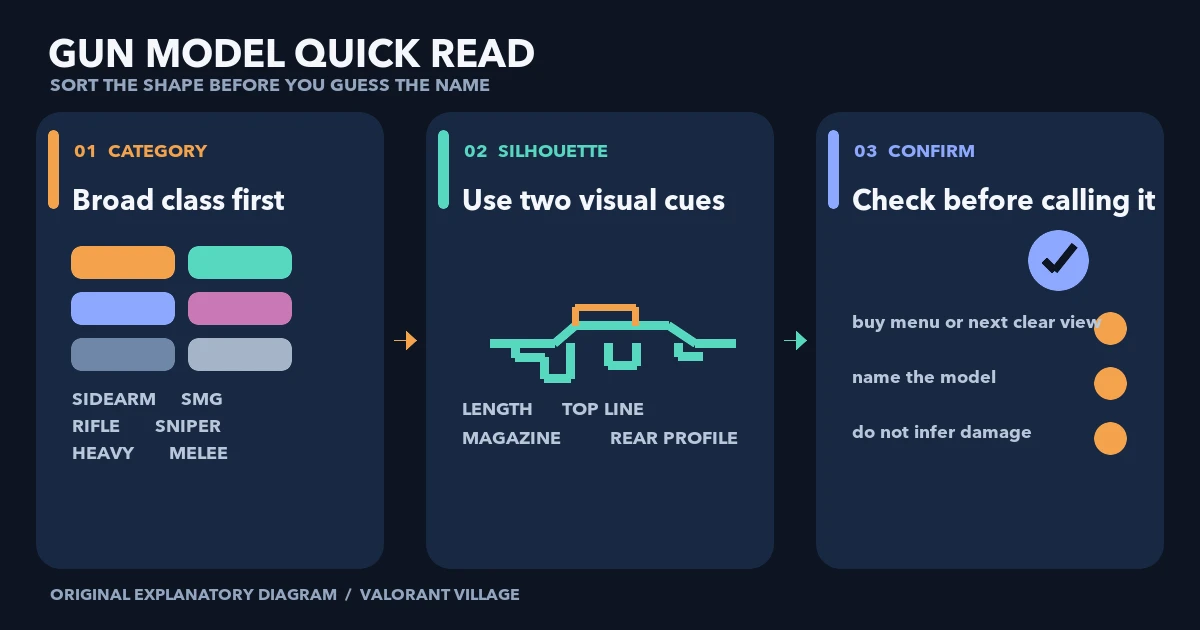
A skin can make a familiar gun look like a different object. In ranked, you rarely have time to open a database and compare every angle. You need a shorter read: category first, silhouette second, confirmation last.
This is not a cosmetic catalogue. Read the base shape first, then make the next decision.
Start with Riot's categories
Riot-documented fact. Riot's Arsenal page groups its weapon cards into Sidearms, SMGs, Shotguns, Rifles, Snipers, Heavies and Melee. The cards checked for this article list:
- Sidearms: Bandit, Classic, Shorty, Frenzy, Ghost and Sheriff.
- SMGs: Stinger and Spectre.
- Shotguns: Bucky and Judge.
- Rifles: Bulldog, Guardian, Phantom and Vandal.
- Snipers: Marshal, Operator and Outlaw.
- Heavies: Ares and Odin.
- Melee: Tactical Knife.
Riot's Beginner's Guide points players to the Arsenal, says to buy by weapon type and try different weapons as they learn what fits their style and team plan.
Valorant Village coaching interpretation. Treat category as your first filter. Ask “Is that a rifle at all?” before Phantom or Vandal. Once the broad class is right, the model name is a smaller problem.
Read the shape in four passes
Everything in this section is coaching interpretation, not a Riot identification rule.
- Start with length. Is the body short, or does the barrel run across the view? This separates compact weapons from rifles and snipers.
- Check the top line. A raised sight, scope or upper block can make a weapon readable before its finish. It is evidence, not proof.
- Look at the middle. The receiver and magazine form the largest visual block. Notice where the magazine sits and how it meets the body.
- Finish at the rear. The stock or rear housing changes the outline near the bottom of the screen. That section can separate similar models.
Use two cues before naming a specific weapon. “Long body plus scope” is a better read than “it has a dark skin, so it must be the Operator.” If the cues disagree, keep the category and delay the exact name. One wrong label is less useful than a correct broad call.
When the skin is doing too much
Some cosmetics add bright panels, animated surfaces or oversized details. That can cover the small features you normally use. Do not fight the skin by staring harder at the decoration. Strip it back mentally: overall length, top edge, magazine block and rear profile.
If you are holding it, use the first-person outline rather than a database image. If you are buying, the menu is the confirmation. A teammate's model may give you a category, not exact damage, fire mode, range or economy. Never infer those from a silhouette.
That is useful. Recognise “rifle” quickly and keep watching the angle instead of solving trivia during the peek. The round needs a fast, honest read.
Practise the read without a skin database
Open Riot's Arsenal and choose a small set from one category. Say the category and two cues before checking the name. Repeat from the first-person view in The Range or a custom game. Connect the card to the moving shape, not a static screenshot.
Add a cosmetic you already own after the base models feel familiar. Ask which cues survived. If it hides the top line, use length and rear profile. If it changes colour but not outline, ignore colour.
Log the mistake as wrong category, wrong model or no confirmation. The first needs broader sorting. The second needs another comparison. The third means stop guessing and use the buy menu, a callout or the next clear view.
Keep recognition separate from gunfights
Riot-documented fact. Riot's Beginner's Guide tells players to learn where enemies can come from, watch angles and corners, and stop moving before shooting to be more accurate.
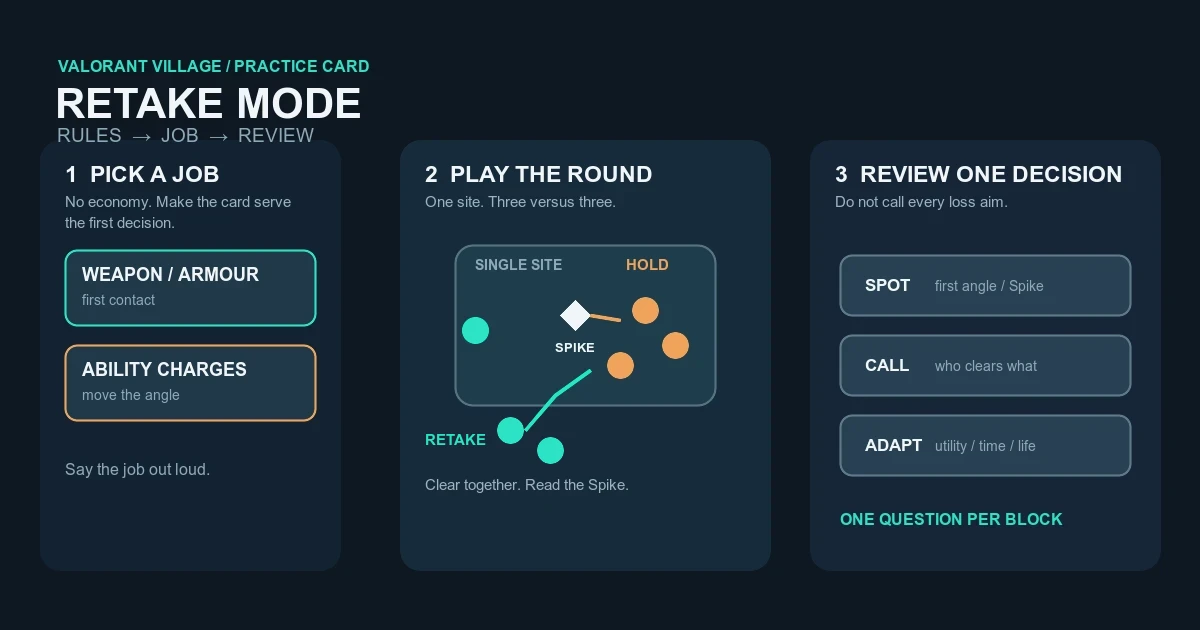
Valorant Village coaching interpretation. Use the silhouette as a quick input to your decision, then put your attention back on the fight. A model read is wasted if your crosshair is low or pointed at the ability you just cast. The crosshair placement guide covers the first aim habit. If you lose the duel after throwing utility, read why you lose gunfights after using utility for the reset between cast and shot.
The picture itself can also change how easy the outline feels to read. That is a display question, not proof that one weapon model has changed. The resolution and aspect ratio guide separates what the screen changes from what it does not.
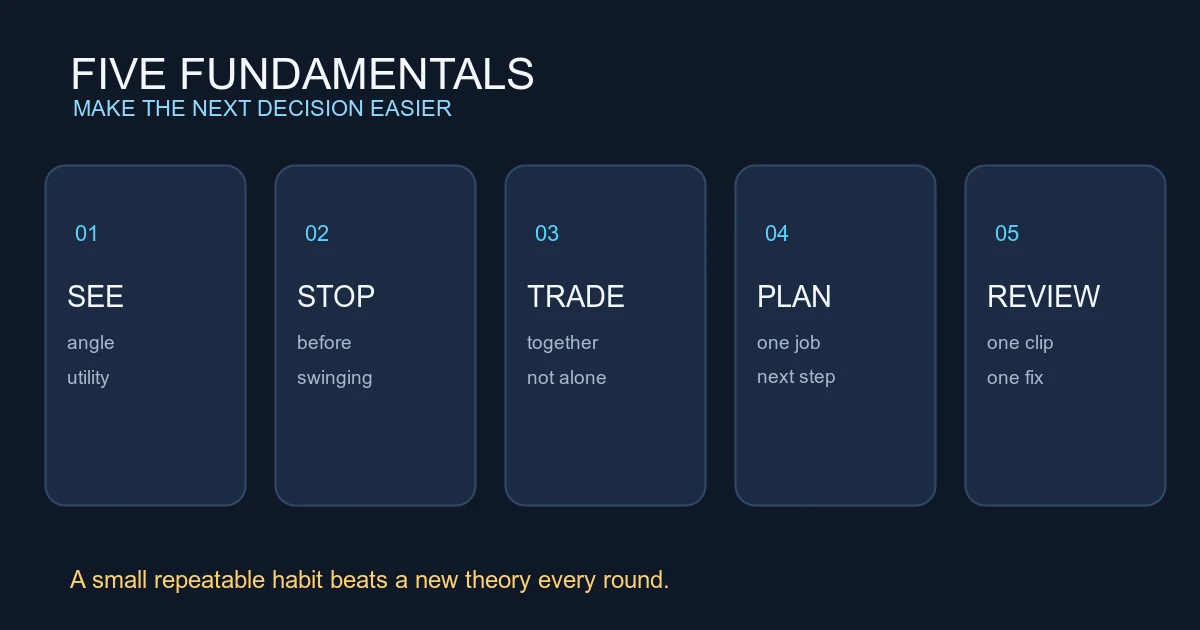
The habit is simple: classify, check two cues, confirm when it matters, then return to the angle. A skin can slow the answer without turning ranked into a database lookup.
Sources checked
- Riot Games, “VALORANT Arsenal: Choose your weapon and view weapon details”, live page checked in a real browser on 2026-08-14 UTC. Claims used: weapon names, category labels and the short descriptions displayed on the weapon cards.
- Riot Games, “Beginner's Guide”, published August 3, 2024 and checked in a real browser on 2026-08-14 UTC. Claims used: Arsenal as the weapon reference, buying by weapon type, experimenting with weapons, learning enemy routes and angles, checking corners and stopping before shooting.
The silhouette cues, practice drill and ranked-use advice are Valorant Village coaching interpretation, not Riot rules or performance guarantees.