Astra Guide: Star Timing Without Playing Only the Minimap
Written by Valorant Village
Source-backed coverage ●
Astra is easy to play as if the minimap were the whole round. You enter Astral Form, draw a set of plans, and keep thinking in symbols while the fight starts in front of you. The fix is not faster map work. It is making each Star answer a specific problem, then returning to first person early enough to play the answer.
What Riot currently confirms
Riot’s current Astra agent page lists her as a Controller. It describes Astral Form as the mode where Astra places Stars. A later activation can turn a Star into Nova Pulse, Nebula or Gravity Well.
Nova Pulse charges briefly before concussing players in its area. Gravity Well pulls players toward its center before exploding, and players still caught inside are made Vulnerable. Nebula turns a Star into a smoke. Astra can Dissipate that smoke, briefly showing a fake Nebula before the Star returns after a delay. Cosmic Divide is separate from the Star sequence: it connects two selected points, blocks bullets and heavily dampens audio.
The official VALORANT Patch Notes 13.02, published July 29, 2026, list a Phoenix adjustment, Retake map additions and agent bug fixes, but no Astra balance entry. This check is why the guide avoids old Star numbers. The mechanics above come from Riot. The decisions below are Valorant Village coaching interpretation.
Coaching interpretation: place the Star around the next decision
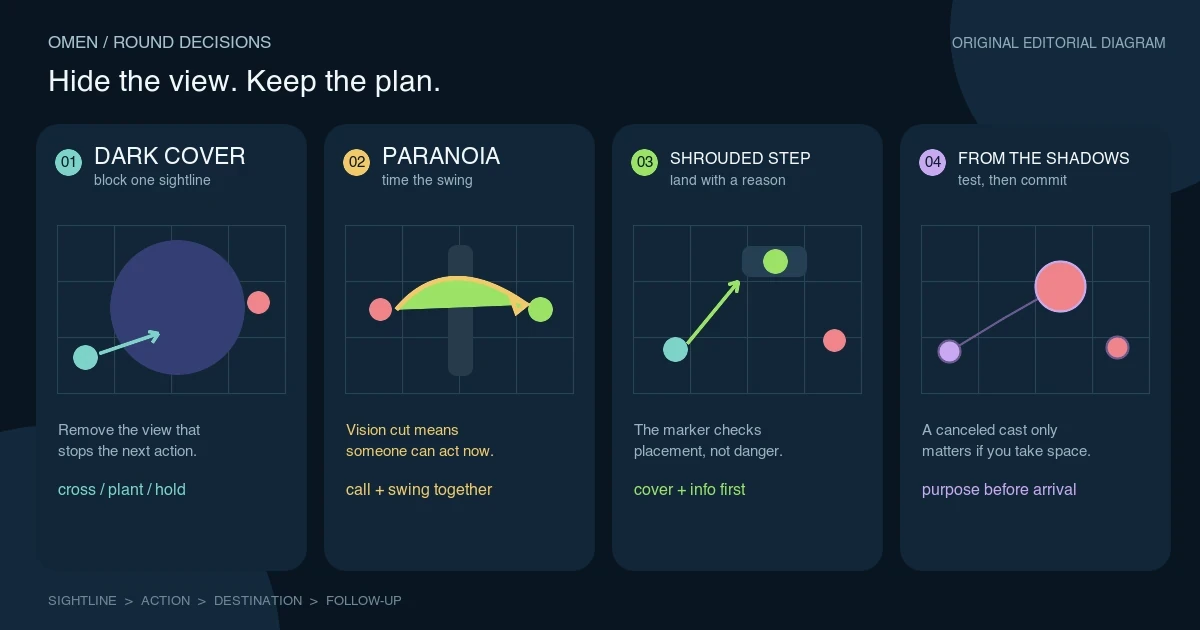
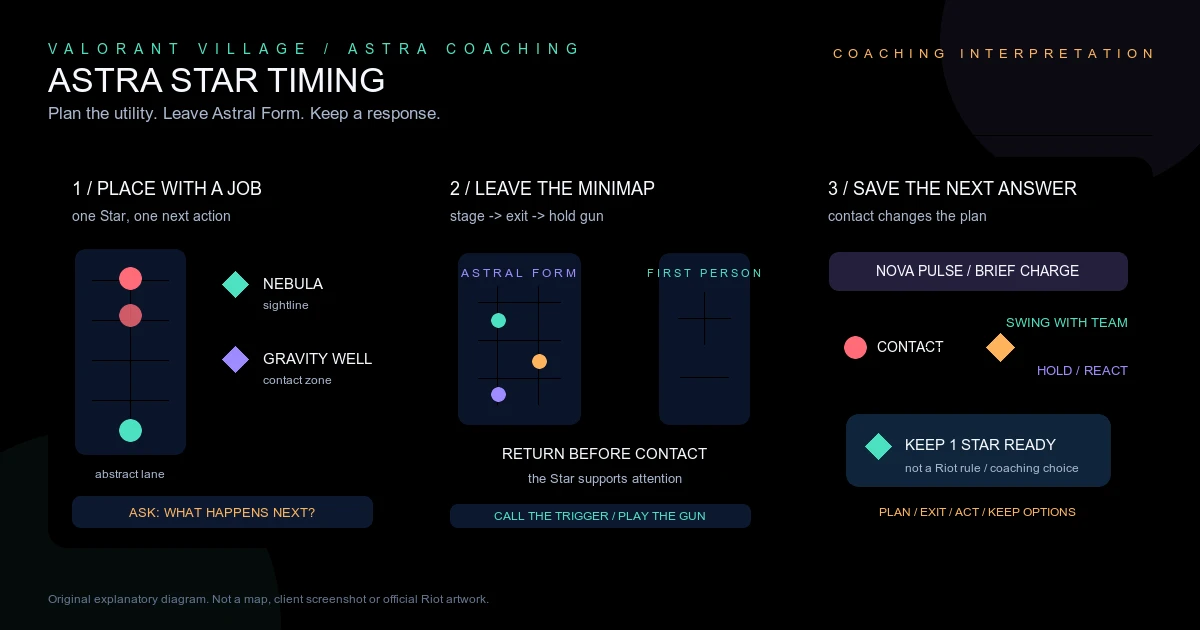
Before you enter Astral Form, name the problem. Which sightline prevents your teammate from crossing? Which lane must an enemy occupy to contest the plant? Which piece of space will matter if the first contact is real? Place the Star around that decision, not around every route you can imagine.
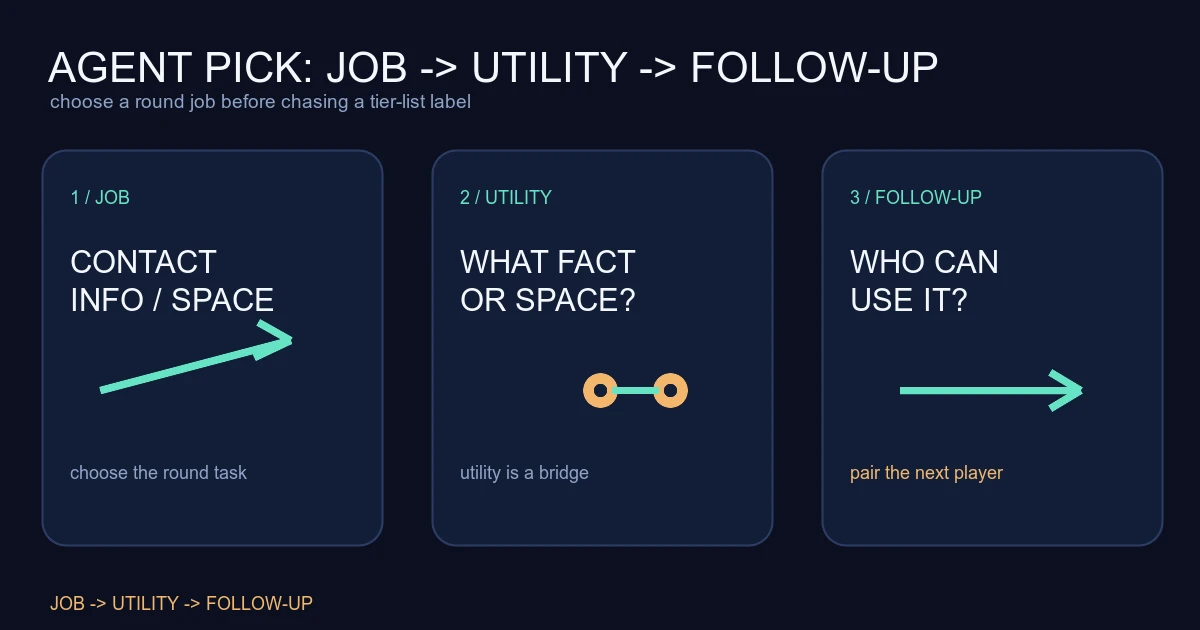
Give every planned Star a short job and a follow-up call. “Nebula for the cross,” “Gravity Well on contact,” or “Nova Pulse when we swing” tells teammates what the symbol means. “I have utility” does not. On attack, the first Star may buy a crossing or hide the plant. On defense, it may shape the lane the attackers must clear. Both are coaching choices, not universal placements.
The test is simple: if the Star activates, can somebody do something immediately? If nobody is ready to act, wait. A technically correct activation can still be mistimed if it creates no playable action.
Use Astral Form, then leave it
Coaching interpretation: treat Astral Form like a planning surface, not a second camera angle. Place the Stars you can explain, make the short team call, and return to first person before contact. Check the minimap again only when the information can change your decision.
Your weapon, crosshair and audio awareness matter when contact starts. If you are still arranging symbols when a teammate takes the first fight, your plan is late. Exit the map before the planned trigger, hold the gun angle your utility does not cover, and listen for the cue that tells you whether to activate. The Star should support your attention, not replace it.
This is also where comms need a verb. “Gravity Well A main on contact, swing with me” gives a trigger and an action. “Nebula down, cross now” sets a clock. If the call changes, say so and leave the old plan behind. Our guide to useful VALORANT comms covers the same fact, location and next-action habit from a wider team perspective.
Coordinate Gravity Well, Nova Pulse and Nebula
Do not treat the three Star abilities as interchangeable effects. Nebula removes a sightline. Gravity Well pulls players toward a center and leaves anyone still caught inside Vulnerable after the explosion. Nova Pulse has a brief charge before it concusses players in the area.
Coaching interpretation: give them separate jobs in the same team action. A Nebula can hide the crossing. A held Gravity Well can wait for the enemy to commit to the space. A Nova Pulse can be reserved for the second beat, when a teammate is ready to swing or take ground after the charge. The order is not a Riot prescription, and it does not guarantee a kill. It is a timing model that connects the effect to a player who can act on it.
If the enemy never commits, do not activate a Gravity Well just because the marker is there. If the team is not ready, a Nova Pulse can be wasted even when it hits its area. If the first smoke has done its job, Dissipate can be a deliberate transition: Riot says it briefly forms a fake Nebula and returns the Star after a delay. Coaching advice is to recycle that option for the next contact, not to chase an instant second smoke.
For a broader explanation of what teammates should do with a Controller’s smoke, read our guide to playing around smokes. The Astra-specific question is always the same: what does this smoke let the team do while the enemy cannot see?
Keep a Star for what you do not know
Avoid activating every Star in the opening plan. Coaching interpretation: keep at least one Star unactivated until the round gives you information. A fake, a late rotate, an unexpected plant position or a retake can make the first plan irrelevant. If every Star is already committed, Astra has no answer left for the fact that actually matters.
This is not a Riot reserve rule. It is a way to protect decision quality. Before contact, have a plan and an option. After contact, choose the effect that answers what you confirmed. After the first fight, decide whether Dissipate or the remaining Star serves the next event. The value is not merely having a button available. It is having one response that was not spent on a guess.
Sound often tells you when the planned moment has arrived. Our VALORANT sound-cue practice guide can help you build the habit of leaving the minimap, reading the first cue and then making the cast.
After three rounds, review four things: did each Star have a named job, did you leave Astral Form before the first playable fight, did a teammate know what to do after Gravity Well or Nova Pulse, and what response was still available when contact changed? Change one trigger next round. Keep the rest of the plan recognizable so you can tell whether the timing improved.