Icebox Verticality: Clearing Angles Before the Plant
Written by Valorant Village
Source-backed coverage ●
Icebox is not clear because the floor is clear. Riot’s current VALORANT Maps page describes a Kingdom excavation site overtaken by the arctic, with two plant sites protected by snow and metal. It also calls out the map’s horizontal finesse and ziplines. Those are the documented map features. The clearing order below is Valorant Village coaching interpretation, not a Riot rule or a fixed Icebox meta.
Use “verticality” as a learning lens for height, cover, side lanes, and movement routes around the Spike. Riot’s map-art team says gameplay clarity comes first and details are generally kept above player height so angles and peeks stay simple. That is a visual habit, not proof that a floor angle is safe. The Art of VALORANT Map Environments also names plant sites and commonly peeked corners as visibility priorities.
Start with the plant lane
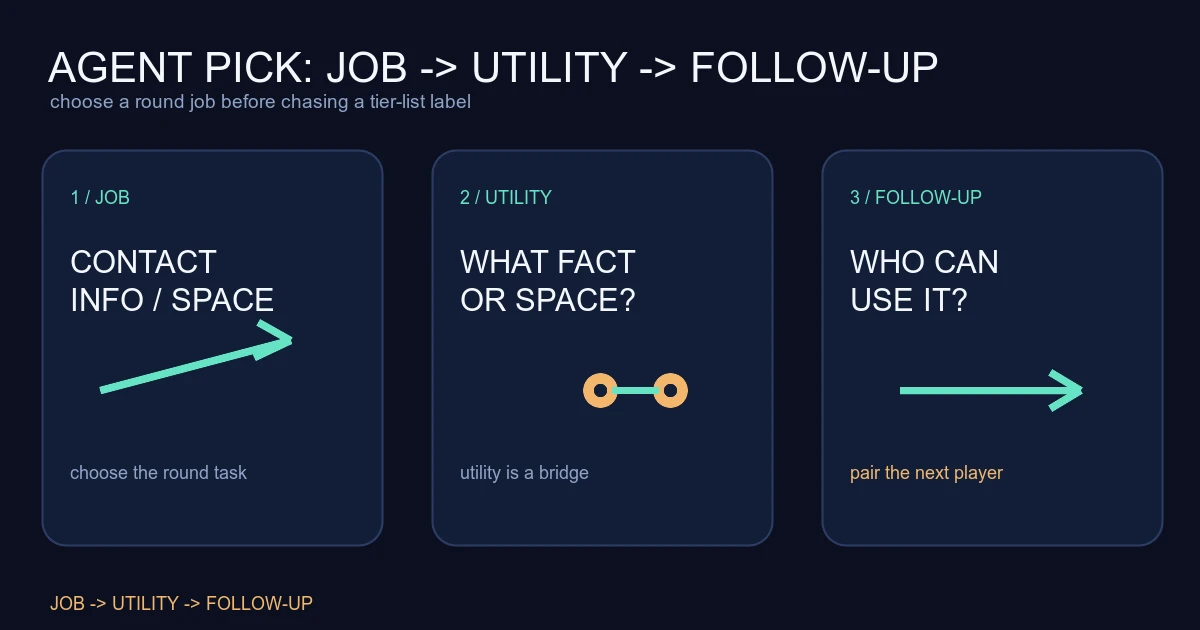
Riot’s Beginner’s Guide tells players to learn where enemies can come from, watch the angles, check corners, ask whether an ability helps the next goal, and communicate information. Apply those basics to the player carrying the Spike.
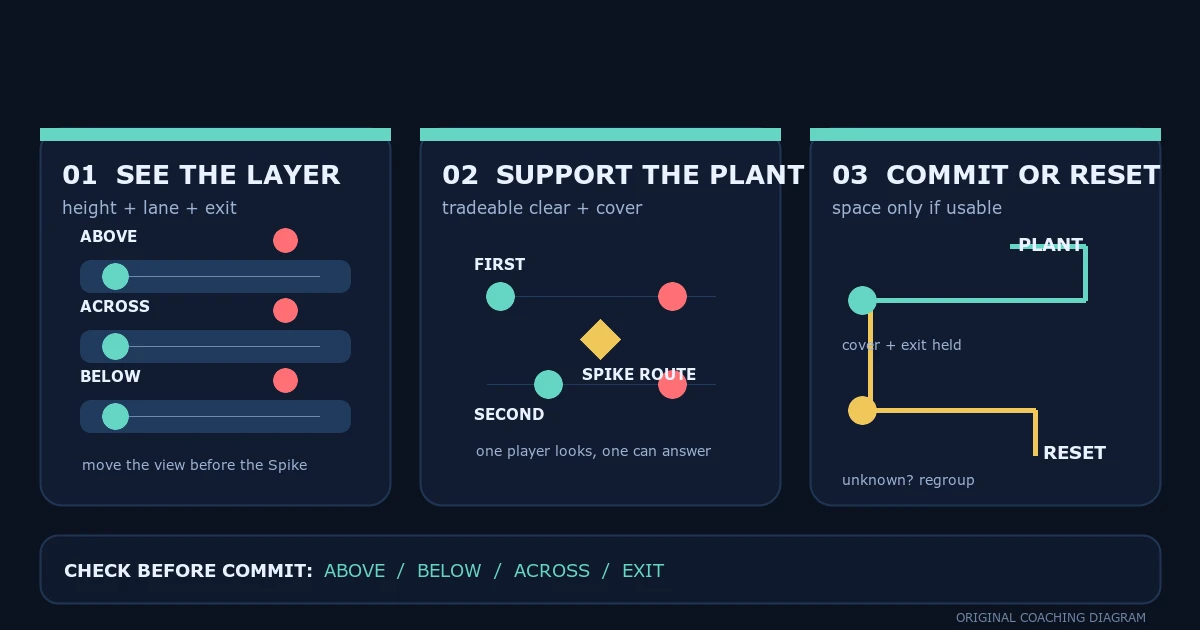
Coaching interpretation, step one: identify the lane the planter must cross. Name the Spike carrier, first contact, pause point, and player who sees the likely shooter. If those jobs are unnamed, the team is clearing for a highlight rather than for a plant.
First clear the angle that can stop that lane. Do not spend every ability on the visible corner while the planter remains exposed to the next height or side lane. A smoke, flash, recon tool, or damaging ability is useful when it helps the next move. Riot does not publish one Icebox utility sequence for every composition.
Change your view before you move the Spike
Coaching interpretation, step two: once the immediate stop is addressed, change the way you look at the space. Check the height that the current view allows, then check the adjacent lane that can interrupt the plant. That may mean looking above the expected crosshair line, below it, or across a gap. Do not turn those directions into invented callouts or a universal route. The point is to break the habit of staring at the same entry seam.
Riot’s current map card names ziplines as part of Icebox’s movement. Treat them as routes with consequences, not automatic shortcuts. Before using one, ask what is confirmed, who can trade the arrival, and where the player goes if nobody appears. A route can change the fight without making its landing safe.
Riot’s tactical-cycle explanation calls the loop Intel, Plan, Execute, Repeat. Its intel questions include enemy locations, owned territory, abilities, guns, and previous actions. Use it as a check: gather the fact, choose the plant lane, execute the supported clear, then read again. If information changes, stop repeating the old angle check.
Plant space is a trade
Riot’s Patch Notes 3.06 recorded a historical Icebox change in which the B-site crate stack was no longer pennable, describing it as a safer planting option. The note is historical evidence that plant cover matters, not a guarantee about today’s crate state.
The coaching decision is not “safe plant or aggressive plant” as a permanent ranking. Ask what the plant space lets your team do next. Can the planter finish while another player watches the lane? Can the first contact be traded? Does the cover protect the Spike, and what utility remains for denial or retake? A plant that is easy to complete may give up forward space. A bolder plant may support a later hold but require more angles to stay clear.
Once the defenders give up the immediate plant lane, do not keep walking deeper simply because the next piece of space is open. If the Spike can go down under support, converting that advantage into a plant may be better than collecting another uncertain fight. This is the same space question in Playing for Space: a position matters when it creates a usable next action.
Do not let one angle own your attention
Tunnel vision on Icebox often starts with a true fact. You see one defender at one height, hear movement, or force someone away from a lane. The mistake is promoting that fact into “site clear.” One sighting is not a full count, and a sound does not provide an official universal range or timing.
Use a short call with three parts: what is confirmed, what remains unknown, and what happens next. “One seen on the entry lane, side height unknown, hold my clear while Spike crosses” is more useful than “site clear.” Riot’s Beginner’s Guide supports the habits behind this call: consider whether enemies should hear a run or walk, use an ability toward the next goal, stop before shooting, and share information with voice, pings, or Agent voice lines. For more practice turning facts into action, use How to Make Useful Comms in VALORANT.
The first player also needs an answer. If the contact dies, can the next player see the shooter now? If not, the peek was information at best, not a tradeable clear. How to Trade a Teammate in VALORANT is the useful follow-up for spacing and readiness. Do not let a map label make an unsupported fight look mandatory.
Preserve an exit before you commit
Coaching interpretation, step three: before the plant starts, name the exit. It can be a covered retreat, a teammate-held lane, or a route back to a position where the next fight is tradeable. The requirement is not one specific Icebox escape. The requirement is that the team knows what it will do if the next height check fails.
If the exit disappears, stop adding depth. Pull the planter back from the exposure, spend one action to change the problem, or give back space and regroup. A failed clear is information. It does not require a second solo peek. In the same way, if the plant is supportable and the team has a post-plant position it can actually reach, commit instead of reopening every angle for comfort.
In a custom game, walk one attack route without abilities. At each height or lane change, name the planter’s path, the stopping angle, the teammate who answers, and the exit. Repeat with one piece of utility and compare what changed. Do not record exact timings. Record which fact enabled the plant and which unknown stopped it.
The useful Icebox call is not “site clear.” It is: “Plant lane safe for now, next height checked, side lane unknown, exit held.” That keeps the Spike moving without pretending the map has stopped asking questions.