Split Mid Control: What Both Teams Are Actually Fighting Over
Written by Valorant Village
Source-backed coverage ●
Mid control on Split is easy to overvalue. A team can win a fight in the middle and still lose the round if nobody knows what that space is supposed to buy.
Riot's current VALORANT Maps page describes Split as two sites separated by an elevated centre. It also calls out two rope ascenders for rapid movement and a tower at each site that matters for control. Split has a vertical middle and site-side elevation to respect, but Riot does not say that either side must contest it every round or that one route is always best.
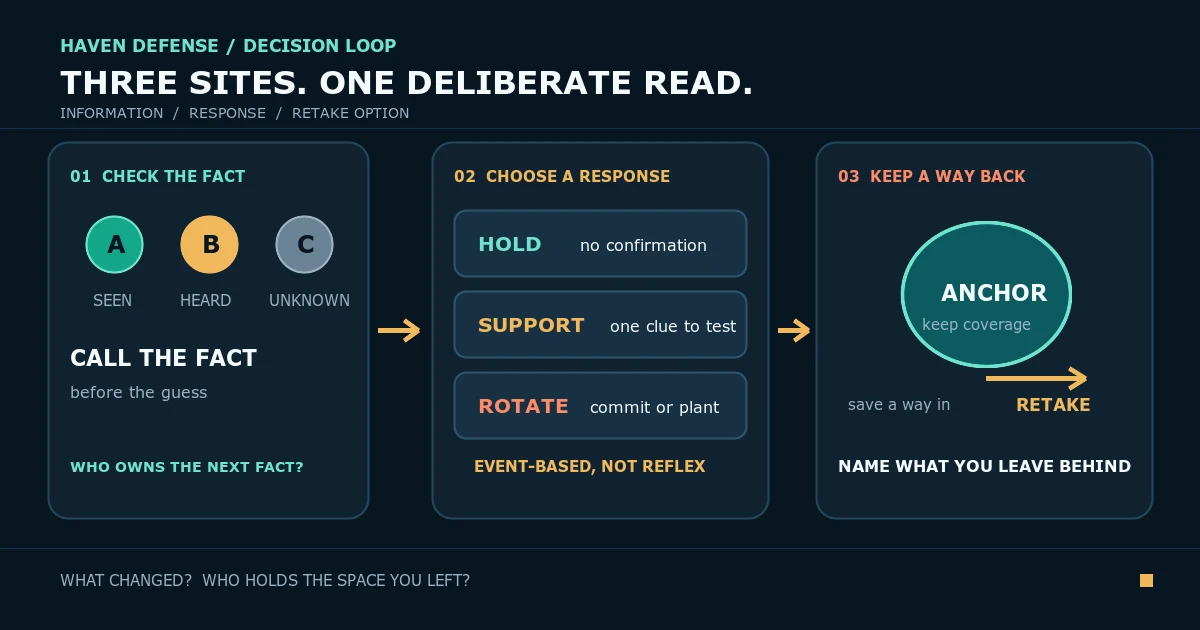
Riot's Beginner's Guide says to learn maps and the angles enemies can use, ask whether an ability helps the next goal, stop moving before shooting, and communicate through voice, pings, or Agent voice lines. Riot's tactical-cycle explanation puts those decisions into a loop of intel, plan, execution, and another read. The advice below is Valorant Village coaching, not a fixed Split meta.
What both teams are fighting over
The middle is a bargaining chip. Attackers are fighting for the right to keep more than one site choice alive. Defenders are fighting to make the next choice narrower, more expensive, or less certain. A mid presence might be an information check, a way to draw attention, or a place to hold while the Spike and the rest of the team decide.
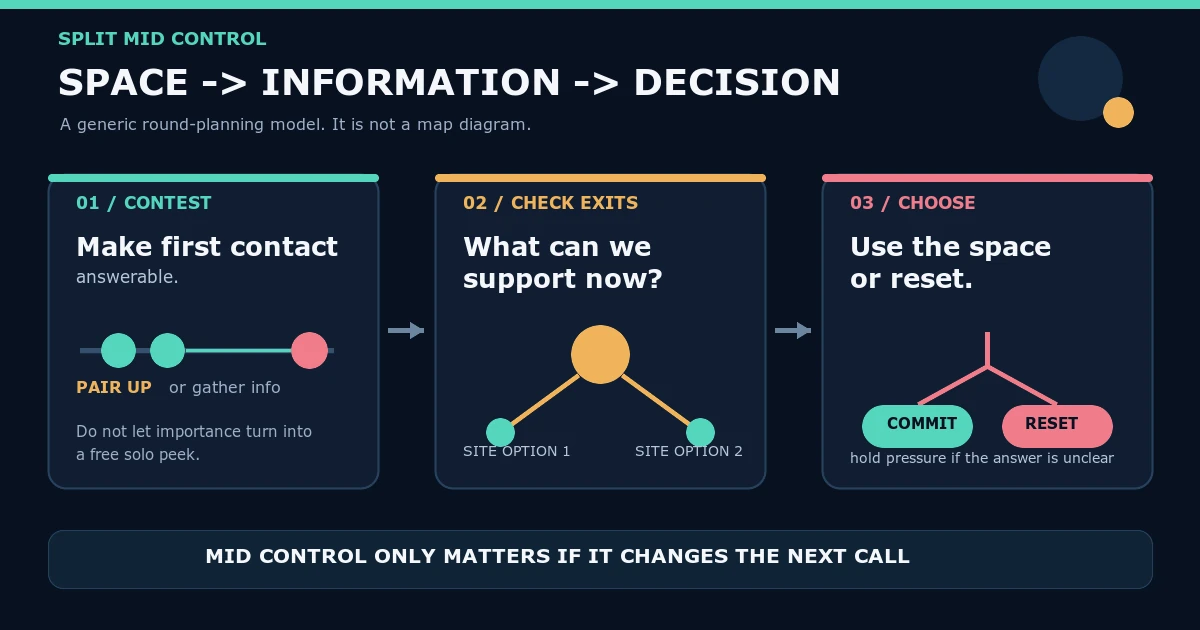
The useful question is not “Did we take mid?” It is “What can we support from here?” If the answer is no exit, no teammate, and no clear next call, the team owns a piece of space without owning a decision.
Coaching: contest the first contact with a reason
Before the round starts, say what the mid contest is meant to test. Are you looking for a defender, trying to make an exit uncomfortable, or keeping a second site option credible? Keep the call short. A plan that cannot fit in one sentence is hard to repeat after the first shot.
If the attack wants mid, pair the first contact with a trade partner or give it a safe information job. The first player needs a teammate who can answer the fight, or a clear way to stop exposing themselves when the answer is bad. Defenders use the same test. Contest mid with a teammate ready to help, an ability that serves the next goal, or a retreat that preserves the next fight.
This is why a solo peek is not a strategy. Mid can be important and the peek can still be untradeable. If you cannot say who answers the fight, do not let the label “mid control” make the decision for you. The peeking guide breaks down information peeks and space-taking peeks without turning either into a ritual.
Coaching: control exits, not just the space
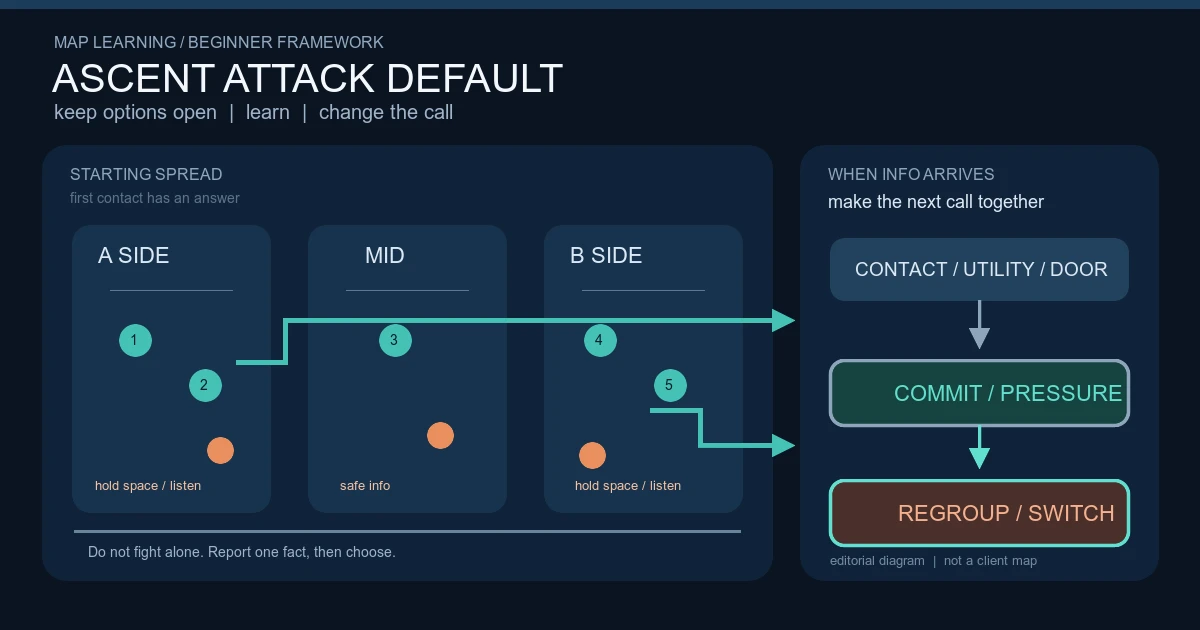
Once a team reaches mid, stop asking whether it owns the area. Ask which exits it can support now. For attackers, name the handoff: who is ready to trade, who carries the Spike, which player checks the next exposure, and which site is the first decision. If the first player takes space but nobody can follow, that space becomes an isolated pocket that defenders can challenge again.
For defenders, identify the exits that mid pressure could threaten. A player seen in mid does not prove a site hit, a full split, or a particular player count. Keep enough attention on the sites to test the next piece of evidence before moving everyone. If you give up the middle, do it to preserve players or prepare for the next fight together.
Riot's reminder to watch above matters here. An exit is not clear just because the floor looks clear. Check the elevation that the current view allows, then let the teammate who can support the next exposure make the call.
Coaching: turn pressure into a site decision
Mid pressure has done its job when it changes the call. Treat these three options as coaching triggers, not a universal sequence.
- Commit: The next exit is supportable, the first contact can be traded, and the Spike can move with the players taking the site. Stop collecting mid and make the site action clear.
- Hold: The defense has responded, but the team still has a safe way to keep mid pressure. Hold the threat while a teammate checks whether the other site is becoming easier, then decide together.
- Reset: The exit is blocked, the first fight is isolated, or the information is too thin to justify another exposure. Give back some space, regroup, and make the next attempt answer a new question.
The defender's version is just as practical. If attackers show mid, do not rotate everyone because the space sounds important. Confirm what they can actually reach, keep an exit covered, and decide whether to contest, delay, or wait for the site commitment. A response should make the next attacker decision harder, not create five separate defender peeks.
Riot's intel-to-plan-to-execute loop is a useful check: mid is the intel, the site choice is the plan, and the supported entry or reset is the execution. If the team keeps taking the same space without moving through that loop, it is collecting territory instead of using it.
Practise the handoff
Use a custom game to walk the same middle route from both sides. Look from each elevation without utility, then add one teammate to hold the first exposure. After each attempt, write down what you learned, which exit the teammate could support, and what site call followed. No site call means mid was a detour.
Say the result as a fact followed by an action: “one seen mid, exit contested, Spike stays with us, hold pressure and regroup on contact.” The useful comms guide covers that fact-to-action habit. For the spacing question behind the first fight, use How to Trade a Teammate in VALORANT.
On Split, the best mid call is often the next one: take the space, name the exit, then choose whether the Spike moves.