Waylay Guide: Movement Utility and When Not to Overheat
Written by Valorant Village
Source-backed coverage ●
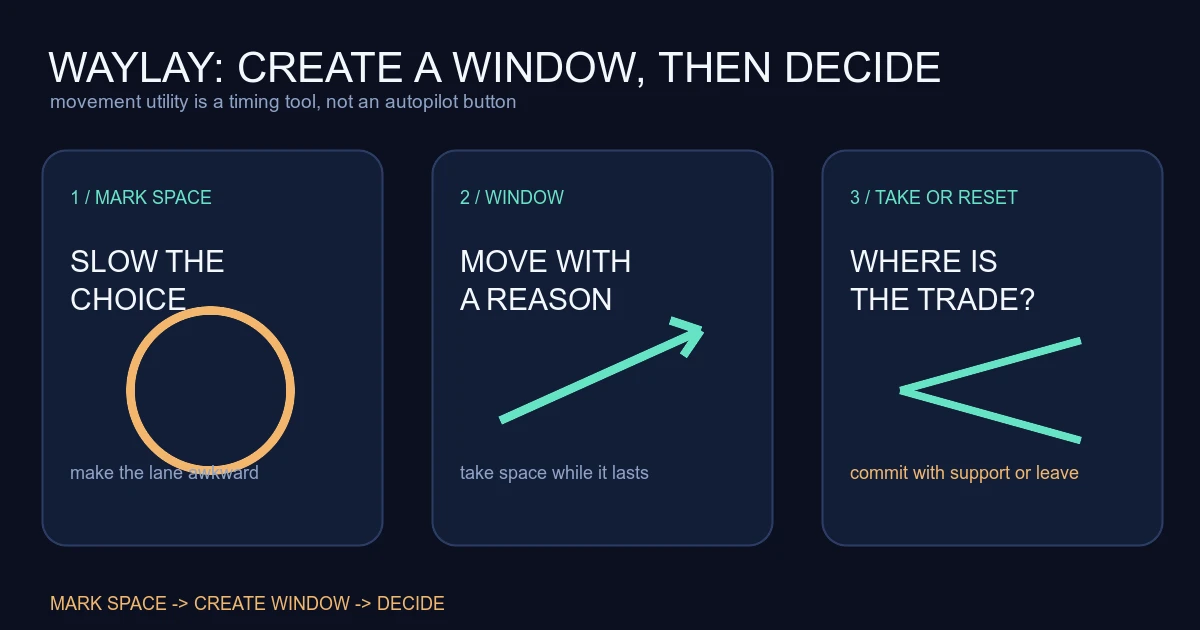
Waylay makes movement feel like a decision you can postpone. A speed boost appears, a lane opens, and it is tempting to take the fight before anyone else has finished setting up. Movement creates an option. It does not create a trade by itself.
Use a simple gate: name the space, name the teammate, spend the utility, then decide whether the next move is take, hold, or reset. If you cannot name the next action, speed is probably making the round louder rather than better.
What Riot documents
Riot's current Waylay agent page lists Waylay as a Duelist. It describes Saturate as a cluster of light that explodes on the ground and Hinders nearby players with a movement and weapon slow. The page also describes Lightspeed as an afterimage that projects a beam; after a brief delay, Waylay gains a powerful speed boost and the beam Hinders players in the area. The page lists Refract and Convergent Paths as other abilities, but this article does not invent details that are not rendered there.
Riot's Patch Notes 13.02 record a Waylay fix for Lightspeed and Refract clipping into Icebox B Tube walls. That is a dated bug fix, not a balance promise or proof that a current route is safe.
The movement gate, teammate conditions, and stop rules below are Valorant Village coaching interpretation.
Give Saturate a reason to exist
Saturate is useful when the slow changes the fight that is about to happen. A player crossing an entry, a defender holding a narrow lane, or a retreat path your teammate is ready to contest can all be reasonable questions. The cast does not mean “the target dies.” It means movement and weapon handling in that area may become harder, which can create a better next decision.
Before throwing, say the job: “Saturate the close lane, swing on contact” or “Saturate the exit, hold the space.” If nobody can see or reach the affected area, save it. A slow that your team cannot use is only a louder way to spend utility.
The guide to playing for space gives the broader test. Space matters when it gives your team an option. Waylay's slow should either protect a route, make a fight more answerable, or force a choice the team is prepared to punish.
Treat Lightspeed as a route, not a command
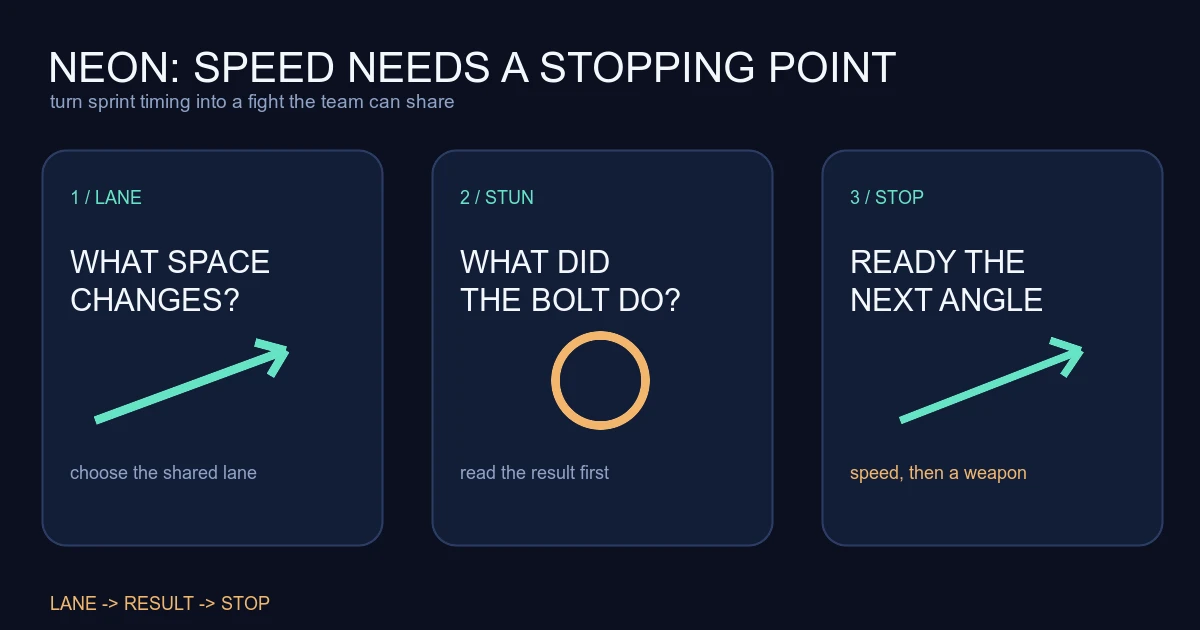
Lightspeed can make a movement line available, but the line still has an entry point and an exit. Before activating it, ask where you will be when the speed effect ends, who sees the same first angle, and what happens if nobody is there. The afterimage and beam may create pressure, but they do not tell you that the route is clear.
Use the ability to solve a named problem: cross a dangerous gap with cover, arrive with a teammate, or change the timing of a contest. Avoid activating it because the round feels slow. A fast unsupported peek is still unsupported.
If the route produces contact, return to the rifle as soon as the movement job is done. The utility gunfight guide covers the attention reset that movement agents also need. Your crosshair should be ready for the next angle, not parked on the ability animation.
Do not overheat after the first result
Overheating usually starts with a true fact. You gained ground, slowed someone, or arrived before the defender expected you. The mistake is treating that fact as permission to take every next fight. Keep one condition for the second move: a teammate can trade, the next angle is covered, or the objective requires the risk.
If none of those conditions exists, hold the space. Make the defender respond. Let the teammate catch up. Or reset to a position where the first gain remains useful. The trade guide explains why a fast first player still needs a second player who can fight the same opponent immediately.
Call the result without exaggerating it: “I am in, no contact, hold behind me” is more useful than “site open.” “Slow hit close, swing now” gives the teammate a trigger. If the slow was destroyed or missed, say that and keep the gun out.
Practise movement with a stop rule
In a custom game, walk one route three times. First, use no utility and name the angle that stops the route. Second, use Saturate or Lightspeed and say what changed. Third, add a teammate and decide whether the route is now tradeable. Stop the drill when you reach the chosen space. Do not add a fourth peek just to make the diagram look successful.
After a live block, classify each Waylay death as route, information, timing, or fight choice. If the answer is fight choice, another speed repetition will not fix it. Keep the movement for the round where it has a job.
Sources checked
- Riot Games Waylay agent page, checked in a live browser 2026-08-15 UTC. Used for Waylay's Duelist role, Saturate, Lightspeed, and the current list of named abilities.
- Riot Games VALORANT Patch Notes 13.02, published 2026-07-28, checked 2026-08-15 UTC. Used only for the dated Icebox B Tube clipping fix.
The movement gate, stop rule, trade conditions, and practice drill are Valorant Village coaching interpretation, not Riot rules or rank guarantees.